
Accessible Hotels & Stays in Kotor
Where to stay in Kotor for step-free access: why the cobbled, stepped, car-free Old Town is the hardest base for limited mobility, the flatter bay alternatives like Dobrota and the modern wider-bay hotels, and the access questions to ask before you book.

Photo: Dean Milenkovic / Unsplash
- ✓Kotor's medieval Old Town is the hardest place to stay step-free: it is car-free, paved in uneven cobbles, threaded with steps, and full of historic buildings with narrow stairs and no lifts.
- ✓For step-free access, the flat bay-front villages — Dobrota above all — and the modern hotels around the wider Boka are far better bets than a heritage room inside the walls.
- ✓The single most important question is the route from car or taxi to your bed: how many steps, how far over cobbles, and is there a lift if the room is above the ground floor?
- ✓Parking right by the door matters more here than almost anywhere, because the Old Town's car-free rule forces a long cobbled walk that a flat bay base avoids.
- ✓Accessibility standards vary widely and few historic properties are purpose-built, so verify specific features — step-free entry, lift, roll-in shower, accessible bathroom — directly with each property in writing.
- ✓Kotor can be a wonderful, gentle base with the right room in the right village; the Old Town's stepped lanes are a sightseeing challenge to plan around, not a place to sleep.
Why the Old Town is the hardest place to stay step-free
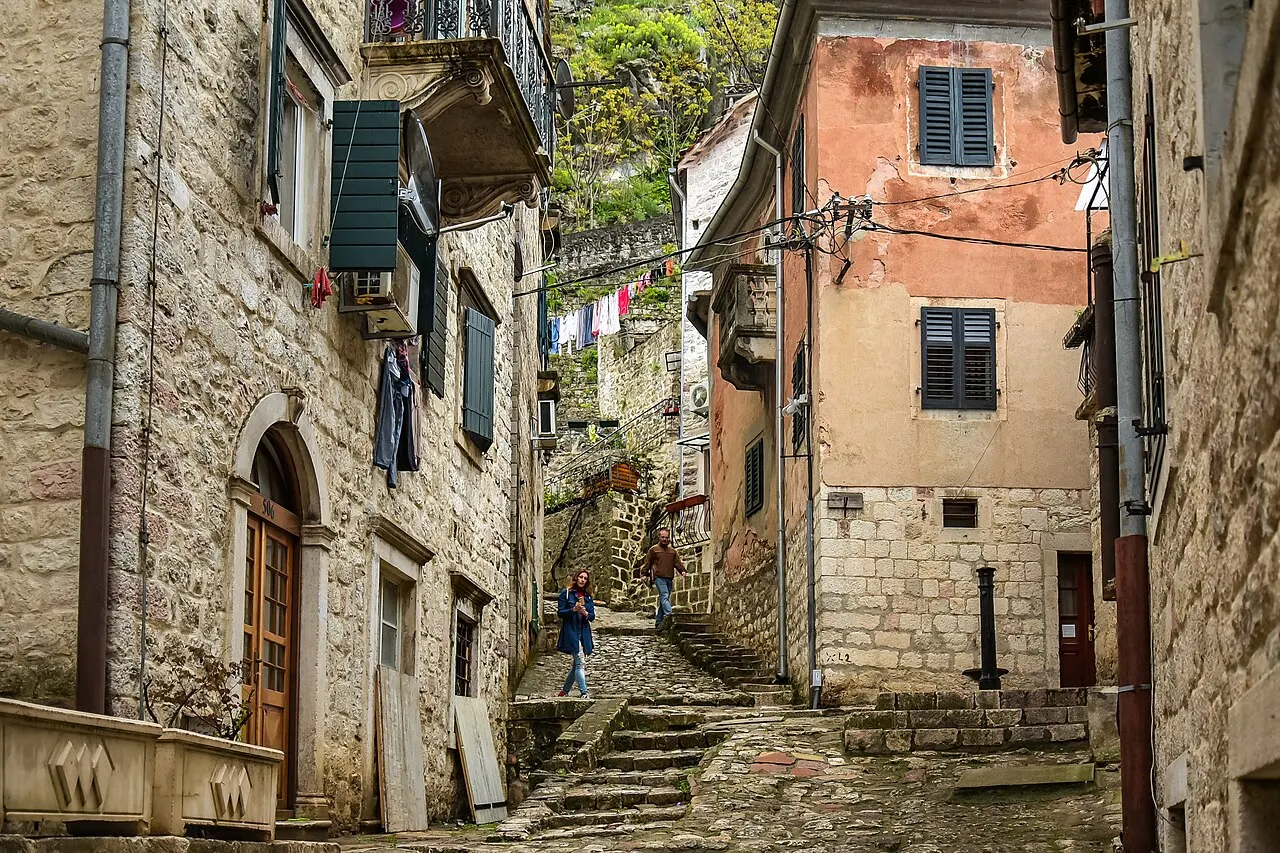
It helps to be honest from the start: Kotor's walled Old Town is one of the least step-free places you could choose to sleep, and understanding why makes the alternatives obvious. The town is a UNESCO-listed medieval maze, entirely car-free, paved in centuries-old cobbles and stone slabs that are uneven underfoot and hard for wheels of any kind. Steps appear without warning — into churches, across thresholds, up to entrances — and the buildings themselves are historic palazzi and townhouses with narrow internal staircases, high thresholds and, very often, no lift at all. A charming room 'in the heart of the Old Town' can mean three flights of worn stone stairs with your luggage and no way around them.
On top of the lanes sits the car-free rule. Because no vehicle crosses the Sea Gate, anyone staying inside the walls is dropped at a waterfront car park and must cover the last stretch into town on foot, over cobbles, with bags — a real barrier for anyone using a wheelchair, a walker or a stick, or simply travelling with someone who tires easily. None of this is a failing of any one hotel; it is the nature of a preserved medieval town. But it does mean that, for step-free or limited-mobility travellers, the Old Town is best treated as somewhere to visit carefully by day rather than to base yourself.
The encouraging part is that Kotor's bay offers genuinely easier bases just minutes away, on flat ground, with parking at the door and modern buildings that can actually be step-free. You can still see the Old Town — that is a sightseeing question, covered separately — while sleeping somewhere that works. This guide is about finding that base and asking the right questions to be sure it truly fits.

Dobrota and the flat bay-front: the better base
For step-free access, the natural answer is Dobrota — the long, flat waterfront village that begins where the Old Town ends and runs north along the same shore. Its advantages are exactly the ones the Old Town lacks: the ground is level, the seaside promenade along the shore is flat and largely smooth, the buildings are a mix of modern apartments and houses rather than stacked medieval stone, and parking is the norm rather than the exception. You can be dropped or park right at the door, and many ground-floor or lift-served rooms here are genuinely manageable. Because Dobrota is on the same shore as the Old Town, you also stay close to the sights without crossing the bay.
Within the flat bay-front, look for ground-floor rooms or buildings with a lift, a step-free entrance from the parking area, and a level path to the water if swimming or the promenade matters to you. The promenade itself is one of the most accessible pleasures in the whole bay — a flat, scenic shoreline walk you can do at your own pace, with cafés along it and the walled town in view across the water. For many limited-mobility travellers, a flat Dobrota base with a level promenade and the Old Town visible across the bay is a far happier holiday than wrestling with stepped lanes.
Muo and Prčanj on the opposite shore are flatter than the Old Town too and offer bay-view stays, but they involve a drive around the bay to reach the centre and can have their own slopes down to the water, so check the specific property's terrain. The principle holds: flat ground, parking at the door, a lift or a ground-floor room, and a level route to where you want to be.
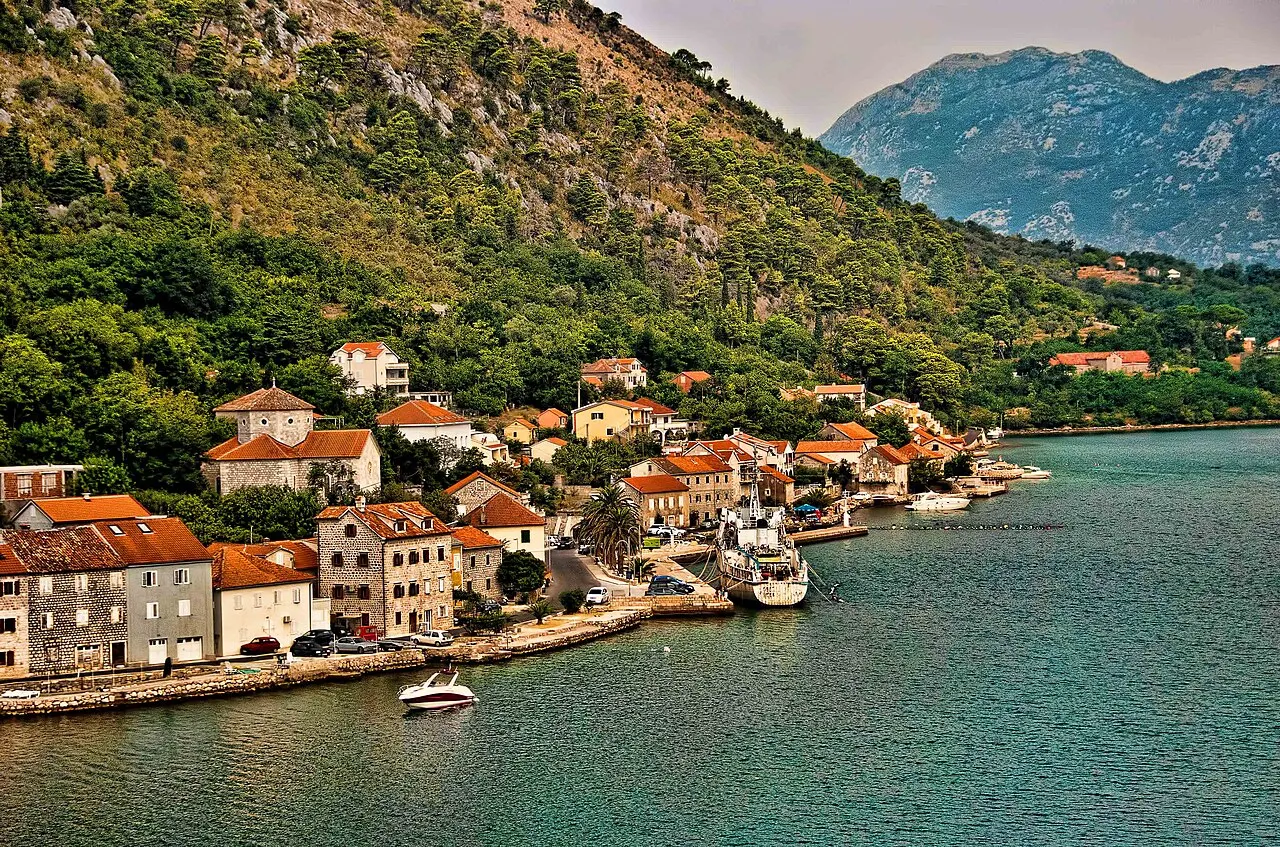
- Dobrota: flat ground, a level promenade, modern buildings and parking at the door — the easiest step-free base.
- Same shore as the Old Town, so you stay close to the sights without crossing the bay.
- Look for a ground-floor room or a lift, a step-free entrance, and a level path to the water or promenade.
- Muo & Prčanj are flatter than the Old Town but involve a drive in and can have slopes — check the property's terrain.
Map pins
Map data © OpenStreetMap contributors · Tiles © OpenFreeMap
Modern wider-bay hotels and what they offer
The other strong option is a modern, purpose-built hotel around the wider Boka, where newer construction means accessibility features the historic buildings cannot match. The larger hotels toward Tivat and the Porto Montenegro marina are the most likely in the region to offer lifts, step-free entrances, accessible parking, and — at the better-equipped properties — designated accessible rooms with roll-in showers and grab rails. They are a short drive around the bay from Kotor, so you base somewhere genuinely step-free and travel into the Old Town by accessible taxi or transfer for sightseeing.
Be realistic about the spread, though. Montenegro's tourism is relatively young, and the gap between properties is wide: some modern hotels are well thought-out for accessibility, others use 'accessible' loosely to mean a lift and no more. A designated accessible room with a roll-in or wet-room bathroom is not something to assume from a star rating — it is something to confirm room by room. The advantage of the modern hotels is simply that they are far more likely to have these features at all than a heritage townhouse inside the walls.
Weigh the trade. A modern wider-bay hotel buys you the most reliable step-free access and the best chance of a proper accessible bathroom, at the cost of a drive into the Old Town. A flat Dobrota apartment keeps you closest to the walled town on level ground, but may offer ground-floor access without a full accessible bathroom. Neither is wrong; the right choice depends on which features are non-negotiable for you — and on getting clear answers before you book.
- Modern hotels around Tivat and Porto Montenegro are the most likely to have lifts, step-free entries and accessible parking.
- Designated accessible rooms — roll-in shower, grab rails — exist at better-equipped properties but must be confirmed room by room.
- Standards vary widely; 'accessible' is used loosely, so verify the specific features you need.
- Trade-off: wider-bay hotels offer the most reliable access but a drive into the Old Town; Dobrota stays you closest on flat ground.
The access questions to ask before you book
Because few Kotor properties are purpose-built and online filters can be optimistic, the safest approach is to write to the property and confirm the specifics in plain terms. The single most important question is the route from car or taxi to your bed: how many steps are there in total — from the parking area, into the building, and up to the room — and is there a lift if the room is not on the ground floor? In a town this stepped, one or two unmentioned stairs can be the difference between a workable stay and an impossible one, so ask for the count, not a reassuring 'easy access'.
From there, work through the features you personally need. Is the entrance step-free or is there a threshold or kerb? How wide are the doorways, and will a wheelchair or walker pass? Is the bathroom step-free — a roll-in or wet-room shower, or a high-sided bath? Are there grab rails? Is there parking right by the door, and is it accessible? If you will use taxis, ask whether the property can arrange accessible transport, as adapted vehicles are not always easy to find on the spot in Montenegro. For Old Town stays, if you are still considering one, ask bluntly how far the room is from the nearest vehicle drop-off and how many cobbled steps lie between.
Get those answers in writing and a Kotor accessibility decision rarely goes wrong. As always, we keep the volatile and property-specific details out of the prose — exact room features, rates, transfer arrangements and what 'accessible' means at any given hotel all vary and change — so verify them directly with the property before you book, and ask for photographs of the entrance, the bathroom and the route to the room if you are unsure.
- The key question: how many steps in total from car/taxi to the bed, and is there a lift above the ground floor?
- Confirm: step-free entrance, doorway widths, a roll-in or wet-room bathroom, and grab rails.
- Parking at the door and accessible taxis — ask whether the property can arrange adapted transport.
- For Old Town stays: how far from a vehicle drop-off, and how many cobbled steps between?
- Verify directly and in writing; ask for photos of the entrance, bathroom and route to the room.

Seeing the Old Town from an accessible base
Choosing a step-free base does not mean missing the Old Town — it means seeing it on the right terms. From a flat Dobrota or wider-bay hotel you can travel into the centre by car or accessible taxi, be dropped at the waterfront close to the Sea Gate, and explore the parts of the walled town that are manageable at ground level. The main entrance and the first squares are reachable, and much of the lower town can be seen slowly, with the understanding that the cobbles are uneven and that the climb to St John Fortress and many side-lanes involve steps that are simply not step-free. Planning which parts to see, and which to admire from the waterfront or a boat instead, turns the Old Town from an obstacle into a gentle outing.
The bay itself is often the more rewarding accessible experience anyway. The flat Dobrota promenade, a boat trip across the water with the walls and Perast in view, and a waterfront dinner are all gentler and more comfortable than the stepped lanes — and arguably show off the Boka at its best. Many limited-mobility travellers find that sleeping flat by the water and sightseeing selectively gives them a calmer, lovelier Kotor than they would have had wedged into a heritage room up three flights of stone.
For the detail of which sights are step-free, where accessible drop-offs are, and how to handle the cobbles and the climb, our dedicated accessible-sightseeing guide goes deeper. The booking decision, though, comes down to the simple principle of this page: sleep flat, park at the door, confirm the steps and the lift in writing, and treat the Old Town's stairs as a daytime challenge to plan around rather than a place to base your stay.
Accessible hotels in Kotor at a glance
Use this quick card to choose an accessible base. The terrain — a cobbled, stepped, car-free Old Town versus the flat bay-front and modern wider-bay hotels — is evergreen; the property-specific and volatile details (exact accessible features, rates, transfer arrangements, what 'accessible' means at any hotel) change constantly, so verify them directly and in writing before you book.
- The catch: the Old Town is car-free, cobbled and stepped, with historic buildings that often have no lift — the hardest base for step-free access.
- Best step-free bases: flat Dobrota on the bay-front, and modern purpose-built hotels around Tivat and Porto Montenegro.
- The key question: total steps from car/taxi to bed, and a lift if the room is above the ground floor.
- Confirm: step-free entrance, doorway widths, a roll-in or wet-room bathroom, grab rails, and parking at the door.
- See the Old Town selectively by accessible taxi from a flat base; enjoy the level promenade and a bay boat instead of the stepped lanes.
- Verify directly and in writing: accessible features, rates, and adapted-transport availability; ask for photos.

Accessible Kotor Travel Guide
An honest accessibility guide to Kotor — the flat-but-cobbled Old Town, the stair-only fortress climb, cruise-port access, taxis and transfers, level waterfront walks, museums, accessible hotels, and realistic routing that plays to the town's strengths.
Read guide
Accessible Kotor Cruise Port
Step-free cruise-port planning for Kotor — the dock-versus-tender question, the short level walk into the Old Town, the cobbled lanes and stair-bound walls, taxis and boat access, toilets, and which shore excursions fit a wheelchair or limited-mobility traveller.
Read guide
Staying in Dobrota
Where to stay in Dobrota, the long bayfront village just north of Kotor's Old Town: who it suits, the waterfront promenade and swimming, the calmer nights, parking and how easily you reach the walled town on foot or by car.
Read guideMore in Where to Stay
6
Best apartments in Kotor
How apartment stays work around the Bay of Kotor: why they're the dominant choice here, what a kitchen and space buy you, where to find them by area, and the practical realities — stairs, parking, air-con, bay views and self check-in — to weigh before you book.
Read guide
Best boutique hotels in Kotor
How to find Kotor's most atmospheric boutique stays: restored stone palaces and captains' houses inside the Old Town walls, along the Dobrota and Muo–Prčanj shore, and in baroque Perast — and how to choose by atmosphere, noise, stairs and view.
Read guide
Best budget hotels in Kotor
How to stay cheaply around the Bay of Kotor without losing your days to buses, parking or steep walks: where the value is, what budget looks like here, the shoulder-season and cruise-day pricing tricks, and the hidden costs to weigh before you book.
Read guide
Best family hotels in Kotor
Where families should stay around the Bay of Kotor: why the car-free Old Town is rarely the best base, the calmer bayfront bases that give space, parking, pools and swimming, and the practicalities — kitchens, prams, deep water — that matter most with kids.
Read guide
Best Hotels in Kotor by Area
A practical framework for choosing where to stay around the Bay of Kotor — matching the Old Town, Dobrota, Muo and Prčanj, Perast and Tivat to first-timers, couples, families, drivers, luxury travellers and cruise extensions, with the booking checks that matter.
Read guide
Best Luxury Hotels in Kotor Bay
The high end of the Bay of Kotor by style: restored palace boutique hotels inside the walls and in Perast, modern marina resorts and superyacht suites at Tivat's Porto Montenegro, spa and wellness hotels, and waterfront bay-view bases — matched to the traveller each suits.
Read guide