
Best budget hotels in Kotor
How to stay cheaply around the Bay of Kotor without losing your days to buses, parking or steep walks: where the value is, what budget looks like here, the shoulder-season and cruise-day pricing tricks, and the hidden costs to weigh before you book.

Photo: Alexander Van Steenberge / Unsplash
- ✓Budget in Kotor mostly means guesthouses, private rooms (sobe), hostels and simple apartments rather than cheap hotels — the bay has few true budget-branded hotels.
- ✓The cheapest beds tend to be a little out of the Old Town, up the hillside above it, or in the bay villages — so the real question is what each saving costs you in walking, stairs or bus time.
- ✓Season swings the price hard: the shoulder months either side of high summer are far better value, and cruise-heavy summer days push the whole town's rates and crowds up.
- ✓A car can be a false economy on a budget here — Old Town parking is tight and paid — so a base on a bus line or within an easy walk often saves more than it costs.
- ✓Weigh the hidden costs before you book: distance into town, steep stairs, paid parking, and whether breakfast and the tourist tax are included.
What "budget" actually looks like in Kotor
Kotor rewards budget travellers, but not quite in the way a chain-hotel city does. The bay has very few true budget-branded hotels; instead, the value lives in a different layer of accommodation — family-run guesthouses, private rooms (the Balkan sobe, often a spare floor in someone's home), a handful of hostels, and simple self-catering apartments. These are frequently better value and more characterful than a budget hotel would be: you get a warm host, a local tip or two, sometimes a kitchen, and a real corner of bay life rather than an anonymous room. The trick is knowing where to look and what trade-off you are accepting for the lower price.
Because the accommodation is small-scale and individually run, prices and quality vary enormously from one door to the next, and the rating system tells you less than it would for a chain. A cheap room near the walls might be a windowless box up four flights of stairs, or a bright, spotless apartment with a bay view — at a similar headline price. That is good news for a careful booker: with a little attention to the practical detail, you can find genuinely lovely places to stay here for modest money. It just means reading the specifics rather than the stars, and weighing what the saving costs you in convenience.

Where the value is: out of the centre, up the hill, around the bay
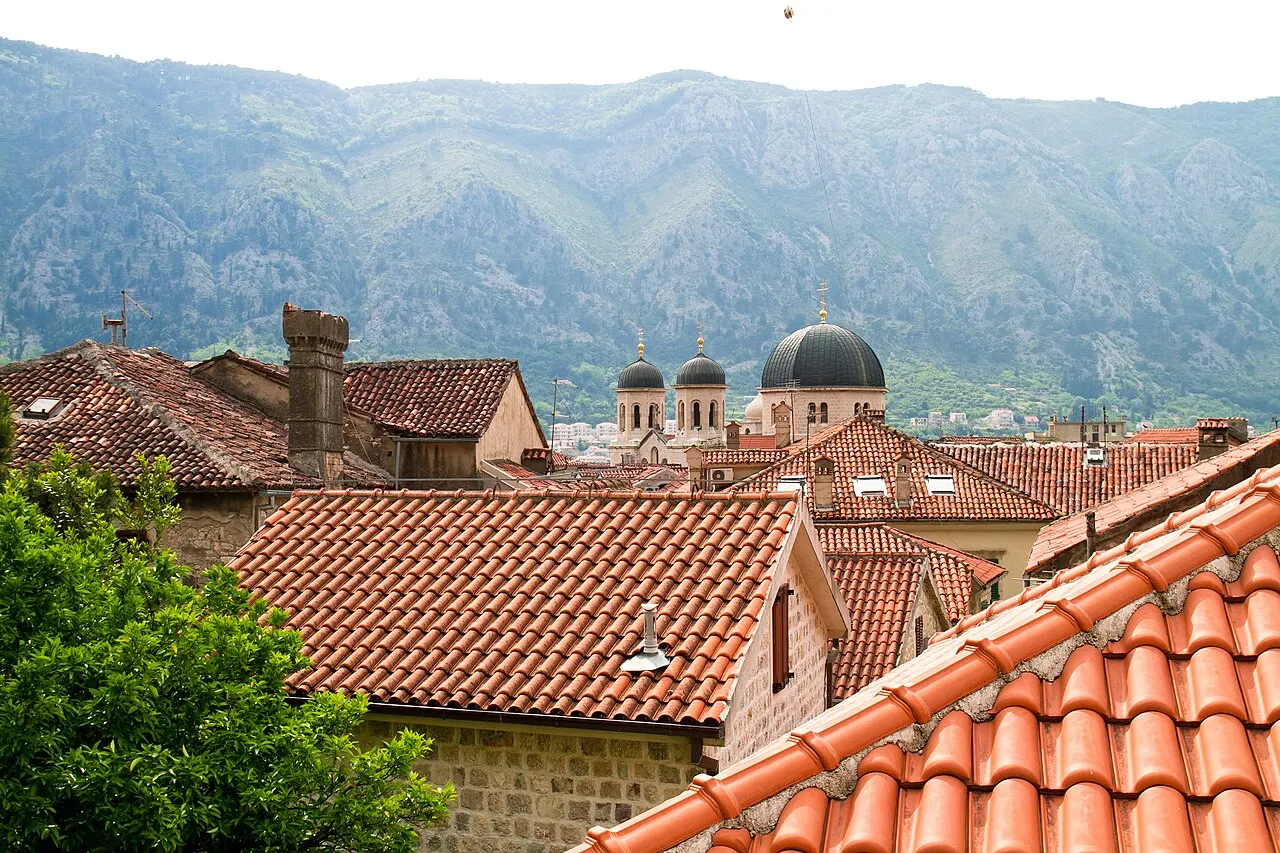
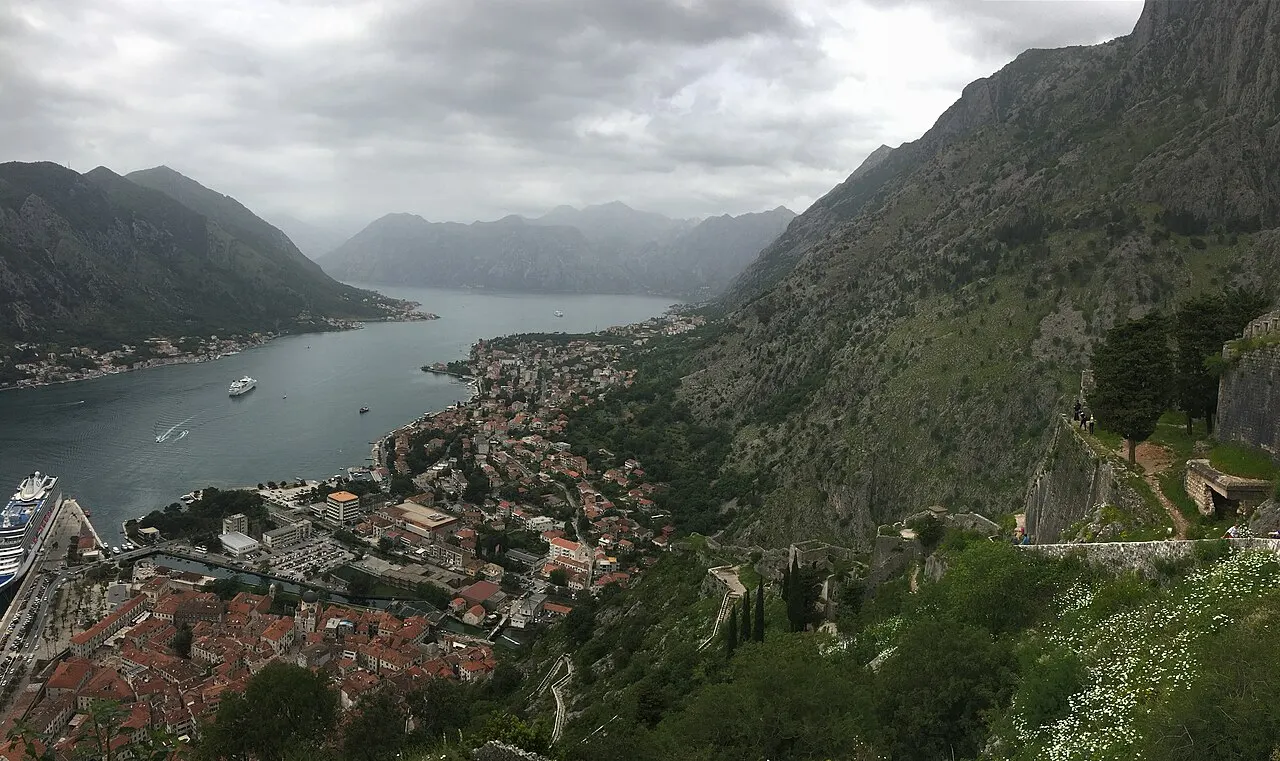
The single biggest lever on price is distance from the Sea Gate. Rooms right in the middle of the walled Old Town carry an atmosphere premium; step a few minutes out — into the streets just beyond the walls, up the hillside above the town, or along the bay into Dobrota and the far-shore villages — and the same money buys you more space, more quiet and often a view. Many budget travellers find the best value in a guesthouse a short, flat walk from the gates, or a simple apartment up the slope with the rooftops and bay spread below; you are still firmly in Kotor, just not paying for a square outside your window.
The bay villages widen the budget further. Dobrota along the same shore as the Old Town lets you walk in (roughly fifteen to forty minutes) and keeps prices softer than the centre; Muo and Prčanj across the water are quieter and cheaper again, with a short bus, taxi or boat into town. Even Tivat and the wider coast can work on a budget if you are happy to day-trip into Kotor. The principle is consistent: the further from the postcard you sleep, the less you pay — so decide how many euros that walk, bus or boat is worth to you, and book accordingly.
- Just outside the walls or up the hill: more space and quiet for less, still an easy walk in.
- Dobrota: softer prices on the same shore, with a 15–40 minute walk into the Old Town.
- Muo & Prčanj: quieter and cheaper across the water, with a short bus, taxi or boat in.
- Tivat and the wider coast: cheapest of all if you are happy to day-trip into Kotor.
- Rule of thumb: the further from the Sea Gate you sleep, the lower the price.
 Staying in Dobrota
Softer prices and a walkable base on the same shore as the Old Town.
 Staying in Muo & Prčanj
Quieter, cheaper across-the-bay rooms with a short hop into town.
Map pins
Map data © OpenStreetMap contributors · Tiles © OpenFreeMap
Timing the season and the cruise calendar
When you go moves the price as much as where you stay. High summer — roughly July and August — is Kotor's peak: the hottest weather, the biggest crowds and the highest rates, with the bay at its busiest. The shoulder seasons either side, late spring and early autumn, are the budget traveller's sweet spot: the weather is still warm and the bay still swimmable, but accommodation is noticeably cheaper and the town far calmer. Push into the quieter months and prices fall further still, though you trade some warmth and accept that Kotor is one of Europe's rainier towns in winter, so pack for showers if you visit off-season.
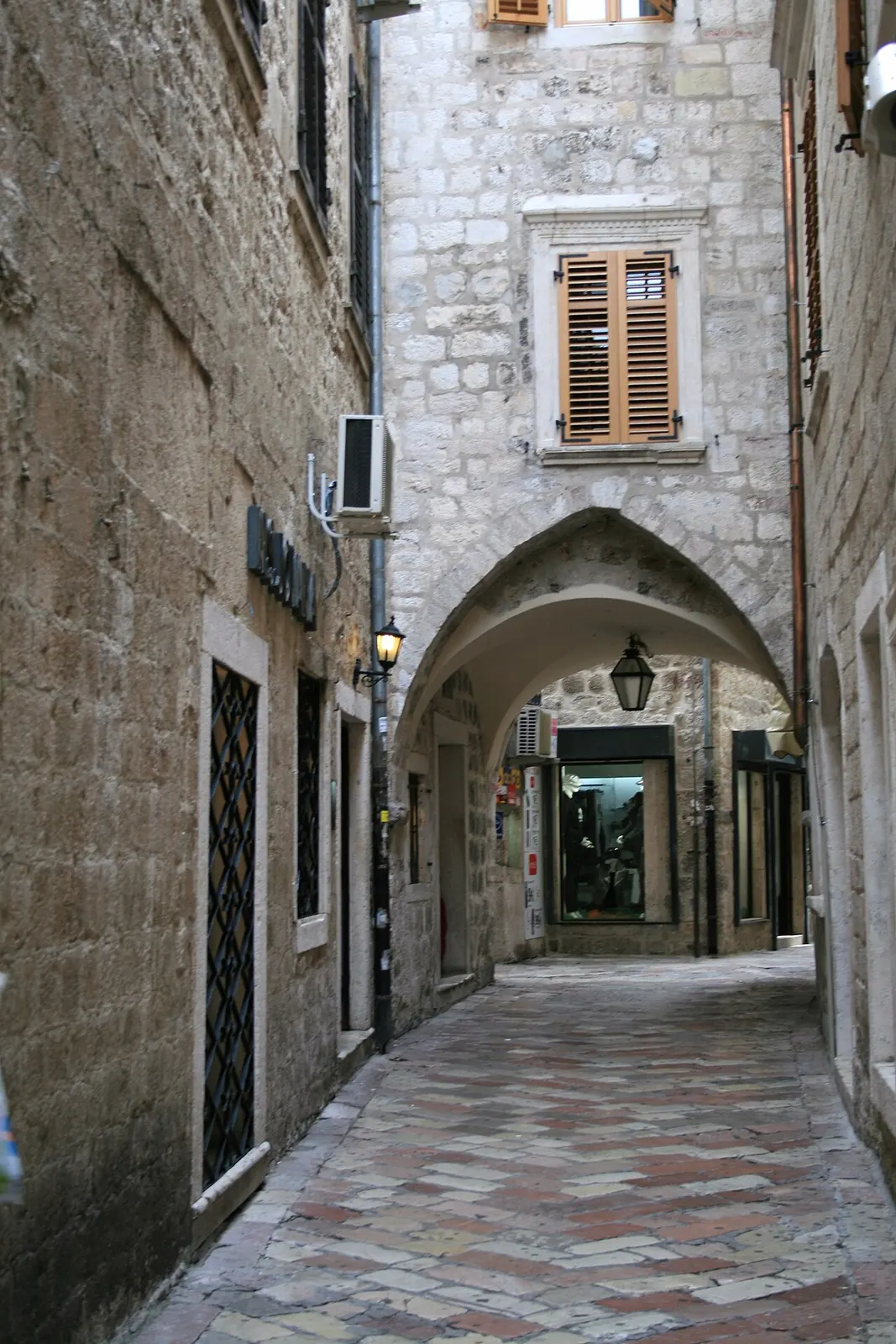
On top of the season sits the cruise calendar, which moves day to day. Kotor is a marquee Adriatic port, and big cruise days bring crowds, busier restaurants and firmer pricing across town; quieter no-ship days are calmer and can be gentler on the wallet for walk-up rooms and tables. You cannot always plan a trip around it, but it is worth knowing — climbing the walls and exploring the lanes early, before the ships' passengers land, costs nothing and dodges the worst of the crush. We keep volatile figures out of the prose, so check the season's rates and, if you can, the cruise schedule when you choose your dates.
- Shoulder seasons (late spring, early autumn) are the value sweet spot — warm, swimmable, cheaper, calmer.
- High summer (July–August) is hottest, busiest and priciest; the quiet months are cheapest but wetter.
- Big cruise days push crowds and pricing up; quieter no-ship days are calmer and can be gentler on cost.
- Climb and explore early, before the ships' passengers land — free, and it dodges the crush.



Eating, getting around and stretching the budget further
Where you sleep is only half the budget; how you eat and move is the rest, and Kotor is kind to a careful traveller. A self-catering room or apartment with even a small kitchen pays for itself fast: the town has a daily market and supermarkets for picnics, breakfasts and a packed lunch to carry up the walls. When you do eat out, step a lane or two off the busiest Old Town squares — the same seafood and grills cost noticeably less away from the view, and the bay villages are better value again. Buzara, fresh fish by the kilo, Njeguši prosciutto and a glass of Vranac are the local spread; you do not need a smart restaurant to eat well here.
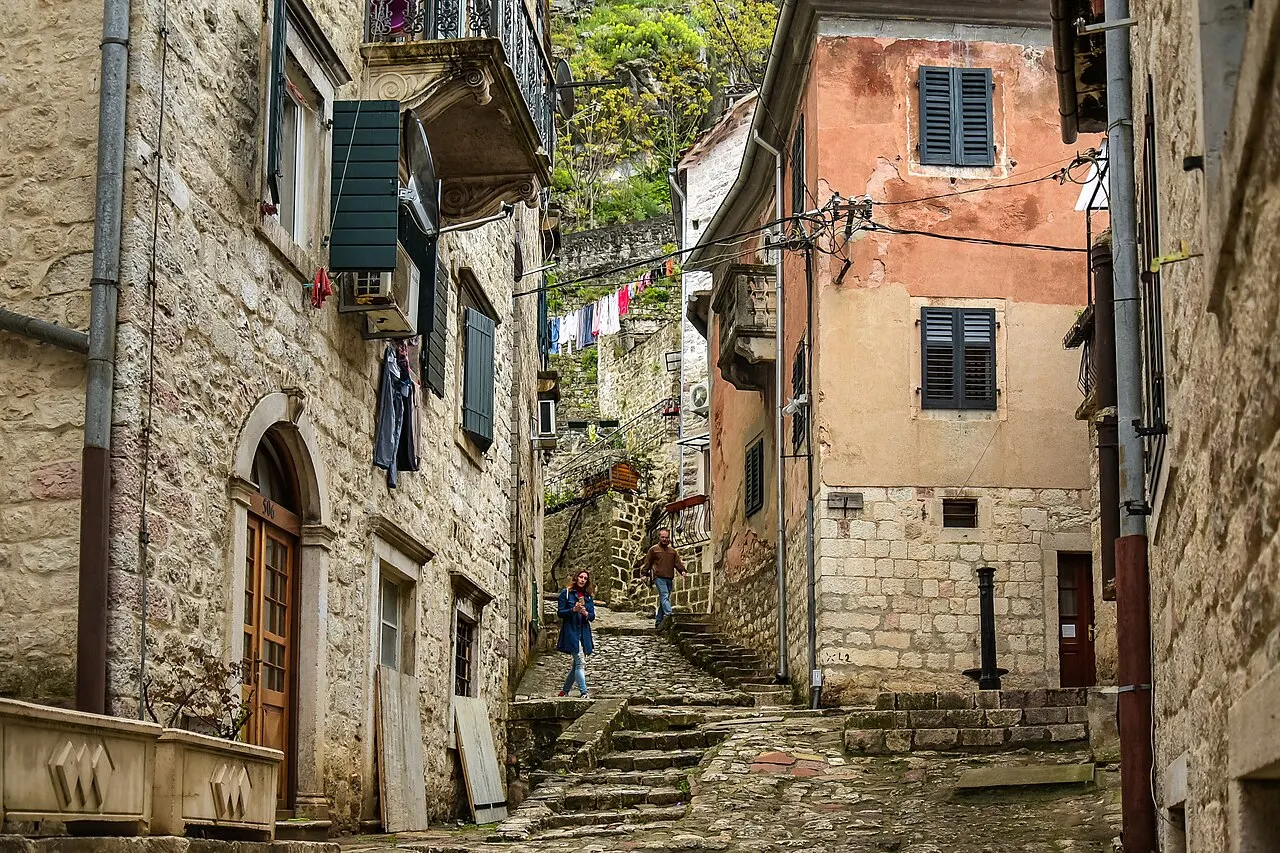
Getting around cheaply is straightforward. The Old Town is car-free and walkable end to end in minutes; the bus station just outside the walls runs inexpensive services along the bay and down the coast; and the short ferry across the bay mouth saves a long drive when you head out. Many of Kotor's best experiences cost little or nothing at all — wandering the lanes, the promenades, the churches, swimming from a public ladder, and the viewpoints. A few evergreen basics: Montenegro uses the euro, cards are widely taken but small konobas and boatmen prefer cash, and we keep the volatile figures — room rates, bus fares, the tourist tax and the walls ticket — out of the prose; verify them before you build a budget.
- Self-cater: a kitchen plus the market and supermarkets covers breakfasts, picnics and a walls-climb lunch.
- Eat off the busy squares — the same food costs less a lane away, and cheaper still in the bay villages.
- Get around cheaply on foot, by the bus station outside the walls and the bay-mouth ferry.
- Many of Kotor's best things — lanes, promenades, churches, swimming, viewpoints — are free or near-free.
- Euro currency; cards widely accepted, but carry some cash for small konobas and boatmen.

Budget hotels in Kotor at a glance
Use this quick card to weigh a budget stay. The value patterns, the season and the hidden costs are evergreen; the volatile details — room rates, bus fares, the tourist tax, named guesthouses and addresses — change with the season and the property, so verify them directly before you book.
- What budget means here: guesthouses, private rooms (sobe), hostels and simple apartments — few cheap hotels.
- Where the value is: just outside the walls, up the hill, in Dobrota, Muo/Prčanj, and Tivat.
- When it's cheapest: the shoulder seasons; high summer and big cruise days cost the most.
- Hidden costs to weigh: distance into town, steep stairs, paid Old Town parking, breakfast and tourist tax.
- Stretch it further: self-cater from the market, eat off the squares, use the buses and the bay ferry.
- Euro currency; cards widely accepted, but carry some cash. Many of Kotor's best things are free.
- Verify directly: room rates, bus fares, the tourist tax, the walls ticket and which places are operating.

Kotor on a Budget: A Low-Cost Itinerary
A lower-cost Bay of Kotor plan that leans on free sights, local buses, market and bakery food, self-guided walks and one or two selective paid splurges — how to do the Old Town, the bay and the views well without spending much, and where it is worth paying.
Read guide
Budget Food in Kotor
How to eat well in Kotor without spending much: bakeries and burek for cheap breakfasts and lunches, the open-air market for picnic supplies, pizza and casual grills, value konobas a lane back from the squares, supermarkets for self-catering, and how to dodge the Old Town location premium.
Read guide
Kotor Without a Car Itinerary
How to enjoy Kotor and the Bay of Kotor entirely car-free: a walkable Old Town, the bus station just outside the walls, local buses along the bay, boats to Perast, taxis to fill the gaps, and honest verdicts on which day trips work without a car.
Read guideMore in Where to Stay
6Accessible Hotels & Stays in Kotor
Where to stay in Kotor for step-free access: why the cobbled, stepped, car-free Old Town is the hardest base for limited mobility, the flatter bay alternatives like Dobrota and the modern wider-bay hotels, and the access questions to ask before you book.
Read guide
Best apartments in Kotor
How apartment stays work around the Bay of Kotor: why they're the dominant choice here, what a kitchen and space buy you, where to find them by area, and the practical realities — stairs, parking, air-con, bay views and self check-in — to weigh before you book.
Read guide
Best boutique hotels in Kotor
How to find Kotor's most atmospheric boutique stays: restored stone palaces and captains' houses inside the Old Town walls, along the Dobrota and Muo–Prčanj shore, and in baroque Perast — and how to choose by atmosphere, noise, stairs and view.
Read guide
Best family hotels in Kotor
Where families should stay around the Bay of Kotor: why the car-free Old Town is rarely the best base, the calmer bayfront bases that give space, parking, pools and swimming, and the practicalities — kitchens, prams, deep water — that matter most with kids.
Read guide
Best Hotels in Kotor by Area
A practical framework for choosing where to stay around the Bay of Kotor — matching the Old Town, Dobrota, Muo and Prčanj, Perast and Tivat to first-timers, couples, families, drivers, luxury travellers and cruise extensions, with the booking checks that matter.
Read guide
Best Luxury Hotels in Kotor Bay
The high end of the Bay of Kotor by style: restored palace boutique hotels inside the walls and in Perast, modern marina resorts and superyacht suites at Tivat's Porto Montenegro, spa and wellness hotels, and waterfront bay-view bases — matched to the traveller each suits.
Read guide