
Staying in Muo & Prčanj
Where to stay in Muo and Prčanj across the bay from Kotor: the front-row view of the walled town, waterfront guesthouses and captains' palaces, swimming off the Vrmac shore, and the driving and parking notes you need for a far-shore base.

Photo: Antonio Janeski / Unsplash
- ✓Muo and Prčanj sit on the opposite, western shore of the bay from Kotor, on the lower slopes of the Vrmac ridge — close as the gull flies, but a drive around the water by road.
- ✓This is the front-row seat: rooms here look straight across the bay at the walled Old Town and its fortress walls climbing the mountain, a view the Old Town itself cannot give you.
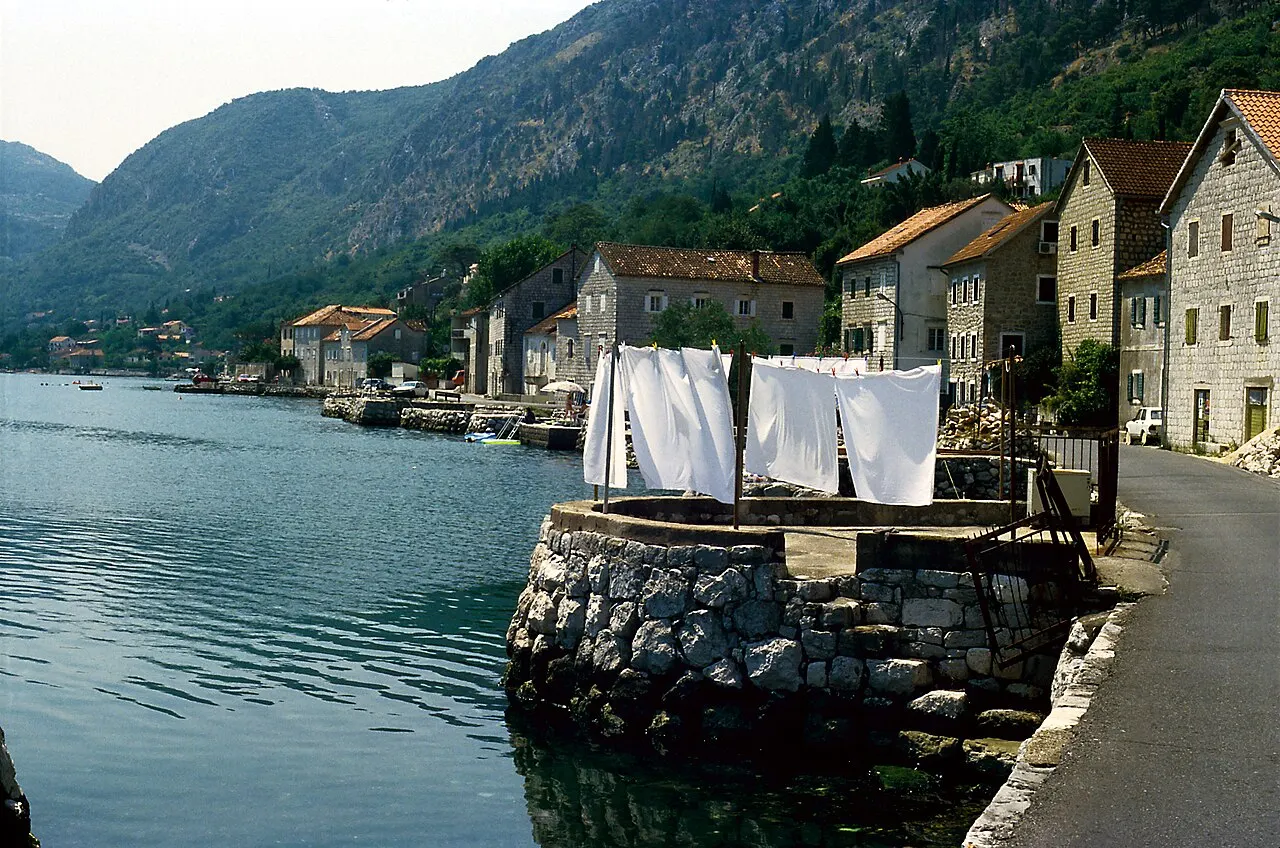
- ✓Both villages are strung along the water as old captains' settlements — quieter and more residential than Kotor, with waterfront guesthouses, apartments and a few stone palaces among them.
- ✓Prčanj's landmark is its great waterfront church, the Birth of the Virgin (Bogorodičin Hram), a surprisingly monumental basilica for so small a village.
- ✓You stay on a calmer shore with easy swimming off ladders and platforms, but you trade walk-in Old Town access for a short drive, taxi or seasonal boat across the bay.
- ✓These villages are car-dependent: come with wheels or budget for taxis, confirm parking with your host, and know the bay road is narrow in places.
Where Muo and Prčanj are, and why you'd stay there
Muo and Prčanj line the western shore of the inner Bay of Kotor, on the lower flank of the Vrmac peninsula, directly across the water from Kotor's Old Town. Muo is the nearer of the two, almost opposite the walled town; Prčanj continues south-west along the shore toward the bay's next pinch. Both grew, like Dobrota across the water, as villages of sea captains and shipowners — narrow waterfront settlements where every house wanted its feet in the bay — and both have kept that quiet, strung-out, residential character to this day.
The reason to base yourself here is the view, and the calm. From a room in Muo or Prčanj you look straight across the bay at Kotor's Old Town, the cathedral and the famous zigzag of fortress walls climbing the mountain behind it — the postcard, framed from your own terrace. It is a view the Old Town, hemmed inside its own walls, simply cannot offer. Add the stillness of a residential far shore, easy swimming off the rocks, and far simpler parking than the lanes, and you have a base that suits couples, quiet-seekers and travellers with a car who are happy to drive in for the sights.
It is the wrong choice if you want to step out of your room into the medieval lanes, or if you have no car and no appetite for taxis. Muo and Prčanj are about waking up to the water and the view, not about walking to dinner in the Old Town. Get that trade-off right and the far shore is one of the bay's most rewarding — and most romantic — places to stay.
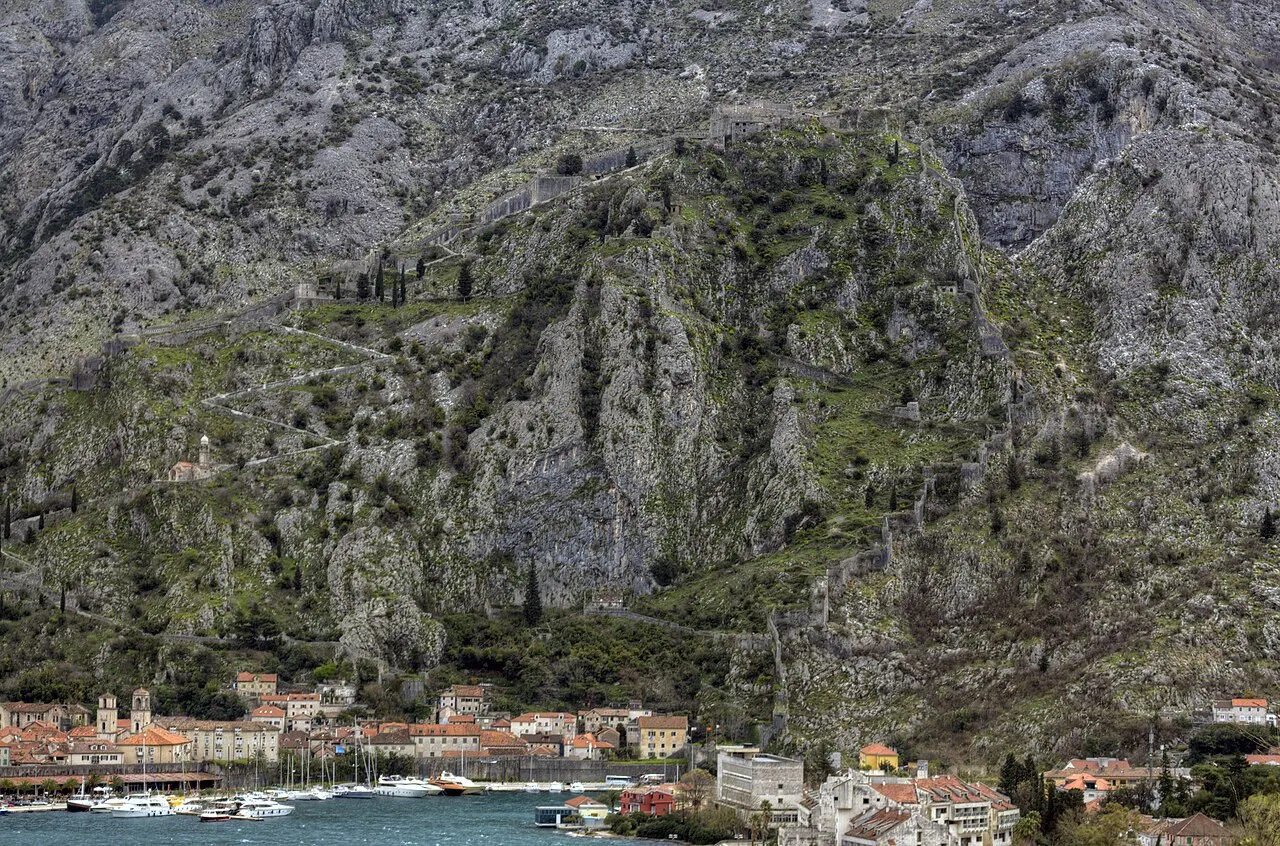

Muo: the front-row village opposite the Old Town
Muo is the closest village to Kotor across the water — so close that the walled town seems to sit just over your shoulder, lit up across the bay at night. It is a small, single-street waterfront place: a thin run of old stone houses, votive chapels, bathing ladders and a few cafés along the shore, with the slopes of Vrmac rising steeply behind. There is little to 'do' in Muo beyond swim, walk the waterfront and watch the light move across Kotor — which is precisely the point of staying here.
As a base, Muo trades on proximity and view. By road it is only a few minutes' drive around the head of the bay into Kotor; in season there is sometimes a small boat shuttle across the water, which turns the commute into the loveliest part of the day — though you should verify whether any such service is running before you rely on it. Stays here are mostly waterfront apartments and guesthouses; expect quiet, a terrace over the water, and the need for a car or taxi to reach the Old Town's restaurants and sights.
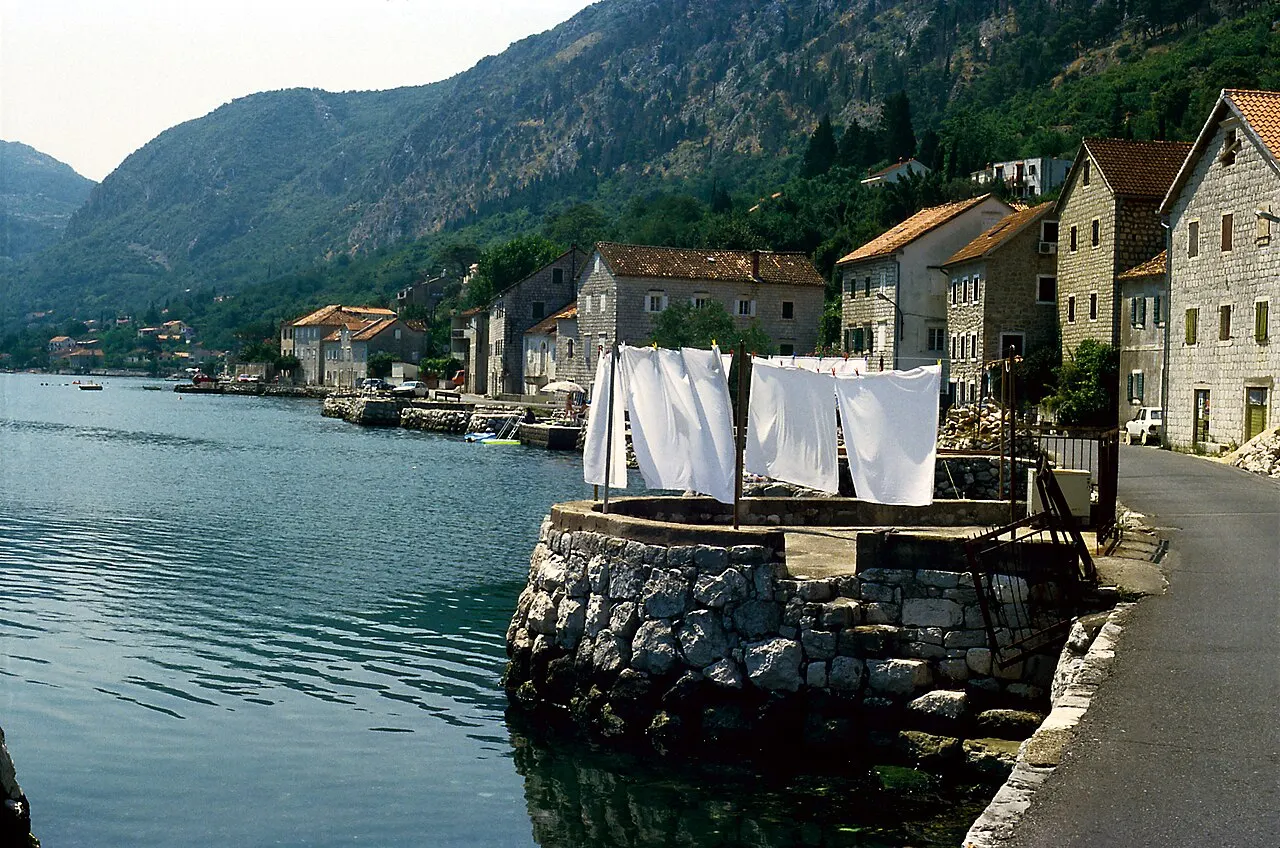
- The nearest far-shore village to Kotor — almost directly opposite the Old Town.
- A thin waterfront strip: stone houses, chapels, bathing ladders and a few cafés.
- A few minutes' drive around the bay into Kotor; sometimes a seasonal boat shuttle — verify it's running.
- Mostly waterfront apartments and guesthouses; quiet, with terraces over the water.
Map pins
Map data © OpenStreetMap contributors · Tiles © OpenFreeMap
Prčanj: captains' palaces and a monumental church
Prčanj continues the western shore south-west of Muo and carries more history on its waterfront. This was a wealthy maritime village — it ran a famous postal-shipping line in the days of sail — and the captains who made fortunes here built grand stone palaces and endowed churches along the shore. The result is a village with real architectural weight for its size: weathered baroque facades, walled gardens and private bathing steps strung along the water, telling the same story of a community that lived by and for the bay.
Prčanj's landmark is impossible to miss: the great waterfront basilica of the Birth of the Virgin (Bogorodičin Hram), a monumental neoclassical church whose scale feels almost startling above so small a village, reached by a broad stairway from the shore. Its presence, and the palaces around it, give Prčanj a grander, slightly more storied feel than Muo — a place to stay if you want the far-shore calm and view with a little more to wander to on foot. As ever with the bay's churches, opening hours can be irregular, so treat a look inside as a bonus and verify times locally.
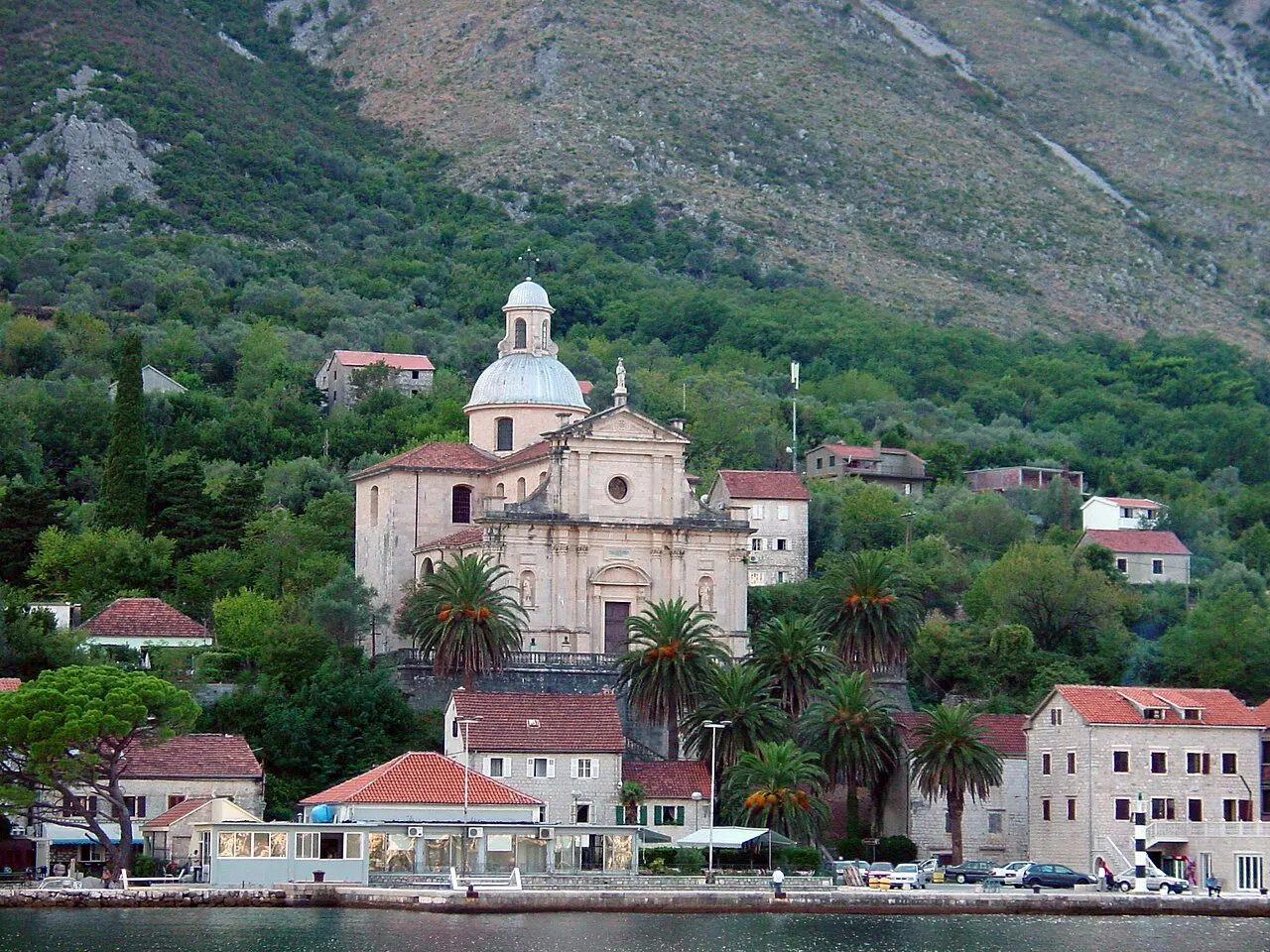
- A wealthy old maritime village with captains' palaces, walled gardens and private bathing steps along the shore.
- Its landmark is the monumental waterfront basilica of the Birth of the Virgin (Bogorodičin Hram).
- A grander, more storied feel than Muo, with a little more to wander to on foot.
- Church opening hours are irregular — treat a look inside as a bonus and verify locally.


The view, the swimming and the romance of the far shore
The single best thing about staying in Muo or Prčanj is the view, and it earns the trade-offs. Because you are across the water, you get the whole of Kotor in one frame: the walled town, the cathedral, the fortress walls climbing the mountain, and — best of all — the lights of the Old Town reflected in the bay after dark. It is the bay's most romantic base for exactly this reason. Couples come here to swap the Old Town's crowds for a quiet terrace, a glass of Vranac and the view changing through golden hour into night.
Swimming is easy and immediate. Like the rest of the inner bay, these villages have no sandy beach — the bay is a deep, steep-sided ria — so you slip into clear, deep water from ladders, flat rocks and concrete platforms along the shore. The water is calm and clean, deep close in, and swimmable well into autumn. With the far-shore villages being quieter, the swimming spots are often less busy than Kotor's nearest bathing platforms, which is part of the appeal. Bring water shoes, pack your own shade for the quieter platforms, and check whether a spot is free public shoreline or part of a café or villa.
- The far-shore view puts the whole of Kotor — walls, cathedral, fortress — in one frame, and its lights in the bay at night.
- The bay's most romantic base for couples who want quiet and the view over the crowds.
- Swim off ladders, rocks and platforms — no sand; the water is clean, deep and swimmable into autumn.
- Bathing spots are often quieter than Kotor's; bring water shoes and your own shade.

Eating and everyday needs on the western shore
Both villages have waterfront konobas and cafés — family seafood taverns with terraces over the bay — serving the classic Boka table: buzara (mussels or mixed shellfish in white wine, garlic and olive oil), fresh fish grilled and priced by the kilo, and Montenegrin wines. There are fewer of them than along Dobrota or in the Old Town, and they are more spread out, so it pays to know your options and book ahead in summer, especially if you do not want to drive into Kotor for dinner. Eating on the far shore is generally calm and good value, with the bay and the lit Old Town as your view.
For everyday needs, both villages have small shops, but the choice is limited — this is a residential shore, not a resort strip. Most people staying here keep a stocked kitchen for breakfasts and lazy lunches and drive or taxi into Kotor (or over to Tivat) for a bigger supermarket shop and the fuller restaurant choice. If self-sufficiency and a quiet terrace dinner sound like the holiday, the far shore is ideal; if you want a wide pick of restaurants on your doorstep every night, the Old Town or Dobrota will suit better.
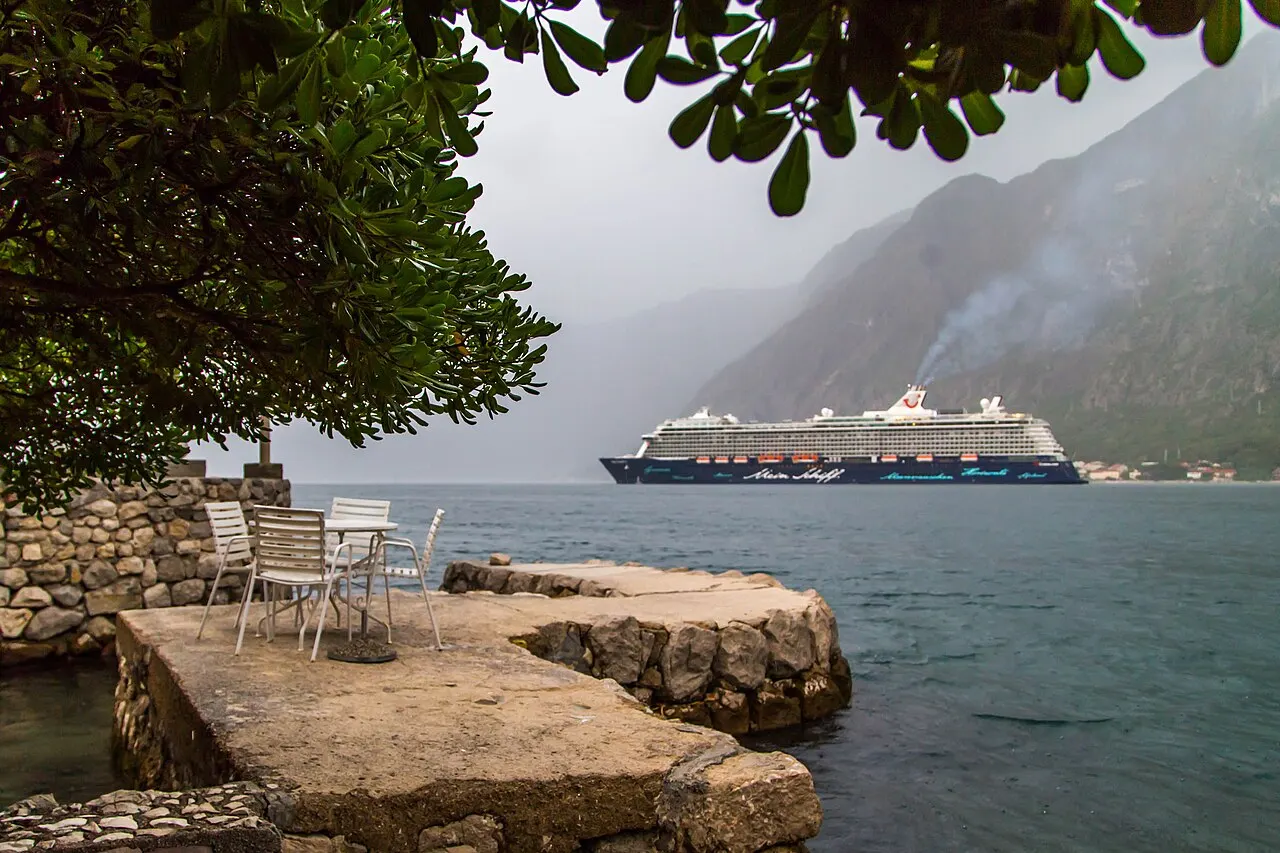
- Waterfront konobas and cafés serve buzara, fresh fish by the kilo and Montenegrin wine — fewer and more spread out than in town.
- Calm and generally good value, with the bay and the lit Old Town as the view.
- Small shops cover basics; most guests keep a kitchen and drive into Kotor or Tivat for a bigger shop.
- Book ahead for dinner in summer if you'd rather not drive into Kotor.

Driving, parking and crossing the bay: the practical trade-offs
Here is the honest part of a Muo or Prčanj stay: you are across the bay, and there is no walking into the Old Town. The villages are linked to Kotor by the bay road, which loops around the head of the water; by car or taxi the trip is short — a few minutes from Muo, a little more from Prčanj — but it is a drive, not a stroll. The regular Kotor-bound buses run the shore road and stop in the villages, so you are not stranded without a car, but services thin out in the evening, so check times if you plan to dine in town and bus back. In season there is sometimes a small passenger boat across the water from Muo, which is by far the nicest way to cross — verify whether it is running before relying on it.
Because of all this, these villages are genuinely car-dependent, and a hire car makes a far-shore base much easier. If you bring one, parking is the saving grace: it is far simpler here than at the car-free Old Town, though the waterfront lanes are narrow and tight in places, so confirm a parking space with your host before booking, especially for a larger vehicle. The same narrowness means the shore road can be slow and pinched in summer — drive it gently. And note that the longer bay loop, plus the Kamenari-Lepetane ferry across the bay mouth, links the far shore on toward Tivat, Herceg Novi and Croatia if you are touring.
A few evergreen notes to close: Montenegro uses the euro, cards are widely taken but cash is handy in small konobas and for boatmen; the bay is best in spring and autumn and hot and busy at the peak; and Kotor is one of Europe's rainier towns in winter. As always, we keep the volatile details — room rates, exact bus, taxi and boat times, parking — out of the prose; verify them before you build a plan around them.
- No walk-in Old Town access — it's a short drive, taxi or bus around the head of the bay (a few minutes from Muo).
- Kotor buses run the shore road but thin out at night; check times if you plan to dine in town.
- A seasonal passenger boat from Muo is the nicest crossing — verify it's running.
- Car-dependent, but parking is far easier than the Old Town; lanes are narrow — confirm a space with your host.
- The bay loop and Kamenari-Lepetane ferry link the far shore on to Tivat, Herceg Novi and Croatia.
Staying in Muo & Prčanj at a glance
Use this quick card to weigh the far shore as a base. The villages, the view, the swimming and the access pattern are evergreen; the volatile details — room rates, exact bus, taxi and boat times, and parking — change with the season and the property, so verify them directly before you book.
- What they are: two quiet waterfront captains' villages on the western (Vrmac) shore, across the bay from Kotor.
- Best for: couples, quiet-seekers and travellers with a car who want the front-row view of the Old Town.
- The draw: a terrace looking straight at Kotor's walls and fortress, and the lights in the bay at night.
- Don't miss: Prčanj's monumental waterfront basilica, the Birth of the Virgin.
- Access: a short drive, taxi or bus around the bay — no walk-in; a seasonal boat sometimes runs from Muo (verify).
- Swimming: off ladders, rocks and platforms — bring water shoes; often quieter than Kotor's.
- Parking: easier than the car-free Old Town, but lanes are narrow — confirm a space with your host.
- Verify directly: room rates, bus/taxi/boat times and parking.

Quiet Places to Stay Around Kotor
Where to sleep away from Old Town noise and cruise crowds: why the walled town is loud, and the quiet bay alternatives — Dobrota, Muo, Prčanj, Perast and the further villages — ranked by stillness, view and how easily you reach the lanes.
Read guide
Best romantic hotels in Kotor
How to choose a romantic hotel around Kotor for two: Old Town character stays, bay-view rooms in Dobrota and across the water, palace stays in Perast, spa and pool retreats, and how to weigh atmosphere against quiet, parking and cruise-day noise.
Read guide
Bay of Kotor
How to explore the Bay of Kotor: the shape of the Boka's four linked basins, and the five ways to experience it — by boat, by bus, by car, on the waterfront on foot, and from a viewpoint above.
Read guideMore in Where to Stay
6Accessible Hotels & Stays in Kotor
Where to stay in Kotor for step-free access: why the cobbled, stepped, car-free Old Town is the hardest base for limited mobility, the flatter bay alternatives like Dobrota and the modern wider-bay hotels, and the access questions to ask before you book.
Read guide
Best apartments in Kotor
How apartment stays work around the Bay of Kotor: why they're the dominant choice here, what a kitchen and space buy you, where to find them by area, and the practical realities — stairs, parking, air-con, bay views and self check-in — to weigh before you book.
Read guide
Best boutique hotels in Kotor
How to find Kotor's most atmospheric boutique stays: restored stone palaces and captains' houses inside the Old Town walls, along the Dobrota and Muo–Prčanj shore, and in baroque Perast — and how to choose by atmosphere, noise, stairs and view.
Read guide
Best budget hotels in Kotor
How to stay cheaply around the Bay of Kotor without losing your days to buses, parking or steep walks: where the value is, what budget looks like here, the shoulder-season and cruise-day pricing tricks, and the hidden costs to weigh before you book.
Read guide
Best family hotels in Kotor
Where families should stay around the Bay of Kotor: why the car-free Old Town is rarely the best base, the calmer bayfront bases that give space, parking, pools and swimming, and the practicalities — kitchens, prams, deep water — that matter most with kids.
Read guide
Best Hotels in Kotor by Area
A practical framework for choosing where to stay around the Bay of Kotor — matching the Old Town, Dobrota, Muo and Prčanj, Perast and Tivat to first-timers, couples, families, drivers, luxury travellers and cruise extensions, with the booking checks that matter.
Read guide