
Bar & Ulcinj Day Trip from Kotor
When Montenegro's far southern coast is worth the long drive from Kotor: Old Bar's ruined hill town and ancient olives, Bar's port, Ulcinj's walled quarter and the great sand of Velika Plaža and Ada Bojana — plus the tradeoffs.

Photo: World of Magic / Unsplash
- ✓Bar and Ulcinj sit at the far southern end of Montenegro's coast — roughly 60–70 km from Kotor to Bar and around 90 km on to Ulcinj, so this is a long, full day, not a half-day stroll.
- ✓The headline sights are unusual and worth the haul: Old Bar (Stari Bar), a romantic ruined town on a hill, its slopes thick with some of the oldest olive trees in the world, and Ulcinj's walled old quarter above the Adriatic.
- ✓Ulcinj is the most Albanian-influenced town on the coast — minarets, a different rhythm and food — and its beaches are the south's great prize: Velika Plaža, a vast belt of sand, and the river-island of Ada Bojana at the Albanian border.
- ✓The honest trade is time on the road. Doing both Bar and Ulcinj from Kotor in a day means a lot of driving; many travellers pick one, or save the south for a coastal road trip with an overnight.
- ✓The Kamenari–Lepetane ferry across the bay mouth shaves the drive south; a hire car gives you the freedom this trip needs, while buses run but eat the day.
- ✓Verify the current ferry and bus times and fares, drive times in summer traffic, and any site entry fees before you build the day around them.
Why go all the way south?
Bar and Ulcinj are the coast's deep south — the stretch most Kotor visitors never reach, which is precisely their appeal. Where Budva and Sveti Stefan are close and polished, the far south is rawer, emptier and stranger: a ruined Ottoman-Venetian town slowly being reclaimed by olive groves, a working port with a hand in trade and ferries to Italy, and a town where the call to prayer drifts over the rooftops and the menus turn toward grilled fish, byrek and strong coffee. This is the part of Montenegro that feels closest to Albania, because it is — Ulcinj sits almost on the border, and the influence runs deep in its language, its food and its mood.
The other reason to come is sand. The Bay of Kotor has lovely coves but little real beach; the south has the country's biggest. Velika Plaža below Ulcinj is a long, shallow belt of grey-gold sand that runs for kilometres, and at its far end the Bojana river splits to form Ada Bojana, a triangular island of sand, reeds and seafood shacks pressed against the Albanian frontier. If your idea of a coast day is a proper beach to walk and swim from, the south delivers it on a scale the inner bay cannot. Below: how to get there, what to actually do, and an honest read on whether to attempt both towns in one day.
How to get there: ferry shortcut, car, bus or tour
The first decision is how to cover the distance, and it shapes everything. By car, the smart move is the Kamenari–Lepetane ferry across the mouth of the bay, which cuts a long loop around the inner Boka and drops you onto the fast coastal road south through Budva and Petrovac toward Bar. From Kotor, reckon on something over an hour to Bar and well over ninety minutes to Ulcinj in good conditions — and more in the summer crush, when the coast road clogs around the resort towns. A hire car is the right tool for this trip: the south is spread out, the best beaches sit beyond the towns, and you will want to set your own pace on a day this long.
Without a car, buses do run down the coast to Bar and Ulcinj from Kotor's station, and Bar even has a railway, but public transport turns an already long day into a marathon of waiting and connections — feasible if you fix on a single town, punishing if you try to see both. Guided day tours to the deep south from Kotor exist but are less common than the Budva and Dubrovnik runs, so check what is actually offered for your dates. Whichever way you go, leave early: the south rewards a dawn start far more than a leisurely one, because the driving is the day's real cost.
- Hire car: the right choice — use the Kamenari–Lepetane ferry to skip the long loop around the bay, then the coast road south.
- Bus: regular but slow; manageable for one town, a slog for both. Bar also has a train station.
- Tour: fewer operators run this far south than to Budva or Dubrovnik — confirm availability for your dates.
- Verify current ferry and bus schedules and fares, and realistic summer drive times, before you commit.
 Practical Travel Tips
The Kamenari–Lepetane ferry, driving the coast road and the logistics behind any Kotor day out.
 Budva Day Trip
The closer, easier coast town on the way south — a gentler alternative to the deep south.
Map pins
Map data © OpenStreetMap contributors · Tiles © OpenFreeMap
Old Bar and the ancient olive trees
Make Stari Bar — Old Bar — your first and best stop. The modern town of Bar sits on the water, a workmanlike port with ferries to Italy, but the old town lies a few kilometres inland on a rocky shelf below the mountains, and it is one of Montenegro's most atmospheric ruins. This was a thriving Venetian and then Ottoman city until a siege and an explosion in the nineteenth century left it broken; today you wander a maze of roofless stone houses, ruined churches, an aqueduct and a hilltop fortress, with the mountains behind and the sea glinting below. It is romantic in the proper sense — a whole town returning to stone and grass, quiet enough to feel you have it to yourself.
The slopes around Old Bar are famous for olives, and the region claims some of the oldest living olive trees on earth. The most celebrated, the Stara Maslina (Old Olive) at Mirovica nearby, is reckoned to be well over two thousand years old, a gnarled survivor fenced and tended as a monument. The whole hinterland is a sea of silver-green groves, and Bar's olive oil is a genuine local pride. Pair the ruined town with a slow look at the trees and a coffee in the little cluster of cafés by the old town gate, and you have the south's most rewarding couple of hours.
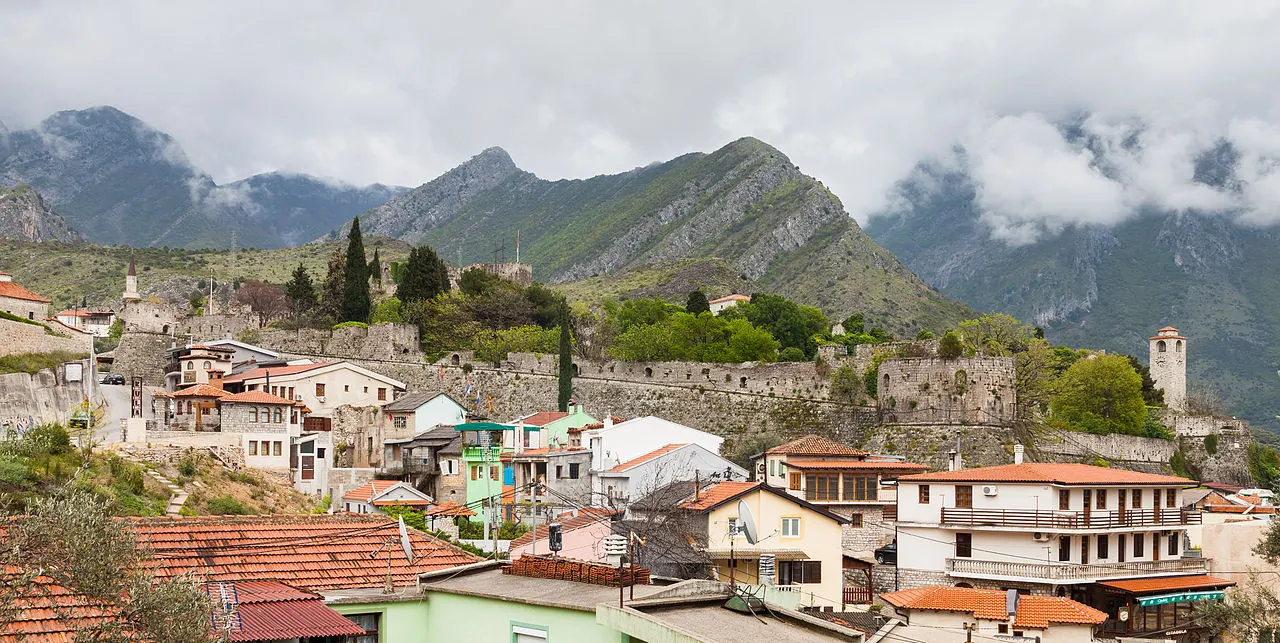
- Stari Bar (Old Bar): a ruined hill town a few km inland — roofless houses, churches, an aqueduct and a fortress to climb for the view.
- The slopes are blanketed in ancient olive groves; the Stara Maslina nearby is said to be over two thousand years old.
- Modern Bar on the coast is a working port with ferries to Italy — useful to know, but the old town is the draw.
- Verify Stari Bar's entry fee and opening hours on arrival; café opening varies by season.

Ulcinj: walled old town and the long sand
Push on south and Montenegro changes character. Ulcinj is the country's southernmost town, the most ethnically Albanian, and the one that feels most like a crossing point between the Adriatic and a wider Mediterranean-Ottoman world. Its old town crowns a rocky headland above the sea — a walled quarter of stone houses, a former citadel and a small museum, with steep lanes dropping to a little harbour and a town beach of dark sand below. The town has a long, layered and sometimes dark history as a port — including a notorious past as a pirate and slave-trading haven — and that depth gives the walled quarter a brooding, lived-in atmosphere quite unlike the polished old towns to the north.
But most people come to Ulcinj for the beaches, and they are the south's great prize. Velika Plaža — the Long Beach — stretches for kilometres east of town: a wide, shallow, grey-gold belt of sand, popular with kitesurfers for its steady wind and so big it rarely feels crowded even in season. Beyond it, where the Bojana river meets the sea on the Albanian border, lies Ada Bojana, a sandy island ringed by river and sea, fringed with reeds, wooden seafood restaurants on stilts, and a long-standing naturist tradition at its far end. A swim and a plate of fresh fish out here, with Albania across the water, is about as far from the cruise-busy bay as Montenegro gets.
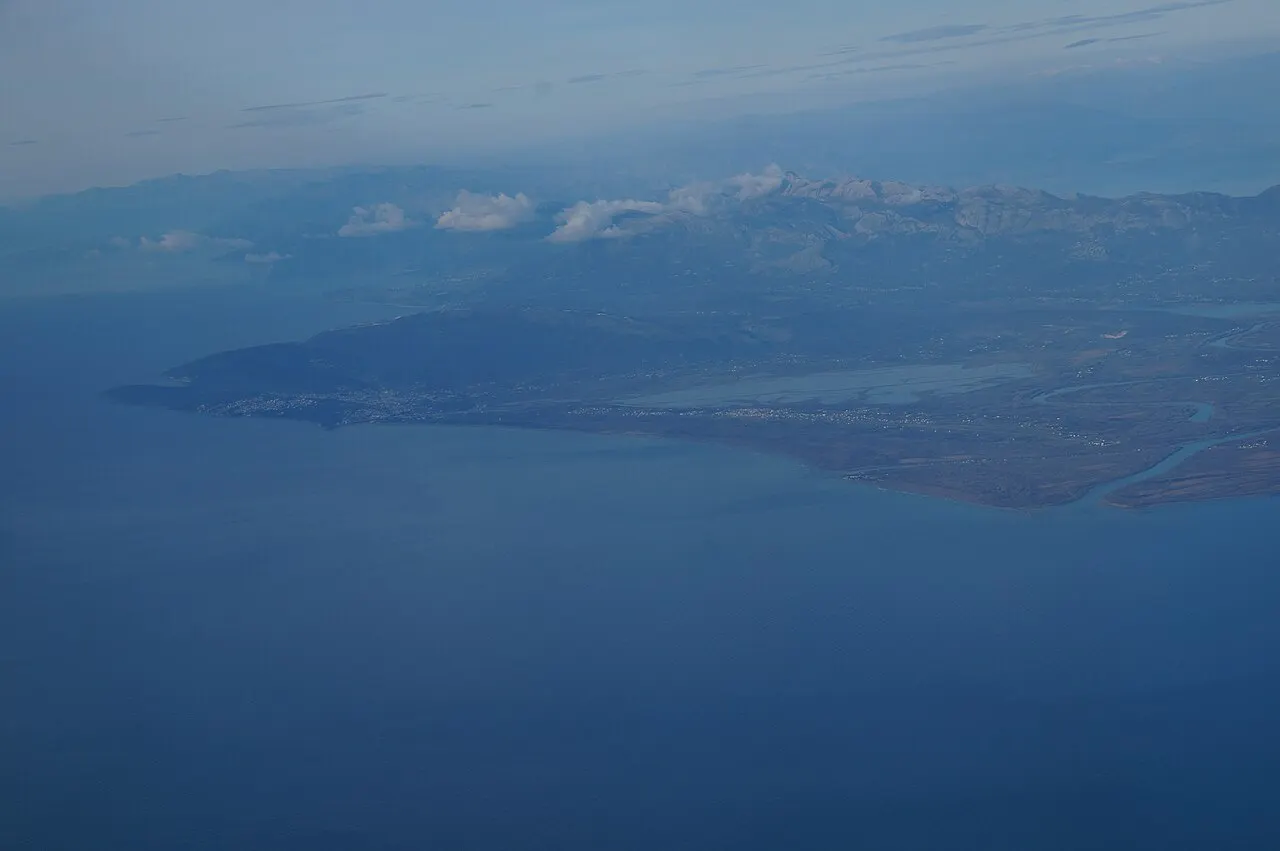
- Ulcinj's walled old town sits on a headland — stone lanes, a citadel, a museum and a town beach of dark sand below.
- Velika Plaža: a kilometres-long belt of shallow sand east of town, beloved by kitesurfers and rarely crowded.
- Ada Bojana: a sandy river-island at the Albanian border with stilted fish restaurants and a naturist tradition.
- Verify any beach-club or parking charges and seasonal restaurant openings, especially out at Ada Bojana.

The honest tradeoff: one day, both towns?
Here is the candid verdict, because the south's distance demands one. Doing Bar and Ulcinj as a single day trip from Kotor is possible by car, but it is a big day — several hours of driving bracketing whatever time you spend, and if you try to fit Stari Bar, the old town of Ulcinj and a beach swim into one round trip you will spend more of the day on the road than off it. It can be done, and a dawn start with the ferry shortcut makes it manageable, but you should go in clear-eyed about the trade.
Our honest advice: if you have only one day and want the south, pick a focus. Choose Old Bar and the olive trees if ruins and atmosphere pull you; choose Ulcinj and Velika Plaža or Ada Bojana if it is sand and a swim you are after. Better still, save the far south for a proper coastal road trip — Budva and Sveti Stefan one day, Bar and Ulcinj the next, with a night somewhere along the way so the driving stops eating your time. The south is genuinely special, but it rewards travellers who give it room rather than those racing back to Kotor for dinner. If you do return to the bay the same night, you will appreciate the quiet lanes all the more for the long day on the road.
- Both towns in a day by car is doable but driving-heavy — start at dawn and use the ferry to make it work.
- Short on time? Pick one: Old Bar for ruins and olives, Ulcinj for the walled town and the great beaches.
- Best of all: fold the south into a multi-day coast road trip with an overnight so the drives stop dominating.
- Verify drive times for your dates — summer coast traffic can add a lot to every leg.
Bar & Ulcinj day trip at a glance
Use this card to set the shape of a long day south. The distances, the old towns, the olive trees and the beaches are evergreen; the volatile details — ferry and bus times and fares, drive times in summer traffic, site entry fees and beach charges — change by season and operator, so verify them from official and operator sources before you rely on them.
- Distance: roughly 60–70 km Kotor to Bar, around 90 km on to Ulcinj — a long, full day, not a half-day.
- Getting there: hire car (best, via the Kamenari–Lepetane ferry), coast buses (slow), or a rarer guided tour.
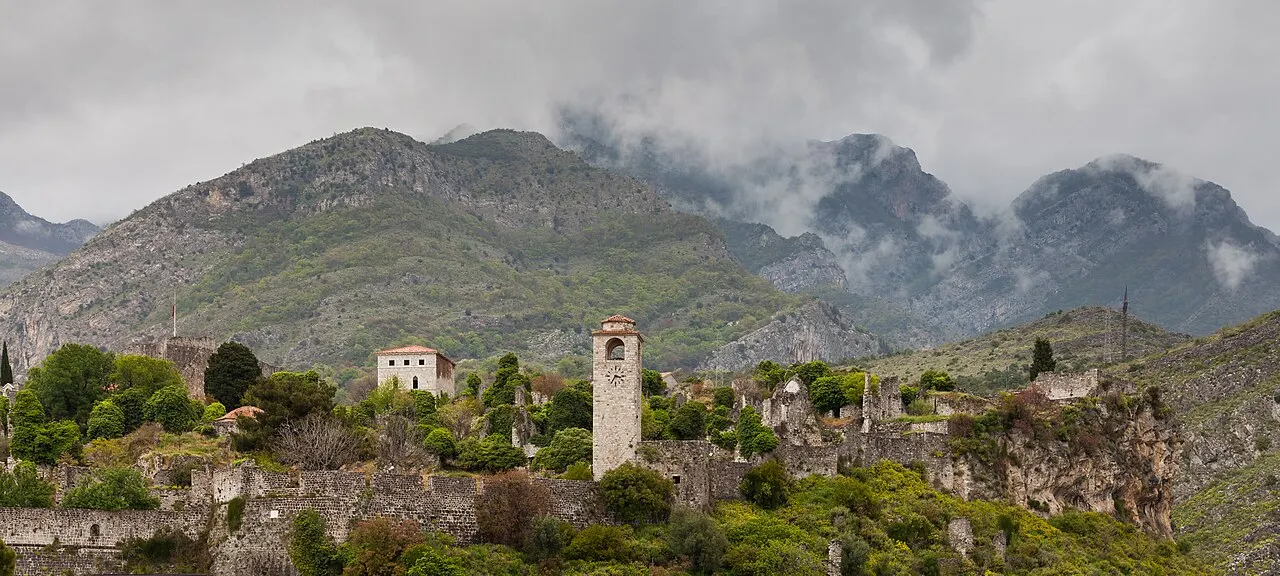
- Old Bar: ruined hill town and fortress a few km inland, ringed by some of the world's oldest olive trees.
- Ulcinj: walled headland old town, plus Velika Plaža and the river-island of Ada Bojana on the Albanian border.
- Mood: the south is rawer, quieter and more Albanian-influenced than the bay — its own world.
- Verify locally: ferry and bus times and fares, summer drive times, Stari Bar entry, and any beach/parking charges.

Best Day Trips from Kotor
The hub for day trips from Kotor: the bay classics of Perast and Tivat, the mountain day to Lovćen and Cetinje, the coast at Budva, Sveti Stefan and Herceg Novi, cross-border Dubrovnik, and the inland wonders of Skadar Lake, Ostrog and Durmitor.
Read guide
Montenegro Coast Itinerary from Kotor
Using Kotor as a base for the Montenegrin coast: a day-by-day plan fanning out to Budva and its riviera, Sveti Stefan, Tivat and Porto Montenegro, Herceg Novi at the bay mouth, the Luštica peninsula and the quiet bay villages — then back to Kotor's lanes each night.
Read guideBudva Day Trip from Kotor
How to do Budva as a day trip from Kotor: the short coast drive, the bus and tour options, the walled Old Town, the riviera beaches and nightlife, and an honest verdict on how long Budva really needs.
Read guideMore in Day Trips
6
Cetinje Day Trip from Kotor
How to day-trip from Kotor to Cetinje, Montenegro's old royal capital: getting there over Lovćen or by the faster road, the royal palace and museums, the Cetinje Monastery and its relics, the old embassies, and pairing the visit with Lovćen — with planning notes.
Read guide
Dubrovnik Day Trip from Kotor
Making Dubrovnik a day trip from Kotor: the cross-border distance, the two crossings and their summer queues, tour versus self-drive, how the day shapes up, and an honest verdict on when it is simply too ambitious.
Read guide
Durmitor Day Trip from Kotor
How to reach Durmitor National Park and the Black Lake from Kotor: the long drive north, what the park holds, the season, getting there by car or tour, and the honest day-trip-versus-overnight tradeoff for Montenegro's high mountains.
Read guide
Herceg Novi Day Trip from Kotor
How to do Herceg Novi as a day trip from Kotor: the drive with the Kamenari–Lepetane ferry shortcut, the stepped Old Town and its fortresses, the long seafront promenade and beaches, and when Herceg Novi beats Budva.
Read guide
Lovćen Day Trip from Kotor
How to day-trip from Kotor to Lovćen National Park: the four ways up — the old serpentine road, the Kotor–Lovćen cable car, an organised tour or a private driver — the Njegoš Mausoleum on its peak, the Njeguši stop, the viewpoints, timing, and an FAQ.
Read guide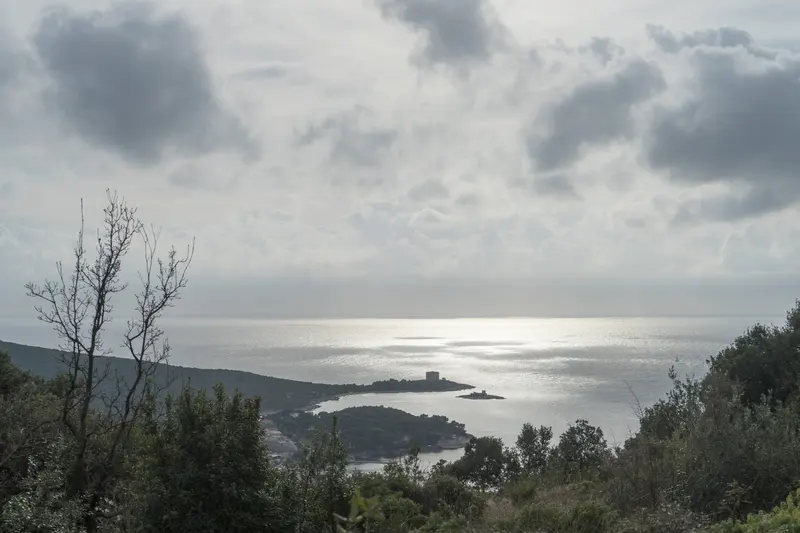
Luštica Peninsula from Kotor
How to plan a Luštica Peninsula day from Kotor: the two ways in — by boat for the Blue Cave and outer coves, or by road via the ferry for the beaches and villages — plus the best swimming, the villages, and how to shape the day.
Read guide