
Christmas & New Year in Kotor
What Christmas and New Year are like in Kotor — a quiet, lamplit, often wet off-season Old Town with festive lights and a New Year's Eve celebration on the squares, hearty winter food and the calm the summer never offers.

Photo: vadym merzlikin / Unsplash
- ✓Kotor at Christmas and New Year is the opposite of its summer self: quiet, lamplit, atmospheric and almost empty of cruise crowds.
- ✓Festive lights string through the Old Town squares and lanes, and an open-air New Year's Eve celebration on the main square is the season's highlight.
- ✓Montenegro is largely Orthodox, so the bigger religious Christmas falls on 7 January (Julian calendar), with traditions like the badnjak yule log on Christmas Eve.
- ✓Winter is the wettest, mildest season — pack for rain and short days, but expect far softer prices and a calmer town.
- ✓Some restaurants and boat tours scale back or close off-season, so check opening hours and verify the year's New Year programme before you go.
Kotor in its quiet season
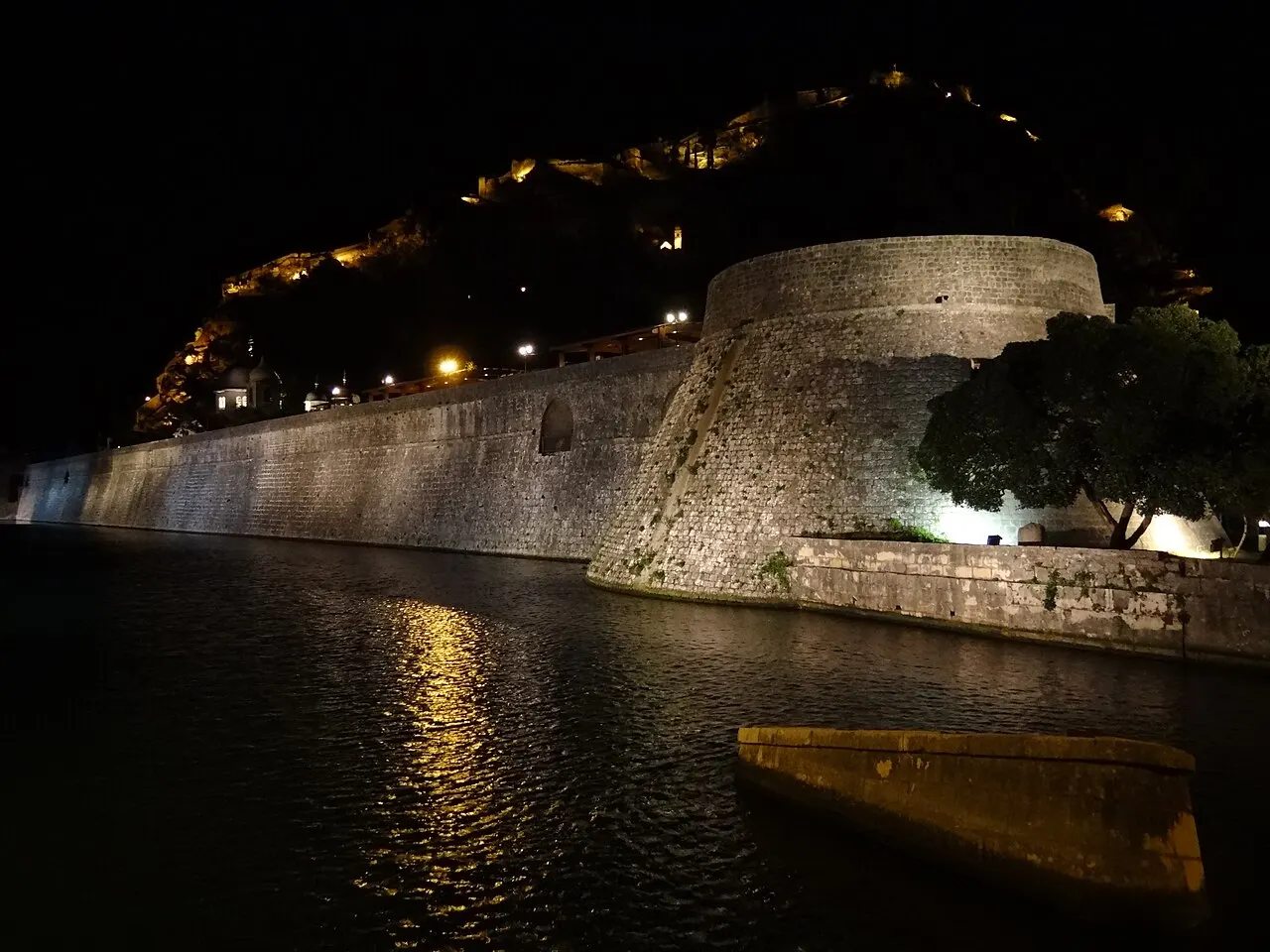
If you only know Kotor from summer photographs, its winter self comes as a revelation. With the cruise ships gone and the day-trippers home, the Old Town empties back into something close to a working medieval town: lamplit lanes, the resident cats, locals at the cafés, and the great walls floodlit above a hushed, often glistening-wet square. Christmas and New Year are the most atmospheric weeks of this quiet season — the stone strung with festive lights, the squares dressed for the holidays, and the whole place wrapped in a calm the summer never allows.
This is Kotor for travellers who want romance over spectacle. The trade is real: shorter days, the chance of rain, and a town running at a slower, partly-shuttered winter rhythm. But in return you get the lanes almost to yourselves, the squares lit and decorated, hearty winter food, and the kind of soft, off-season prices that make a special trip affordable. For couples especially, a lamplit Christmas stay inside the walls is one of the most quietly romantic things the bay offers all year.

Festive lights and New Year on the square
The visible heart of the season is the lights. In the weeks around the holidays the Old Town's squares and lanes are strung with festive decorations, and the main square typically hosts a programme of seasonal events — markets, music and family activities — that give the town a glow and a gentle bustle quite unlike the summer rush. It is small-scale and local rather than a mega-event, and that is exactly its charm: a community keeping the dark weeks bright.
The peak is New Year's Eve. Like much of the region, Kotor marks the night with an open-air celebration on the main square — live music and a crowd seeing the year in together, usually with fireworks over the bay or the town at midnight. It is free, festive and far more intimate than a big-city countdown, with the floodlit walls as a backdrop. The exact programme, performers and timings are set each year, so treat them as things to confirm close to the date rather than fixed facts, and arrive on the square in good time if you want to be in the thick of it.
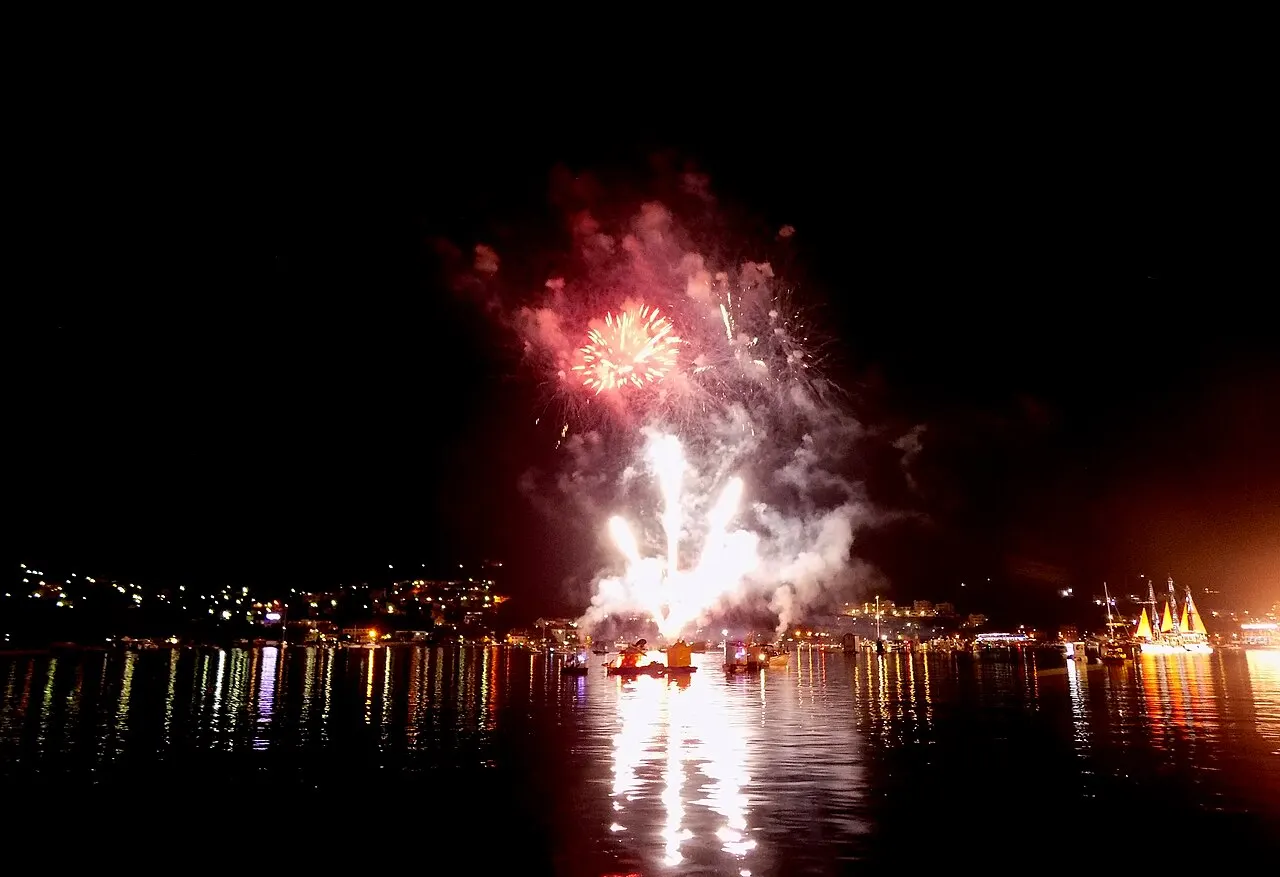
- Festive lights and a small seasonal programme — markets, music, family events — fill the Old Town squares around the holidays.
- New Year's Eve brings an open-air celebration on the main square, usually with live music and midnight fireworks.
- It is free and intimate rather than a mega-countdown — arrive early for a spot, and verify the year's programme.
Map pins
Map data © OpenStreetMap contributors · Tiles © OpenFreeMap
Two Christmases, and what to expect
One thing surprises many first-time visitors: in Montenegro the bigger Christmas is not 25 December. The country is predominantly Orthodox, and the Serbian Orthodox Church follows the Julian calendar, so the principal religious Christmas falls on 7 January, with Christmas Eve — Badnji dan — on 6 January. Traditions cluster around that date, including the badnjak, an oak yule log or branch brought in and burned on Christmas Eve. The Catholic communities of the Boka, with their long Venetian heritage, mark 25 December, so the wider season effectively stretches from late December through to the Orthodox Christmas and on past the Orthodox New Year in mid-January.
Practically, that means the festive atmosphere lingers longer than you might expect, but it also means the public holidays, church services and which days are quietest can differ from a Western European Christmas. If a particular date matters to you — a special dinner, an open church, a market — check what is actually happening on that day for the current year rather than assuming the 24th–26th pattern from home. The season's rhythm here is its own.
- Montenegro is largely Orthodox: the main religious Christmas is 7 January, with Christmas Eve (Badnji dan) on 6 January.
- The badnjak — an oak yule log burned on Christmas Eve — is the season's signature tradition.
- Catholic Boka communities also mark 25 December, so the festive season stretches from late December into mid-January.
Weather, winter food and where to stay
Be honest with yourself about the weather. Kotor's winters are mild rather than cold — snow in the town itself is uncommon — but they are wet: tucked under the mountains at the head of the bay, Kotor is one of the rainiest places in Europe, and December and January see plenty of it. Pack a proper waterproof, expect short days, and plan a stay that embraces the indoors — long lunches, museums, candlelit dinners — rather than fighting for sightseeing weather. When the rain clears, the bay under low winter cloud is hauntingly beautiful, and the walls climb, far emptier than in summer, is yours if conditions allow.
Winter is the season for Kotor's heartiest food, and the menus turn warming: rich seafood stews and buzara, grilled bay fish, Njeguši prosciutto and cheese off the mountain, slow-cooked meat, and a glass of robust Vranac by a fire. Note that some restaurants and most boat tours scale back or close in the off-season, so check opening hours rather than assume, and book a festive or New Year's Eve dinner ahead — the places that do stay open fill on the big nights. For where to sleep, this is the one time of year a room inside the walls is both atmospheric and quiet; a romantic bolthole in the Old Town, or a cosy bay-view base nearby, makes the most of the season.
- Mild but very wet — Kotor is among Europe's rainiest towns in winter; pack waterproofs and plan for short days.
- Hearty winter food: seafood stews, grilled fish, Njeguši prosciutto and cheese, slow meat and a glass of Vranac.
- Some restaurants and most boat tours scale back off-season — verify opening hours and book festive dinners ahead.

Kotor Events Calendar
The year-round guide to Kotor's festivals and traditions: the winter and summer Carnivals, the KotorArt summer festival, the great Bokeljska Noć on the bay, the Fašinada at Perast, the Boka Navy's St Tryphon traditions, and the festive season.
Read guide
Kotor in December
What Kotor is like in December: festive lights and squares dressed for Christmas and New Year, hearty winter food and warm konobas, moody bay views, quiet low-priced hotels, and weather-flexible plans for the short, wet days.
Read guide
Best romantic hotels in Kotor
How to choose a romantic hotel around Kotor for two: Old Town character stays, bay-view rooms in Dobrota and across the water, palace stays in Perast, spa and pool retreats, and how to weigh atmosphere against quiet, parking and cruise-day noise.
Read guideMore in Events
6Boka Navy Traditions in Kotor
A guide to the Boka Navy (Bokeljska Mornarica) of Kotor — one of the world's oldest maritime confraternities, its ties to St Tryphon and the 3 February feast, the ceremonial kolo round dance before the cathedral, and the gold-braided historic uniforms, plus how to witness it and where it fits in a Kotor stay.
Read guide
Bokeljska Noć (Boka Night)
A guide to Bokeljska Noć — Kotor's late-summer festival of decorated, illuminated boats on the bay, closing with fireworks over the water — including where to stand, the waterfront crowds and where to stay.
Read guide
Camellia Days in Stoliv
A guide to Camellia Days (Praznik kamelija) in Stoliv — the quiet Vrmac-shore village that is the Bay of Kotor's camellia heart, a flower the captains brought home from the Far East and now a symbol of the Boka, celebrated each spring with blooms, a camellia ball and gentle bay walks, plus how to fold it into a Kotor stay.
Read guideFašinada in Perast
A guide to the Fašinada — Perast's centuries-old tradition, held every 22 July, when at dusk a procession of boats rows out to Our Lady of the Rocks and drops stones to reinforce the island — with its legend, timing and how to watch respectfully.
Read guideKotor Carnival Guide
A planning guide to Kotor's Carnival in both its forms — the centuries-old winter Carnival of masks and parades through the off-season Old Town, and the summer Carnival in the warm months: what to expect, when each falls, hotel timing and crowds.
Read guideKotor Children's Theatre Festival
A family guide to Kotor's international children's theatre festival — a long-running summer fixture that fills the Old Town's squares with puppetry, street theatre, shows and a children's parade — with how to find the programme, when shows run, ticket and free-event tips, and where to stay with kids.
Read guide