
Driving in Kotor and Montenegro
What it's really like to drive in Kotor and Montenegro: narrow two-lane bay roads and summer traffic, the white-knuckle serpentine, tunnels, the Kamenari–Lepetane ferry shortcut, rental and cross-border cautions, parking, fuel and mountain-route planning.

Photo: Laurynas Žižys / Unsplash
- ✓Montenegro's roads are spectacular but slow — mostly two narrow lanes hugging the bay and the mountains, with little room to overtake.
- ✓Map distances flatter the reality: winding roads and summer traffic mean a short drive can take far longer than you expect.
- ✓The famous Kotor–Njeguši–Lovćen serpentine is thrilling and beautiful but demanding — tight hairpins, narrow sections and oncoming buses.
- ✓The Kamenari–Lepetane ferry across the bay mouth is the great shortcut, saving the long drive around when you head north or to Croatia.
- ✓Kotor's Old Town is car-free, so plan to park outside the walls, and expect tight spaces and a summer crunch.
- ✓Carry the right documents, confirm a hire car may cross any border you plan to use, and verify fuel, ferry and toll details before you set off.
What driving the bay is really like
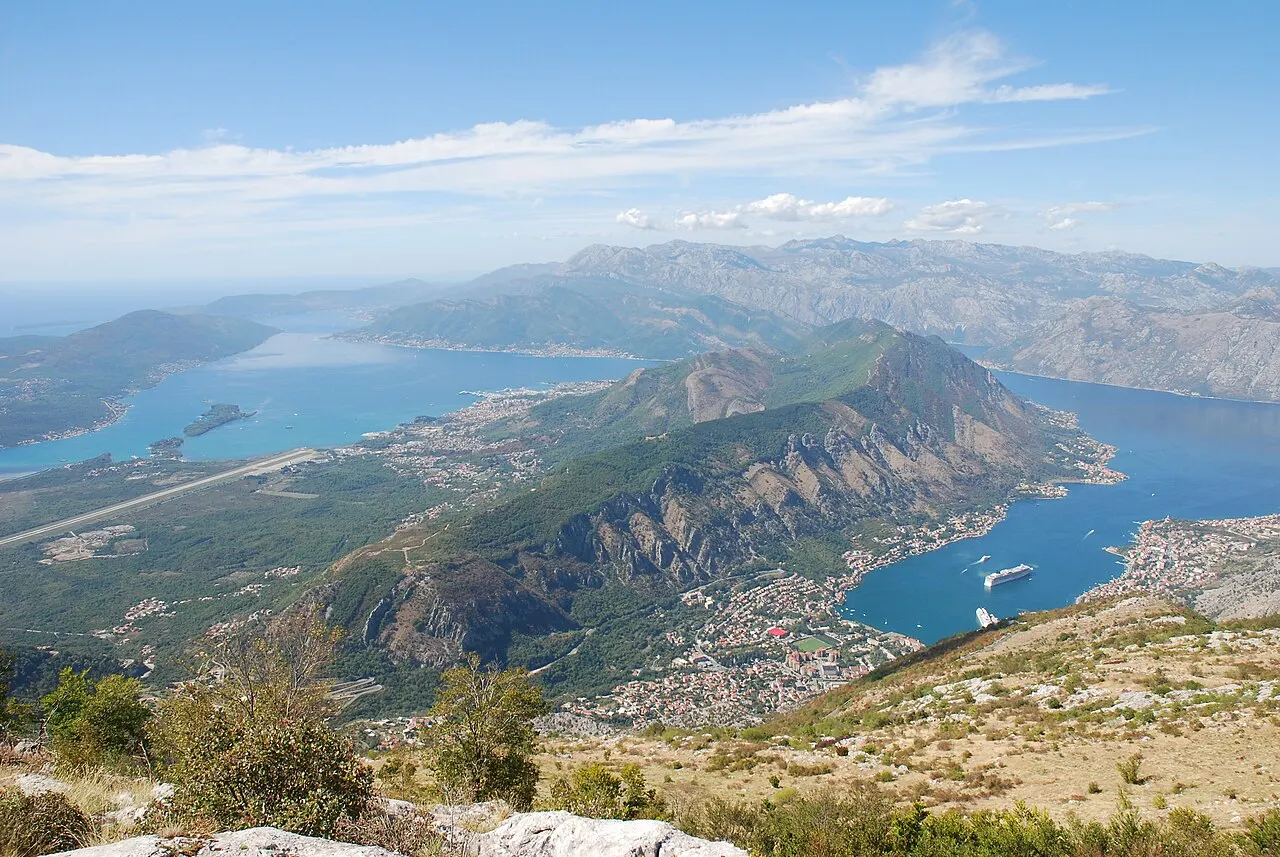
Driving in and around Kotor is one of the great pleasures of a Montenegro trip and one of its quiet challenges, often in the same five minutes. The Bay of Kotor is a flooded river canyon with mountains rising almost vertically from the water, so the road has nowhere to go but along the very edge — which gives you a near-continuous reveal of water, walls and captains' villages, and also a road that is mostly two narrow lanes, threaded through old stone settlements with little room to spare. It is beautiful, and it is slow.
The single most useful mindset is to treat the slowness as the point. Allow far more time than the map suggests, drive gently, and stop often at the proper laybys. Summer compounds everything: the shoreline road, Perast and the serpentine all clog from late morning through the afternoon, so the early hours and the evening are calmer and far better both for driving and for the views. Drive the bay this way and it is a joy; rush it and it is a grind.

The roads: serpentines, narrow lanes and tunnels
Two kinds of road define driving here. The first is the shoreline: winding, two-lane, pinched in places where old houses crowd the carriageway, shared with buses, scooters, cyclists and pedestrians. The second is the mountain road — above all the legendary serpentine that switchbacks up the wall behind Kotor toward Njeguši and Lovćen. It rewards you with the single greatest aerial view in the country, looking straight down on the walled town and the whole bay, but it is genuinely demanding: tight hairpins, sections narrow enough that two vehicles must take turns, and tour coaches coming the other way on blind bends.
A few habits keep it safe and enjoyable. On blind mountain corners a tap of the horn is normal and expected — locals do it constantly. Let faster traffic pass at the laybys, drive the serpentine only in good weather and clear visibility, and consider going up one way and down another, or skipping the driving on a guided tour if hairpins worry you. Watch too for the occasional unlit tunnel and for rain that makes the serpentine genuinely slippery. If heights and bends make you nervous, this is not a route to force.
- Shoreline roads: narrow two-lane, shared with buses, scooters, cyclists and pedestrians — drive slowly.
- The serpentine: iconic views but tight hairpins, single-vehicle squeezes and oncoming coaches.
- Tap the horn on blind mountain corners; let faster traffic pass at the laybys.
- Drive the serpentine only in good weather; watch for unlit tunnels and slippery rain.
Map pins
Map data © OpenStreetMap contributors · Tiles © OpenFreeMap
The ferry shortcut and route planning
Not every bay journey should be a full loop, and the smartest move in a Montenegro road trip is knowing when to take the ferry. The Kamenari–Lepetane car ferry crosses the narrow mouth of the bay and turns what can be an hour or more of winding shoreline road into a short hop across the water — invaluable when you are heading north toward Herceg Novi and Croatia, or out toward the Luštica peninsula. It is a working car ferry, frequent and quick, that simply slots into your drive, with a small scenic bonus thrown in.
For wider route planning, lean on the same principle of generous time. The mountains — Lovćen, Cetinje and the routes north to the Tara Canyon and Durmitor — are spectacular but slow, and best given a full day or an overnight rather than squeezed in. Keep the tank reasonably full, as fuel stations thin out on the higher and quieter roads, and carry water. Verify ferry timetables and fares, and any toll on routes you plan to use, from official sources before you rely on them, since these change with the season and operator.
- Use the Kamenari–Lepetane ferry to shortcut the long inner-bay drive north or toward Luštica/Croatia.
- Treat mountain routes (Lovćen, Cetinje, the north) as a full day or an overnight, not a quick add-on.
- Keep the tank full and carry water — services thin out on higher, quieter roads.
- Verify ferry times/fares and any tolls before you build a route around them.
Rental cars, borders and documents
Most visitors who drive Montenegro do it in a hire car, and a little admin saves trouble. Confirm with the rental company what is and isn't allowed — above all, whether the car may cross any border you plan to use. A trip to Dubrovnik in Croatia, for instance, needs the company's permission and the correct cross-border insurance (a green card or equivalent), or you can be turned back or charged at the frontier. Check too for any limits, the excess and the condition of the car before you drive off, photographing existing scratches.
On documents and rules, the essentials are the standard European ones: a valid driving licence, the car's registration and insurance papers, and the usual safety kit many countries require. Drive on the right, mind the speed limits and police checks, which are common, and never drink and drive — enforcement is strict. We keep volatile specifics such as fuel prices, fines and exact insurance requirements out of the prose because they change; verify them with your rental firm and official sources before you set off.
- Confirm a hire car may cross any planned border, with valid cross-border (green-card) insurance.
- Check limits, excess and existing damage before driving off; photograph any scratches.
- Carry licence, registration, insurance and the usual required safety kit; drive on the right.
- Mind speed limits and police checks; do not drink and drive — enforcement is strict.
Parking and the car-free Old Town
One rule overrides all the others when you reach Kotor itself: you cannot drive into the Old Town. The walled town is a car-free warren of stone lanes, so every visitor parks outside the gates and walks the few minutes in. Aim for the paid lots and street zones just outside the walls or along the waterfront and main road, and expect spaces to be tight — worst on cruise days and through high summer, easiest early in the morning or in the evening.
For anyone touring by car, the simplest fix is to base somewhere with its own parking — typically a hotel or apartment along the bay rather than inside the centre — so you never join the daily scramble near the gate. Read the parking signs and pay properly wherever you leave the car, since Montenegro's coastal towns enforce parking and a wrongly parked car risks a fine. When in doubt, choose a marked, attended lot over an uncertain street spot.
- The Old Town is car-free — park outside the walls and walk in.
- Spaces are tightest on cruise days and in summer; arrive early or in the evening.
- Base at a bay-side hotel or apartment with parking to skip the daily scramble.
- Pay properly and read the signs — wrongly parked cars risk a fine.

Driving in Montenegro at a glance
Use this card to set expectations before you take the wheel. The roads, the geography and the rules-of-thumb are evergreen; the volatile details — fuel prices, ferry fares, tolls, fines and rental insurance specifics — change, so verify them from official and operator sources before you rely on them.
- Expect narrow, winding two-lane roads — beautiful but slow; allow far more time than the map suggests.
- Drive the bay early or in the evening to dodge the midday summer clog.
- The serpentine is iconic but demanding — clear weather, slow pace, horn on blind bends.
- Use the Kamenari–Lepetane ferry to shortcut the long way round.
- Confirm cross-border rules and insurance on a hire car before any border run.
- Park outside the car-free Old Town; base where parking is easy.
- Verify locally: fuel, ferry fares, tolls, fines and rental insurance details.

Bay of Kotor Scenic Drives
The best drives around the Bay of Kotor: the shoreline loop through Perast and the captains' villages, the white-knuckle Kotor–Lovćen serpentine, the Kamenari–Lepetane ferry shortcut, plus photo stops, summer traffic and driving cautions for each.
Read guide
Kamenari–Lepetane Ferry Guide
The Kamenari–Lepetane car ferry across the mouth of the Bay of Kotor: where it runs, when it saves real time versus driving around, how to use it step by step, what to verify, and when the scenic shoreline drive is the better choice.
Read guide
Njeguši & the Serpentine Road
How to plan the old serpentine road above Kotor to Njeguši — the hairpin climb out of the bay, the famous viewpoints, the pršut-and-cheese stop, when to go, who should drive it, and the traffic-rule caveats to verify.
Read guideMore in Practical
6
Accessible Kotor Travel Guide
An honest accessibility guide to Kotor — the flat-but-cobbled Old Town, the stair-only fortress climb, cruise-port access, taxis and transfers, level waterfront walks, museums, accessible hotels, and realistic routing that plays to the town's strengths.
Read guide
Best Time to Visit Kotor
A month-by-month guide to the best time to visit Kotor, weighing cruise crowds, fortress-climb heat, boat-trip and swimming season, rain, prices and the bay's calendar of events.
Read guideDubrovnik to Kotor
How to get from Dubrovnik to Kotor: the cross-border bus, the hire car, the private transfer, the two border crossings and their summer queues, whether it works as a day trip, and when staying overnight is the better call.
Read guideGetting Around Kotor
How to get around Kotor and the Bay of Kotor: when to walk, take a local bus, hail a taxi, hop a boat, drive and park, use the Kamenari–Lepetane ferry, or book a private driver.
Read guide
How to Get to Kotor
How to get to Kotor: the three nearest airports — Tivat, Podgorica and Dubrovnik across the border — plus bus, car, cruise ship and private transfer, with a practical FAQ.
Read guide
Is Kotor Safe?
Practical, honest safety advice for Kotor — wandering the Old Town, night walks, boat trips, the fortress climb, driving the mountain roads, solo and female travel, and cruise-day crowds.
Read guide