
Kotor Bus Station Guide
How Kotor's bus station works: where it sits just outside the Old Town, the routes along the bay and coast, buying tickets, the small luggage charge, taxis, and realistic expectations for getting around the Boka by public transport.

- ✓Kotor's bus station sits just southeast of the Old Town, a short, flat walk of a few minutes from the main Sea Gate.
- ✓It is the hub for the whole region: frequent buses run along the bay and down the coast to Budva, plus services to Tivat, Herceg Novi, Podgorica, Dubrovnik and beyond.
- ✓Two layers of service overlap here — comfortable intercity coaches you buy a ticket for, and the cheaper, frequent local Blue Line buses along the bay and coast.
- ✓Buy intercity tickets at the station counter or online; pay the driver on local buses. Expect a small extra charge for hold luggage.
- ✓Public transport covers the coast and bay towns well but thins out for the mountains and quiet villages — for those, a taxi, transfer or hire car fills the gaps.
- ✓Verify timetables, fares and the luggage charge before you rely on them — they shift by season and operator.
Where the bus station is — and the walk into town
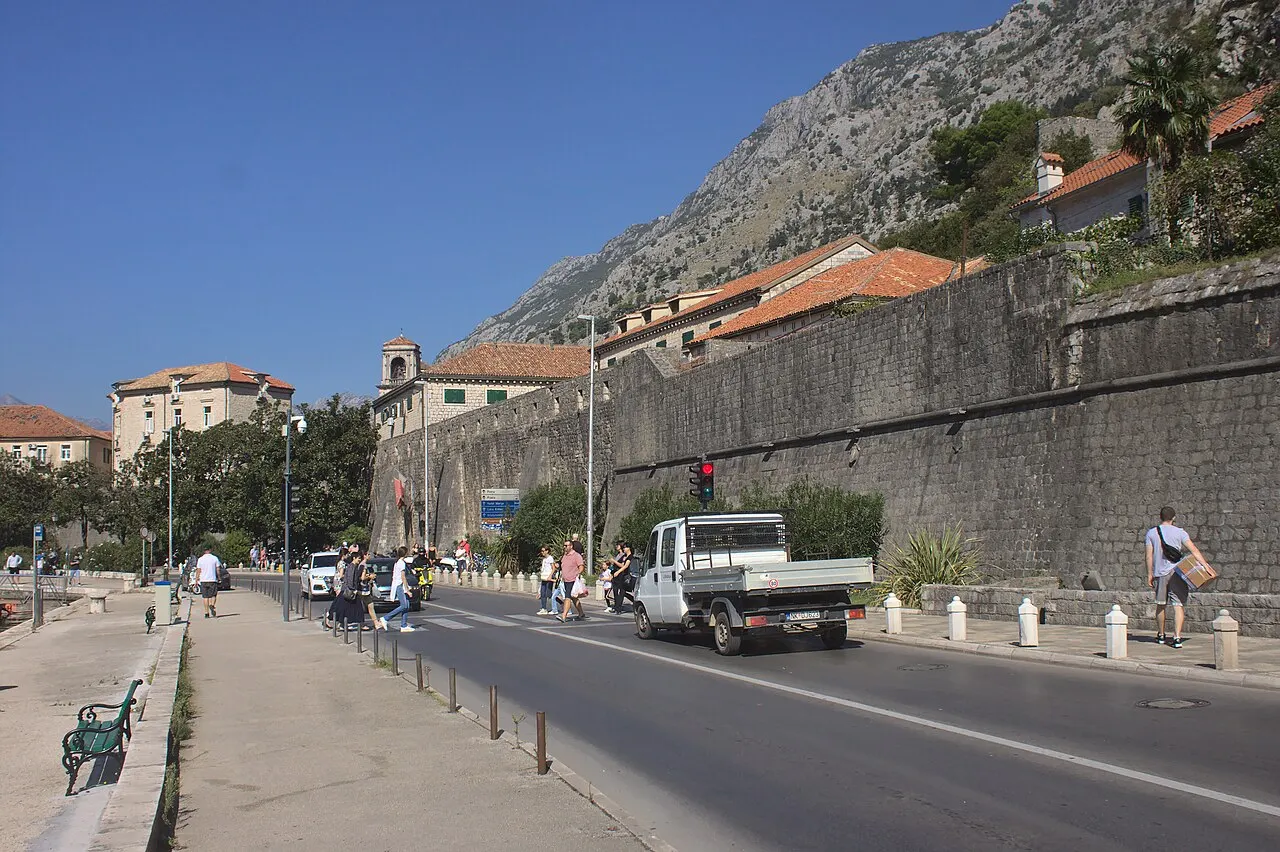
Kotor's bus station (Autobuska stanica Kotor) sits just outside the Old Town to the southeast, where the main coastal road skirts the walls. That location is one of the genuinely convenient things about arriving in Kotor: there is no long transfer and no need for a taxi to reach the centre. From the station forecourt it is a short, flat walk of only a few minutes to the main Sea Gate and the heart of the walled town — you simply roll your bag along the road beside the walls and you are there.
That proximity cuts both ways for planning. It means a bus is a perfectly civilised way to arrive or leave, dropping you almost at the gate. It also means you should not over-think the logistics: there is no airport-style shuttle network to learn, just a short stroll. The station itself is modest — a forecourt of bays, ticket windows, a small café and a luggage office — rather than a grand terminal, which suits the scale of the town.


Where the buses go: routes from Kotor
For its size, Kotor is remarkably well connected, because it sits on the main coastal corridor. The single most useful route is the run down the coast to Budva — frequent, quick and cheap, it is the spine of the region's public transport and the easiest day trip you can make without a car. Heading the other way, buses serve the bay and the western coast toward Herceg Novi, and inland services climb to Podgorica, the capital, with onward connections across Montenegro.
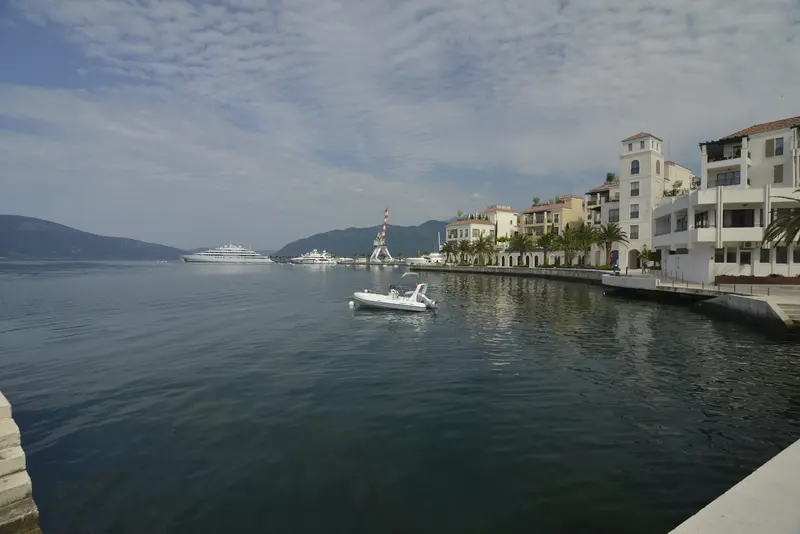
Closer to home, buses also reach Tivat (handy for the airport and Porto Montenegro) and trace the inner bay toward Perast and Risan, putting the captains' villages within reach of those travelling light. Cross-border coaches link Kotor with Dubrovnik in Croatia, handling the frontier for you. In short: the coast and the bay towns are well covered, while the mountains and the quieter corners need a different plan.
- Down the coast: frequent, cheap buses to Budva — the region's busiest and most useful route.
- Around the bay: services toward Tivat, Herceg Novi, and the inner-bay villages of Perast and Risan.
- Inland & beyond: buses to Podgorica and onward across Montenegro.
- Cross-border: coaches to Dubrovnik (Croatia), with the border handled en route.
 Budva Day Trip from Kotor
The easiest bus day out — frequent services down the coast.
 Tivat from Kotor
The marina town and airport, reachable by the bay road.
 Dubrovnik to Kotor
The cross-border coach and the other ways across the frontier.
Map pins
Map data © OpenStreetMap contributors · Tiles © OpenFreeMap
Intercity coaches vs local Blue Line buses
It helps to understand that two different layers of bus overlap at Kotor. The first is the intercity network: comfortable coaches running scheduled services to Budva, Podgorica, Herceg Novi, Dubrovnik and the rest, operated by various companies. For these you buy a ticket — at the station counter or, increasingly, online — and you may be assigned a seat. These are the buses you take for any journey of real distance.
Overlapping with them, especially on the busy coastal stretch, are the local Blue Line (Blue Line / Mediteran-style) buses — cheaper, more frequent, and aimed at locals hopping between the bay and coast towns. On these you typically pay the driver as you board and there is no reservation; you just turn up and ride. For short hops like Kotor to Budva or along the bay, the local bus is often the simpler, cheaper choice; for longer or cross-border journeys, the intercity coach is the one to book.
- Intercity coaches: scheduled, more comfortable, ticketed at the counter or online — for longer journeys.
- Local Blue Line buses: cheaper, more frequent, pay-the-driver — best for short coastal and bay hops.
- Both use the same station; choose by distance and how much you value comfort vs frequency.
Tickets, luggage and a few station tips
Buying a ticket is straightforward. For intercity services, use the ticket windows in the station building or book online in advance — worth doing in high summer when popular departures can fill. For local coastal buses you generally just pay the driver in cash as you get on, so keep small euro notes and coins handy. Montenegro uses the euro, and while cards are common in shops, the bus is one place where cash still smooths things along.
One quirk to expect: a small extra charge for stowing a bag in the hold, paid separately to the driver or loader, common across the Balkans. It is minor but catches first-timers out, so have a coin or two ready. Beyond that, the usual sense applies — arrive a little early for a booked coach, keep your passport accessible on cross-border services, and check whether your bus terminates at Kotor or is passing through. We deliberately keep fares, the luggage charge and timetables out of the prose because they change; verify them at the station or with the operator.
- Intercity: buy at the counter or online (book ahead in peak summer). Local buses: pay the driver in cash.
- Carry small euro notes and coins — cash rules on the buses even though cards are common elsewhere.
- Expect a small separate charge to put a bag in the hold — have a coin ready.
- Arrive early for booked coaches; keep your passport handy on cross-border routes.
Realistic expectations: what the bus can and can't do
Public transport in the Boka is good for what it is designed to do and patchy beyond that, and it is worth setting expectations honestly. The coastal and bay corridor — Kotor to Budva, around toward Tivat and Herceg Novi, up to Podgorica — is well served, affordable and easy. If your plans run along that line, you genuinely do not need a car, and the bus is a relaxed, scenic way to travel with someone else doing the driving on the winding roads.
Where it falls short is the off-corridor stuff: the mountain villages, Lovćen and Cetinje, the quieter coves, and any schedule that wants you somewhere specific at an odd hour. Frequencies thin out, last buses can be early, and connections are not always neat. For those, a taxi, a pre-booked transfer, a guided tour or a hire car fills the gap. The honest planning rule is to use the bus for the coast and the bay towns, and to arrange something else for the mountains and the margins of the day.
- Great for: the coastal/bay corridor — Budva, Tivat, Herceg Novi, Podgorica — frequent and cheap.
- Weaker for: the mountains (Lovćen, Cetinje), quiet villages and late or awkward hours.
- Check the last departure before relying on a bus back, especially off-season.
- Fill the gaps with a taxi, transfer, tour or hire car for off-corridor trips.
Taxis and the last leg
Taxis wait at and around the bus station and are the obvious choice for anything the bus does not reach — a late arrival, the climb to a mountain village, a door-to-door run to your hotel along the bay, or the airport at Tivat. Use official taxis, and agree the fare or confirm the meter is running before you set off; for longer or fixed routes (the airport, a day trip) a quoted price up front is normal and saves any haggling later.
But for most arrivals, the last leg needs no vehicle at all. Because the station is right beside the Old Town, you will usually just walk the few minutes to the Sea Gate and into the lanes — bag in hand, the walls rising beside you, the town opening up ahead. It is a quietly lovely way to arrive in Kotor, and a reminder of how compact and human-scaled this corner of the bay really is.
- Taxis wait at the station — best for late arrivals, the mountains, the airport or a hotel along the bay.
- Use official taxis; agree the fare or confirm the meter before setting off, and ask for a quote on fixed routes.
- For most arrivals you simply walk the few minutes from the station into the Old Town — no taxi needed.
Kotor bus station at a glance
Use this quick card to plan an arrival, a departure or a bus day trip. The station's location, the routes and how ticketing works are evergreen; the volatile details — timetables, fares and the hold-luggage charge — change, so verify them at the station or with the operator before you rely on them.
- Location: just southeast of the Old Town, a short flat walk to the Sea Gate.
- Best route: frequent, cheap buses down the coast to Budva; plus Tivat, Herceg Novi, Podgorica and cross-border Dubrovnik.
- Two layers: ticketed intercity coaches and pay-the-driver local Blue Line buses.
- Tickets: counter or online for coaches; cash to the driver on local buses. Carry small euro notes and coins.
- Expect a small separate charge for hold luggage.
- Reality: excellent for the coast and bay towns, thin for the mountains and odd hours — fill gaps with taxis or a car.
- Verify locally: timetables, fares and the luggage charge.

Kotor Without a Car Itinerary
How to enjoy Kotor and the Bay of Kotor entirely car-free: a walkable Old Town, the bus station just outside the walls, local buses along the bay, boats to Perast, taxis to fill the gaps, and honest verdicts on which day trips work without a car.
Read guide
Getting Around Kotor
How to get around Kotor and the Bay of Kotor: when to walk, take a local bus, hail a taxi, hop a boat, drive and park, use the Kamenari–Lepetane ferry, or book a private driver.
Read guideBudva Day Trip from Kotor
How to do Budva as a day trip from Kotor: the short coast drive, the bus and tour options, the walled Old Town, the riviera beaches and nightlife, and an honest verdict on how long Budva really needs.
Read guideMore in Practical
6
Accessible Kotor Travel Guide
An honest accessibility guide to Kotor — the flat-but-cobbled Old Town, the stair-only fortress climb, cruise-port access, taxis and transfers, level waterfront walks, museums, accessible hotels, and realistic routing that plays to the town's strengths.
Read guide
Best Time to Visit Kotor
A month-by-month guide to the best time to visit Kotor, weighing cruise crowds, fortress-climb heat, boat-trip and swimming season, rain, prices and the bay's calendar of events.
Read guideDriving in Kotor and Montenegro
What it's really like to drive in Kotor and Montenegro: narrow two-lane bay roads and summer traffic, the white-knuckle serpentine, tunnels, the Kamenari–Lepetane ferry shortcut, rental and cross-border cautions, parking, fuel and mountain-route planning.
Read guideDubrovnik to Kotor
How to get from Dubrovnik to Kotor: the cross-border bus, the hire car, the private transfer, the two border crossings and their summer queues, whether it works as a day trip, and when staying overnight is the better call.
Read guide
How to Get to Kotor
How to get to Kotor: the three nearest airports — Tivat, Podgorica and Dubrovnik across the border — plus bus, car, cruise ship and private transfer, with a practical FAQ.
Read guide
Is Kotor Safe?
Practical, honest safety advice for Kotor — wandering the Old Town, night walks, boat trips, the fortress climb, driving the mountain roads, solo and female travel, and cruise-day crowds.
Read guide