
Mamula Island
Understanding Mamula, the fortress island at the mouth of the Bay of Kotor: its Austro-Hungarian fort, its dark wartime past, the recent hotel conversion and the controversy around it, and how to see it from the water on a bay-mouth boat tour.
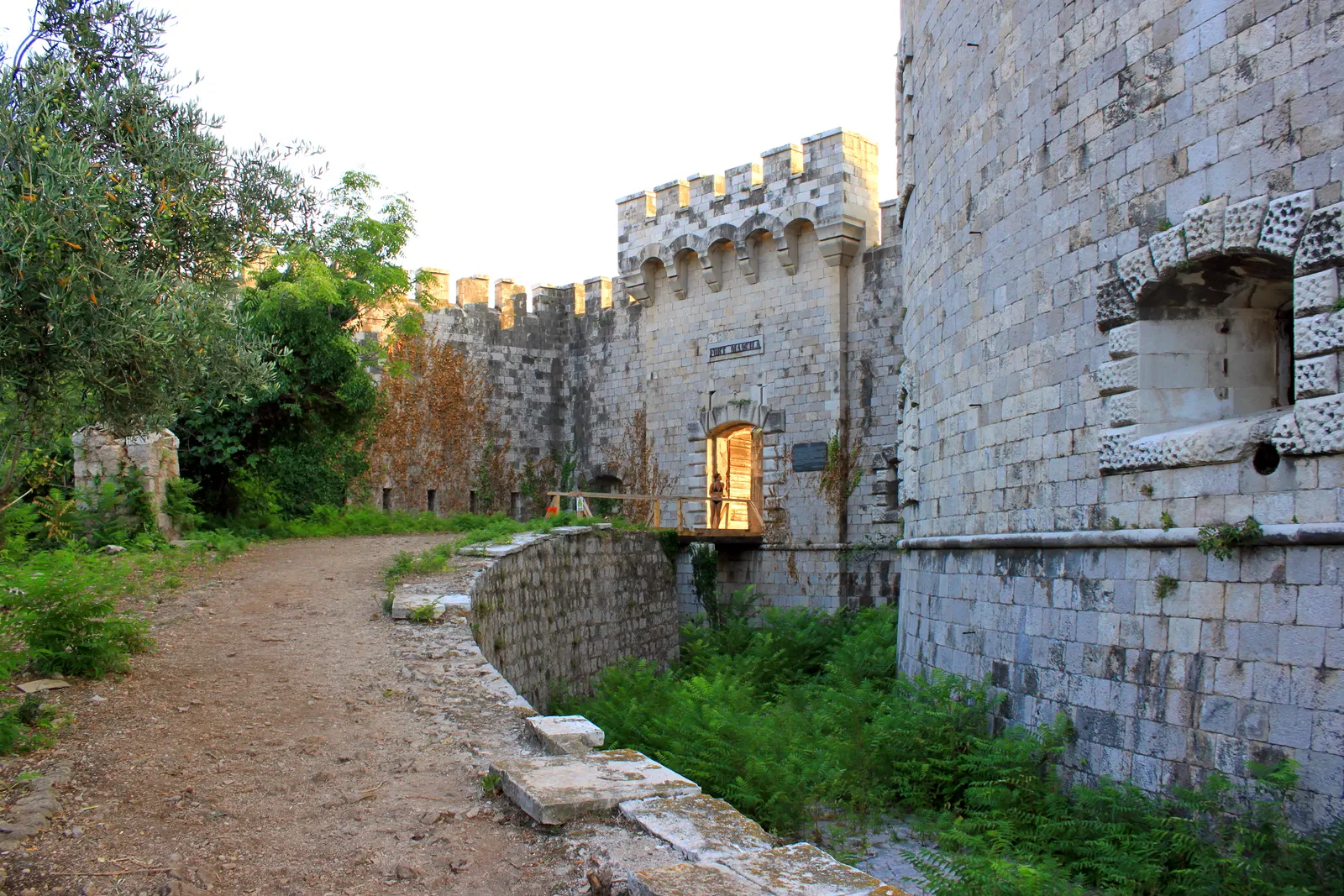
Photo: Marcin Konsek / Wikimedia Commons · CC BY-SA 4.0
- ✓Mamula is a small fortress island — properly named Lastavica — guarding the very mouth of the Bay of Kotor, where the Boka opens to the Adriatic.
- ✓A circular 19th-century Austro-Hungarian fortress covers almost the whole island, built to defend the bay's narrow entrance.
- ✓Its history is grim as well as grand: during the Second World War the fort was used as a prison and internment camp, and that memory shapes how the island is regarded today.
- ✓In recent years Mamula was redeveloped as a luxury island resort — a conversion that drew real controversy given the site's past.
- ✓For most visitors it is a powerful thing to see from a boat rather than a casual stop; access depends on the resort and the operator, so verify before counting on landing.
- ✓It pairs naturally with the Blue Cave, the submarine tunnels and the Luštica coves on the same outer-bay boat day.
What Mamula is, and where it sits
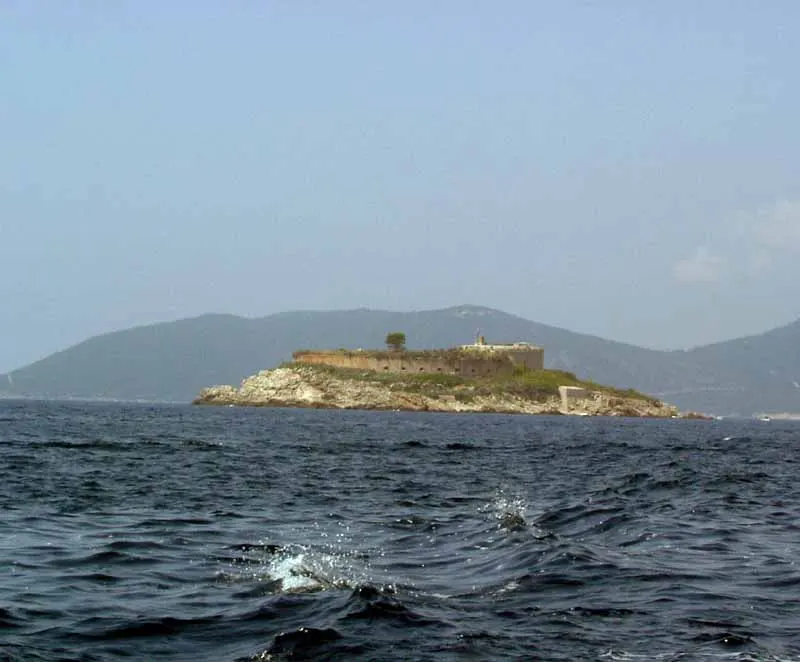
Few sights catch the eye at the mouth of the Bay of Kotor like Mamula: a low, round island almost entirely filled by a stone fortress, standing alone in open water where the sheltered Boka gives way to the Adriatic. Its formal name is Lastavica, but everyone calls it Mamula after the Austro-Hungarian general who ordered the fort built. From a boat it reads instantly as what it is — a purpose-built sea fortress, guarding the gateway to one of the great natural harbours of the eastern Adriatic.
Geographically, Mamula sits right at the bay's threshold, between the tip of the Luštica peninsula and the Prevlaka headland, commanding the narrow channel that ships must pass to enter the Boka. That position is the whole point of it: nothing could slip into the bay without coming under the fort's guns. Today the same position makes it a dramatic landmark on any boat trip that ventures out to the bay mouth, rising from the sea like a stone crown on its tiny island.
Because it is an island, Mamula is firmly part of the bay's boat-trip world rather than its road network. You will see it, photograph it and circle it from the water — and whether you can set foot on it at all depends on the resort that now occupies it and on the operator you travel with. More on that below; for now, picture it as the great fortified full stop at the end of the bay.
The fortress: an Austro-Hungarian sea fort
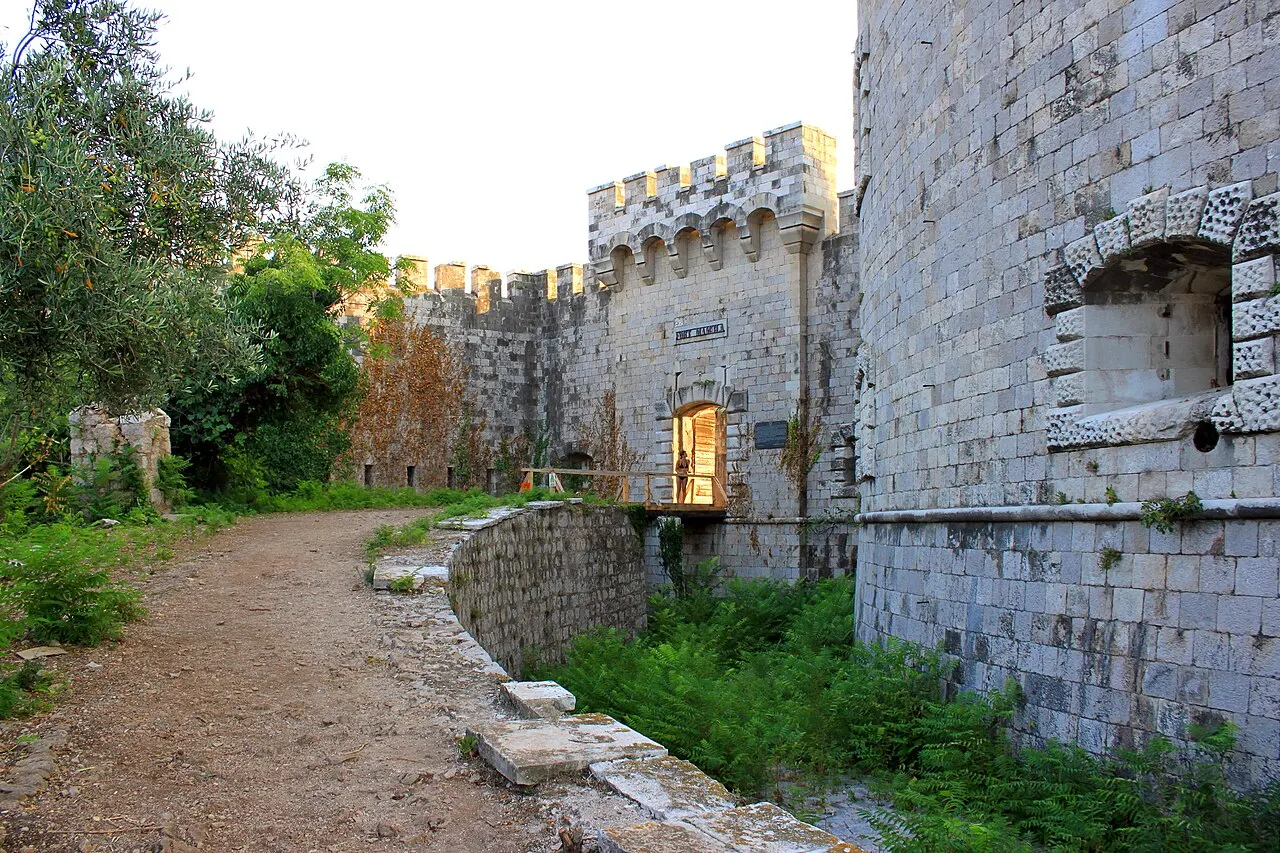
The building that covers Mamula is a fortress of the Austro-Hungarian era, raised in the 19th century when the empire controlled this coast and fortified the Bay of Kotor as a key naval position. It is a compact, roughly circular fort of solid stone, designed to mount artillery covering the bay's entrance in every direction. Stand off it in a boat and you can read the military logic in the masonry: thick walls, gun positions facing the open channel, the whole structure hunkered low and hard against the sea.
Mamula did not stand alone. It was one node in a wider ring of coastal defences — forts, batteries and, later, the submarine tunnels cut into the cliffs nearby — that together turned the bay into a guarded fortress harbour across successive eras. Seeing Mamula alongside those other relics on a single boat day gives you a vivid, joined-up sense of how seriously this gentle-looking bay was defended over the centuries.
Architecturally it is impressive precisely because it is so single-minded: an island given over almost entirely to one defensive building, with little else on the rock. That austerity is part of what makes it photogenic and a little forbidding — and what made its later history all the more sombre. For exact construction dates and the fort's full military service record, lean on a reputable history source rather than any single online summary, which often blur the details.
- A 19th-century Austro-Hungarian sea fort, named for the general who built it.
- Roughly circular and solid stone, designed to cover the bay's narrow entrance with artillery.
- One part of a wider ring of forts, batteries and tunnels defending the Boka.
- Verify exact construction dates and service history against a reputable source.
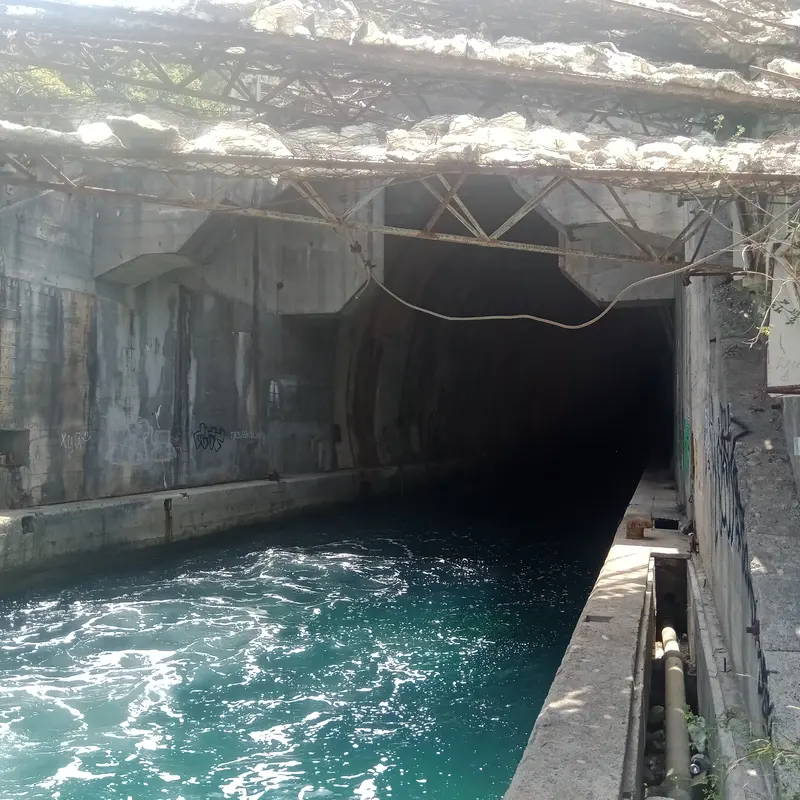 Submarine Tunnels
The 20th-century pens that joined Mamula in defending the bay mouth.
 Bay of Kotor & Boat Tours
How the bay's defences read as one story from a single boat trip.
Map pins
Map data © OpenStreetMap contributors · Tiles © OpenFreeMap
A dark history: the wartime camp
Mamula's grandeur as a fortress is shadowed by a much darker chapter. During the Second World War, under the occupation of this coast, the fort was used as a prison and internment camp. People were held there in harsh conditions, and the island became a place of suffering — a history that local communities remember and that is central to any honest account of the site. It is impossible to write about Mamula purely as picturesque scenery; the stones carry this memory.
That past is why the island matters to people far beyond its architecture, and why later plans for it became so charged. For descendants of those imprisoned there and for the wider region, Mamula is not simply an abandoned curiosity but a site associated with real loss. Visitors who understand that bring the right frame of mind to seeing it — appreciating the drama of the fort while remembering what happened within its walls.
If you want the specifics of the wartime period — who ran the camp, the numbers held there, the dates — seek them out from credible historical and memorial sources, and treat sensationalised retellings with care. The essential, well-documented point is simple and sobering: this beautiful island fort was, within living memory, a place of imprisonment, and that history deserves acknowledgement rather than a glossed-over mention.
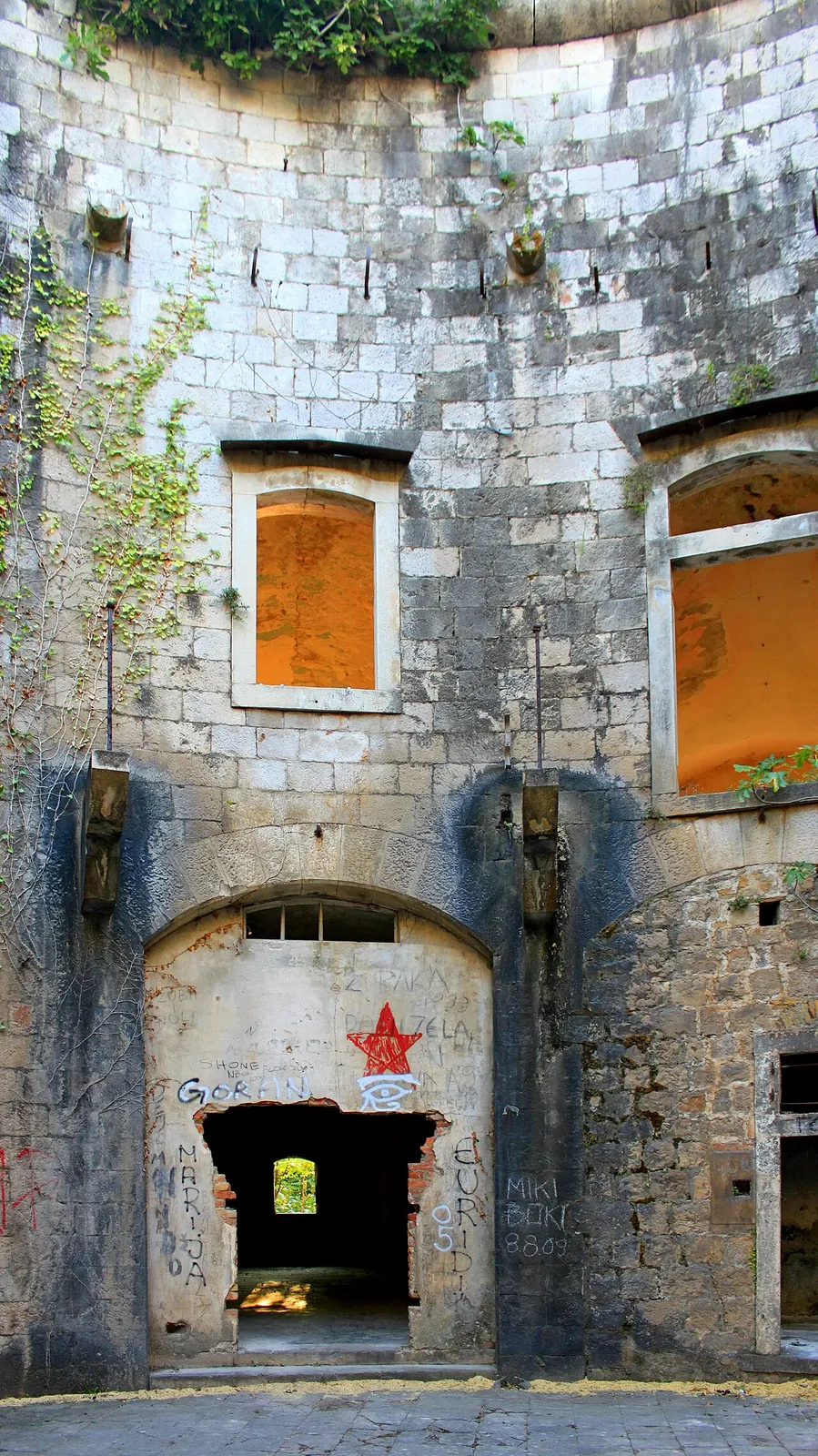
- During the Second World War the fort was used as a prison and internment camp.
- It is a site of real suffering that local communities and descendants remember.
- That memory is central to how the island is regarded — not just picturesque scenery.
- For specifics (who, how many, exact dates), rely on credible historical and memorial sources.

The hotel conversion and the controversy
In recent years Mamula has had a third life. After standing abandoned for decades, the island and its fortress were redeveloped into a luxury island resort — the historic walls repurposed around a high-end hotel, with the kind of pool, bar and suite offering you would expect of an exclusive island getaway. It is, on its own terms, a striking piece of adaptive reuse: a once-derelict sea fort turned into one of the more unusual places to stay on the Adriatic.
But that conversion was, and remains, controversial. Turning a site associated with wartime imprisonment and suffering into a luxury resort struck many people — survivors' families, local communities and commentators among them — as deeply inappropriate, and the project drew significant criticism. The tension is real and worth knowing: what one party presents as sensitive restoration, others experience as the commercialisation of a place of memory. We flag this not to take a side for you, but so you can form your own view with the full picture.
Practically, the redevelopment also changed how the island is accessed. As a private resort, Mamula is no longer simply an open ruin to land on and wander; access for non-guests depends on the resort's policies and on what the boat operators arrange, and these things change. So if landing on the island — rather than seeing it from the water — matters to you, treat it as something to verify directly and currently, rather than assume. Prices, stay packages and any day-visit arrangements are exactly the kind of volatile detail we keep out of the prose; check official and current sources.
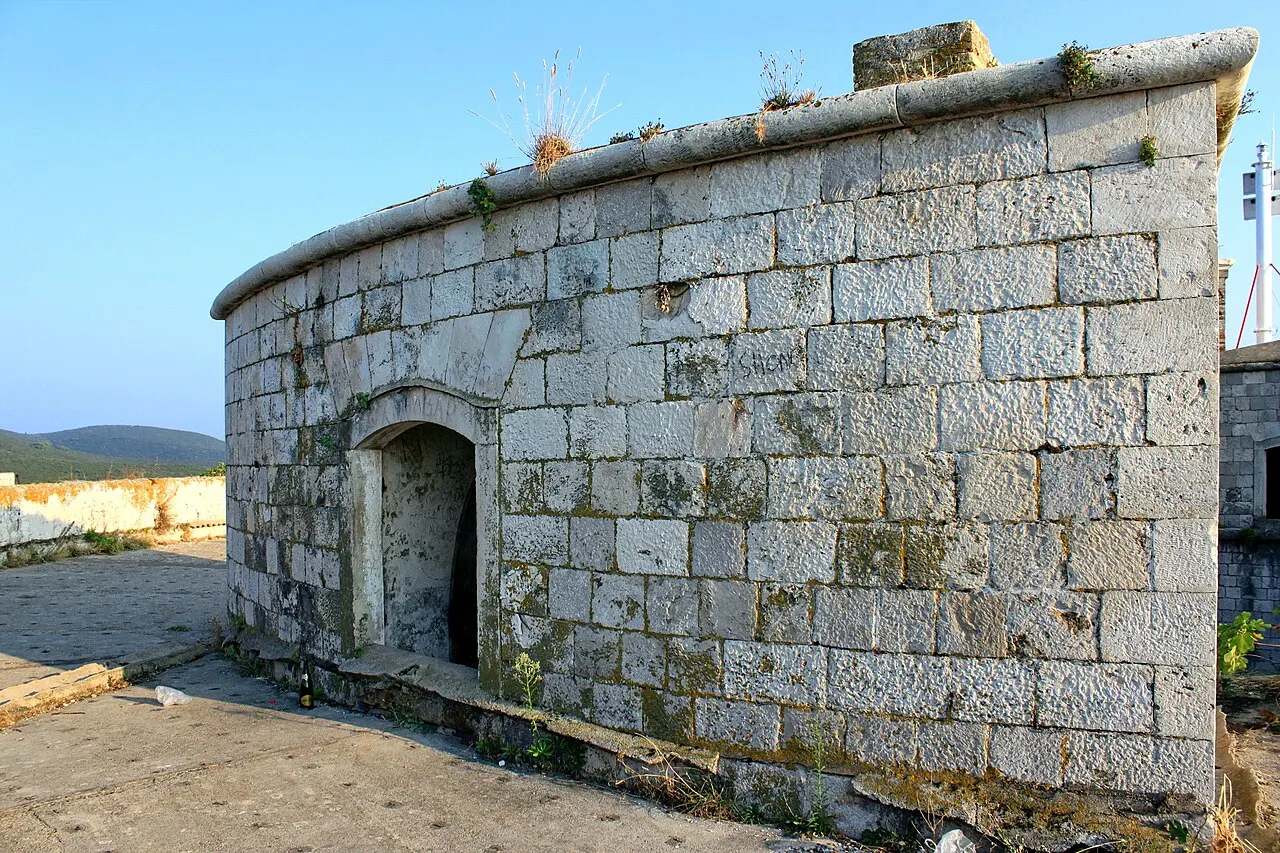
- The abandoned fort was redeveloped into a luxury island resort within the historic walls.
- The conversion of a site tied to wartime suffering into a resort drew significant controversy.
- Access for non-guests now depends on resort policy and operator arrangements — and can change.
- Verify any day-visit access, stay packages and prices directly from current official sources.
How to see Mamula — the boat-tour reality
For the great majority of visitors, the right way to experience Mamula is from the water, as part of a boat trip out to the mouth of the bay. The standard outer-bay excursions — the ones that take in the Blue Cave, the submarine tunnels and the open-sea coves of Luštica — pass close to the island, circle it or pause alongside, so you get the full drama of the fort rising from the sea without needing to land. That, honestly, is enough to make it a highlight of the day.
If you hope to actually set foot on the island, that is a different and less certain proposition. Because Mamula is now a private resort, whether and how non-guests can land is governed by the resort and the operators, and is the kind of thing that genuinely varies — so ask specifically when you book, and do not build a fixed plan around going ashore unless the operator confirms it. Many travellers find that seeing it from the boat, with its history in mind, is both moving and more than sufficient.
Logistically, treat it like any bay-mouth trip: the open water here is more exposed than the inner basins, so excursions are weather-dependent and can be cancelled or rerouted in wind. Departures typically run from Kotor, the bay villages or Herceg Novi nearer the mouth; the exact mix of stops, the duration and whether Mamula is approached closely or merely passed all depend on the operator. Confirm the route, and the weather, before you commit.
- Most visitors see Mamula from the water on a bay-mouth boat tour — circling or pausing alongside.
- Landing on the island is uncertain and resort-controlled; confirm with the operator, don't assume.
- Usually combined with the Blue Cave, submarine tunnels and Luštica coves on the same day.
- Open water at the mouth is exposed — trips are weather-dependent and can be cancelled.
- Verify operators, departure points, route, any landing access and prices before booking.
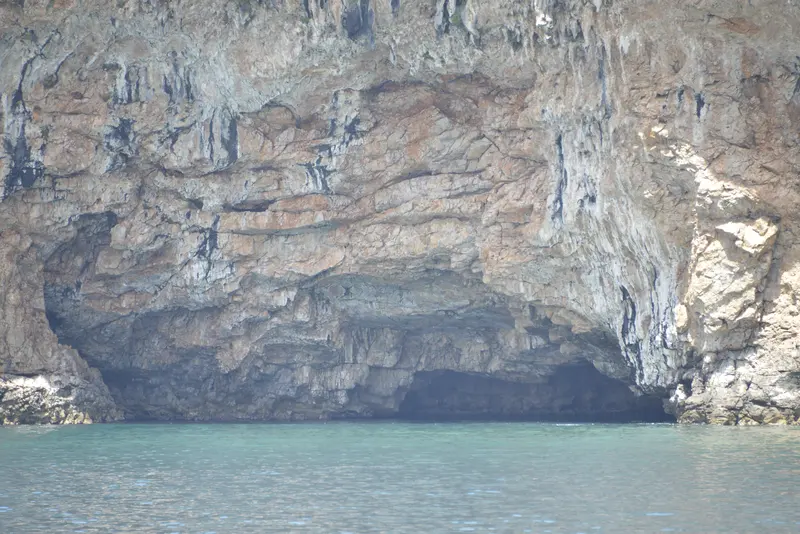
Blue Cave Montenegro
Is the Blue Cave (Plava Špilja) worth it from Kotor? What it is and why the water glows, where it sits near the bay mouth, how trips reach it, the sea-condition and timing realities, swimming inside, the crowds, and the honest verdict with alternatives.
Read guideSubmarine Tunnels of the Bay of Kotor
What the Bay of Kotor's old submarine tunnels are, the Yugoslav-navy history behind them, how boat tours actually visit these cliff-cut pens near the bay mouth, and the photo and safety context to know before you go.
Read guide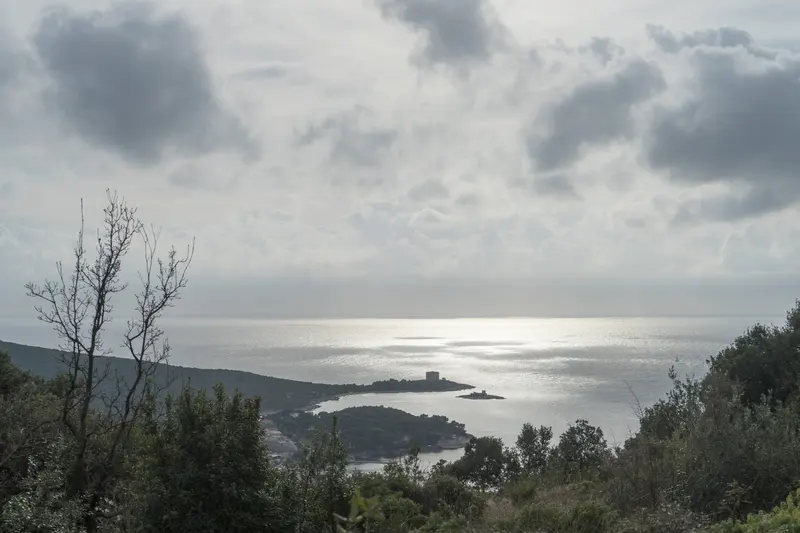
Luštica Peninsula
A guide to the Luštica peninsula at the mouth of the Bay of Kotor: its clear open-sea beaches and coves like Žanjice, Mirište and Rose, the Blue Cave, the quiet hill villages and olive groves, the drive-versus-boat decision, and when it's worth leaving the inner bay.
Read guideMore in Bay of Kotor
6
Bay of Kotor Boat Tours
Compare the kinds of boat trip on the Bay of Kotor: shared group tours, fast speedboat trips, private charters, the Perast and Our Lady of the Rocks classic, the Blue Cave route, and sunset cruises — what each suits, rough durations and the weather caveat.
Read guide
Best Swimming Spots in the Bay of Kotor
The best places to swim in the Bay of Kotor, compared by access, water, shade, families, boat traffic and view: the Dobrota platforms, the Muo and Prčanj rocks, the quiet Stoliv, Orahovac and Ljuta coves, and the clear-water Luštica beaches out toward the open sea.
Read guide
Kayaking & SUP in Kotor Bay
Where paddling works in the Bay of Kotor: the sheltered inner bay off Dobrota, Muo and Prčanj, the beginner-friendly routes, the all-important morning-wind safety rule, what to rent and which guided trips to join, and who kayaking and stand-up paddleboarding suit.
Read guide
Kotor Sunset Cruise Guide
When to book a sunset cruise in Kotor and what route to choose: why the bay is at its most beautiful at golden hour, the Perast run versus the open-bay loop, group boats versus going private, and how the high mountains change the sunset itself.
Read guide
Kotor to Perast by Boat
Every way to get from Kotor to Perast and Our Lady of the Rocks: boat tours (shared and private), the bay bus, taxi and driving — with steps, rough durations and the catch that there is no scheduled passenger ferry.
Read guide
Our Lady of the Rocks
A guide to Our Lady of the Rocks off Perast: the legend and the votive stones that built the islet, the 17th-century church, its icon, silver tablets and museum, the short boat across, the Fašinada ritual, and how to time and photograph a visit.
Read guide