
Kotor Old Town: A Guide to Stari Grad
How to explore Kotor's walled Old Town (Stari Grad): the gates, the squares you navigate by, St Tryphon Cathedral, the small churches, the cats, the museums and the quiet corners away from the crowds.

Photo: Gleb Rurenko / Unsplash
- ✓Kotor's Old Town (Stari Grad) is a tiny, car-free maze of stone lanes inside medieval walls, part of the bay's UNESCO World Heritage listing.
- ✓There are no real street names to speak of — you navigate by squares: Arms Square, Flour Square, St Luke's Square and St Tryphon Square.
- ✓The headline monument is the twin-towered Romanesque Cathedral of St Tryphon, first consecrated in 1166.
- ✓The town's free-roaming cats are an unofficial mascot, with their own small museum and a clutch of cat-themed shops.
- ✓Come early or stay late: the lanes belong to residents and cats in the cool hours, then fill from mid-morning on a cruise day.
What the Old Town is
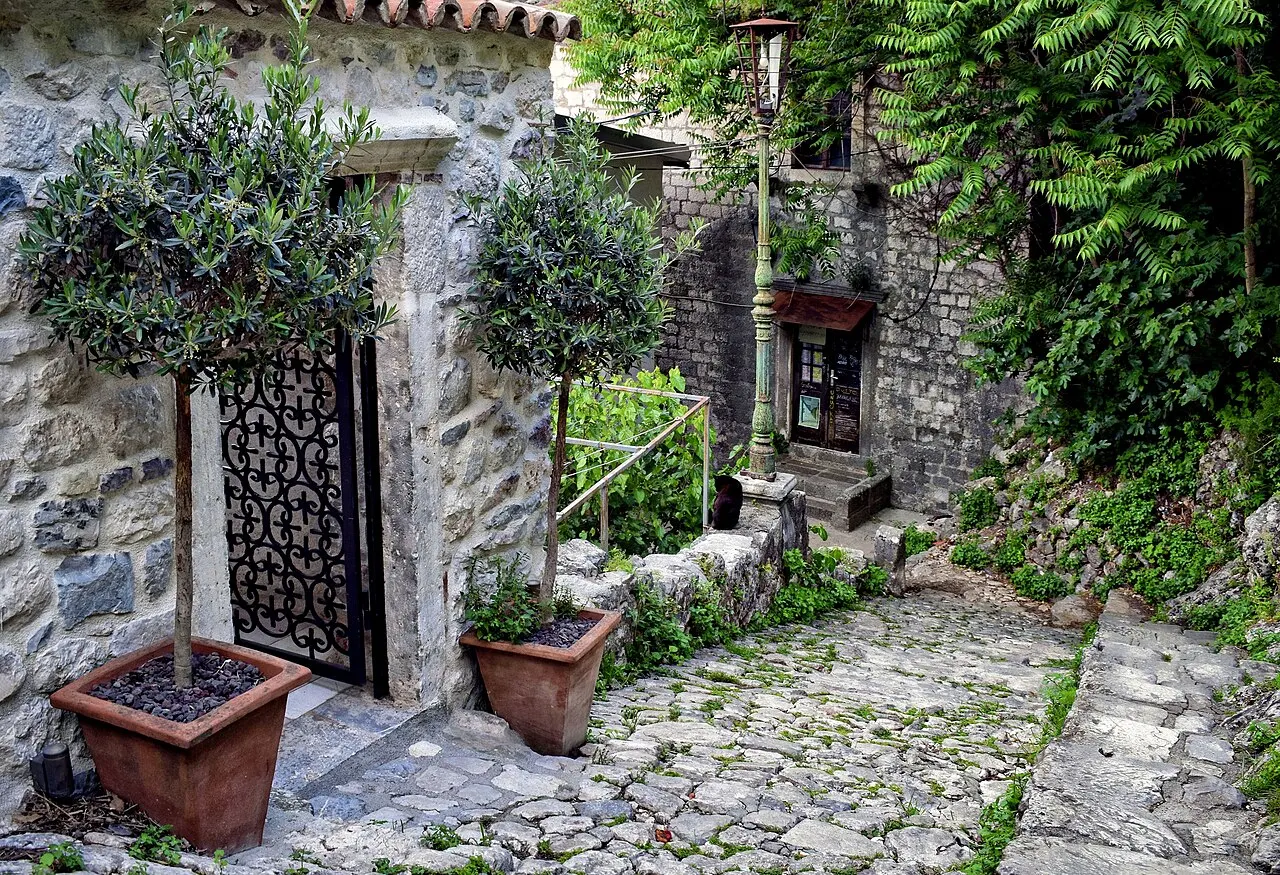
Kotor's Old Town — Stari Grad to locals — is the reason most people come, and it is smaller than the photographs suggest. The whole walled town is a rough triangle wedged between the bay and the cliff, and you can cross it on foot in well under ten minutes. What makes it feel larger is the density: a tangle of stone lanes, sudden squares, palazzo courtyards and church doors, all car-free, all worn smooth by centuries of feet. It is one of the best-preserved medieval towns on the Adriatic, and since 1979 it has been inscribed, with the wider Boka, on the UNESCO World Heritage list.
The town grew under Venice, which held Kotor for nearly four centuries, and the Venetian fingerprints are everywhere — the winged lions over the gates, the Baroque palaces, the leaning clock tower. But the streets themselves are older and more organic than any planned grid, deliberately confusing as a defence against invaders and the bora wind. The happy result for a visitor is that you cannot really see the Old Town by following a route; you see it by wandering, getting pleasantly lost, and trusting that the next lane will spit you back out into a square you recognise.
The three gates
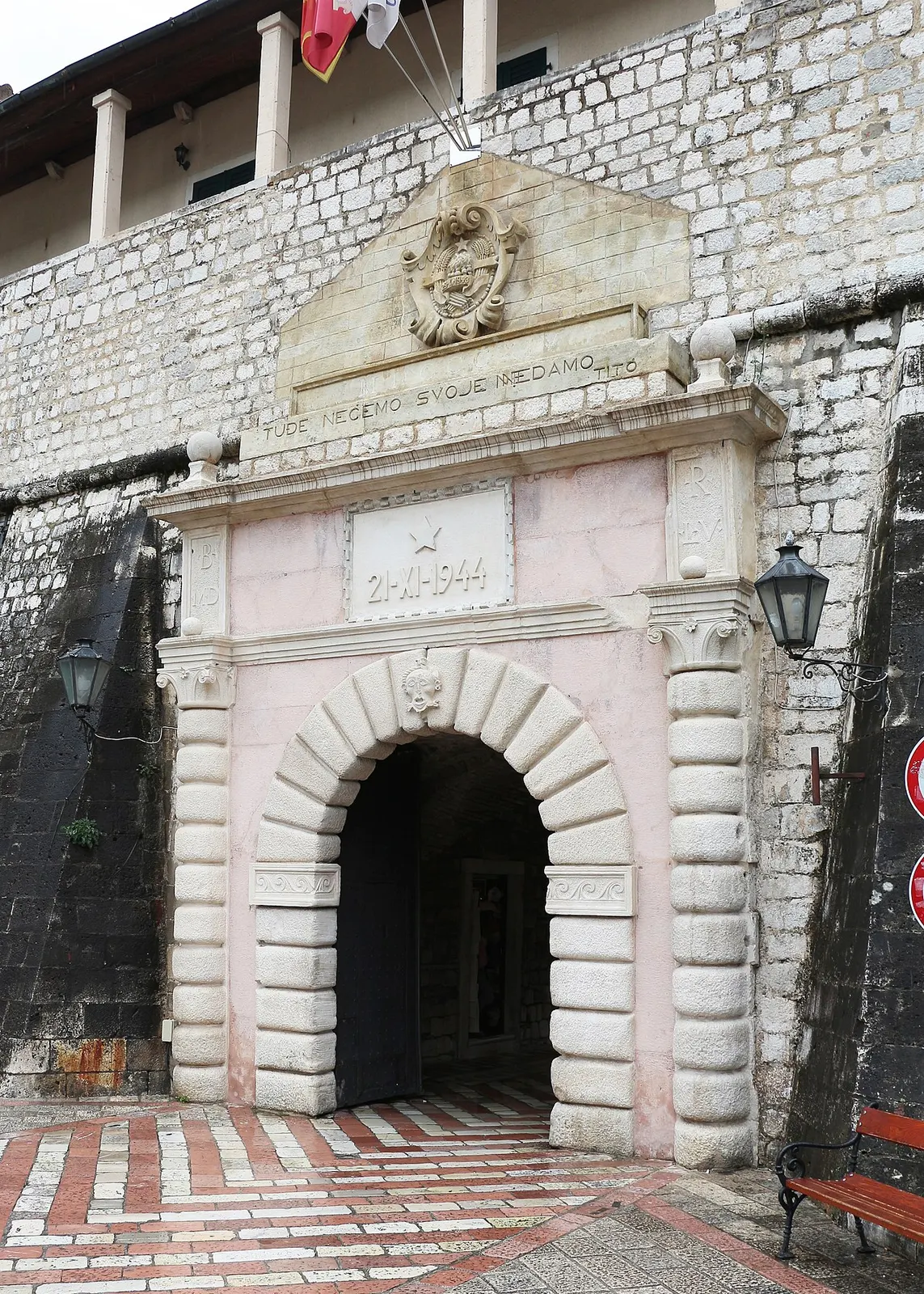
The walls have three historic gates, and which one you come through shapes your first impression. The main Sea Gate (Vrata od mora) on the west side is the grand entrance, facing the quay where the cruise ships and boats tie up; pass beneath its arch and you step straight onto Arms Square, the town's largest open space. Most visitors arrive this way, so it is also the busiest threshold on a cruise morning.
The other two gates are quieter and worth seeking out. The River Gate (Vrata od Škurde) to the north opens onto the Škurda stream and the lower entrance to the city-walls climb, while the small South Gate (Gurdić) sits above a tidal spring at the foot of the fortress hill and is the oldest of the three, layered with Romanesque, Gothic and Renaissance work. Slipping in or out through the River or South gates is one of the easiest ways to feel the town the way it was lived in, away from the main flow.
Map pins
Map data © OpenStreetMap contributors · Tiles © OpenFreeMap
Navigating by squares, not streets
Forget street names; Kotor runs on squares. They are the town's landmarks, its meeting points and its mental map, and learning four of them is enough to never feel truly lost. Just inside the Sea Gate is Arms Square (Trg od oružja), the largest, named for the armoury that once stood here and presided over by the leaning Venetian clock tower of 1602. It is the natural orientation point and the place to agree to meet.
From Arms Square the lanes thread to Flour Square (Trg od brašna), edged by handsome palaces; to St Tryphon Square (Trg svetog Tripuna), dominated by the cathedral's twin towers; and to little St Luke's Square (Trg svetog Luke), perhaps the most atmospheric of all, with two churches facing each other across the stone. Wander between these four and you will brush past most of what matters, while the smaller squares and dead-end courtyards in between reward the curious.
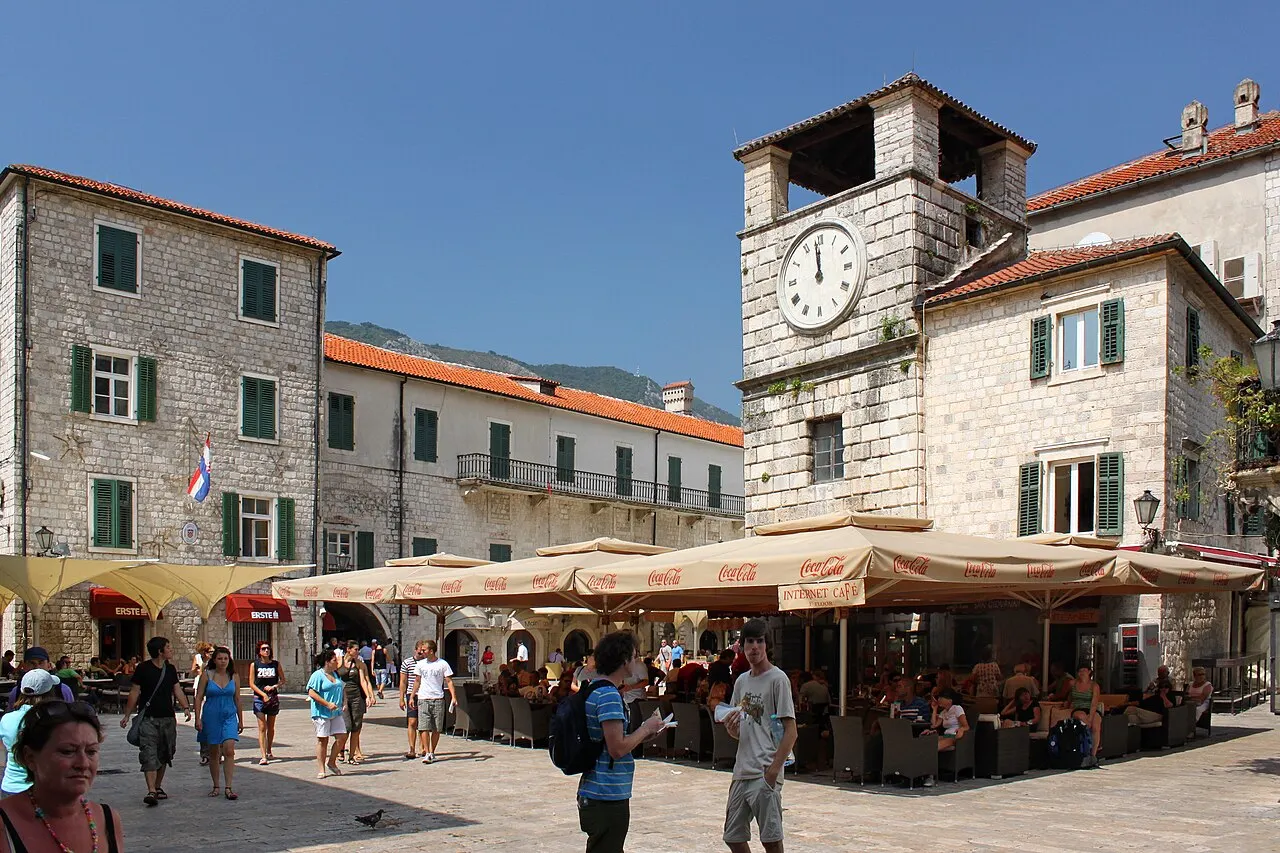
- Arms Square (Trg od oružja) — the largest, just inside the Sea Gate, with the leaning clock tower.
- Flour Square (Trg od brašna) — a handsome palace-lined square a short walk on.
- St Tryphon Square — dominated by the twin-towered cathedral.
- St Luke's Square — the most atmospheric, with two churches face to face.
Churches: St Tryphon and the smaller treasures
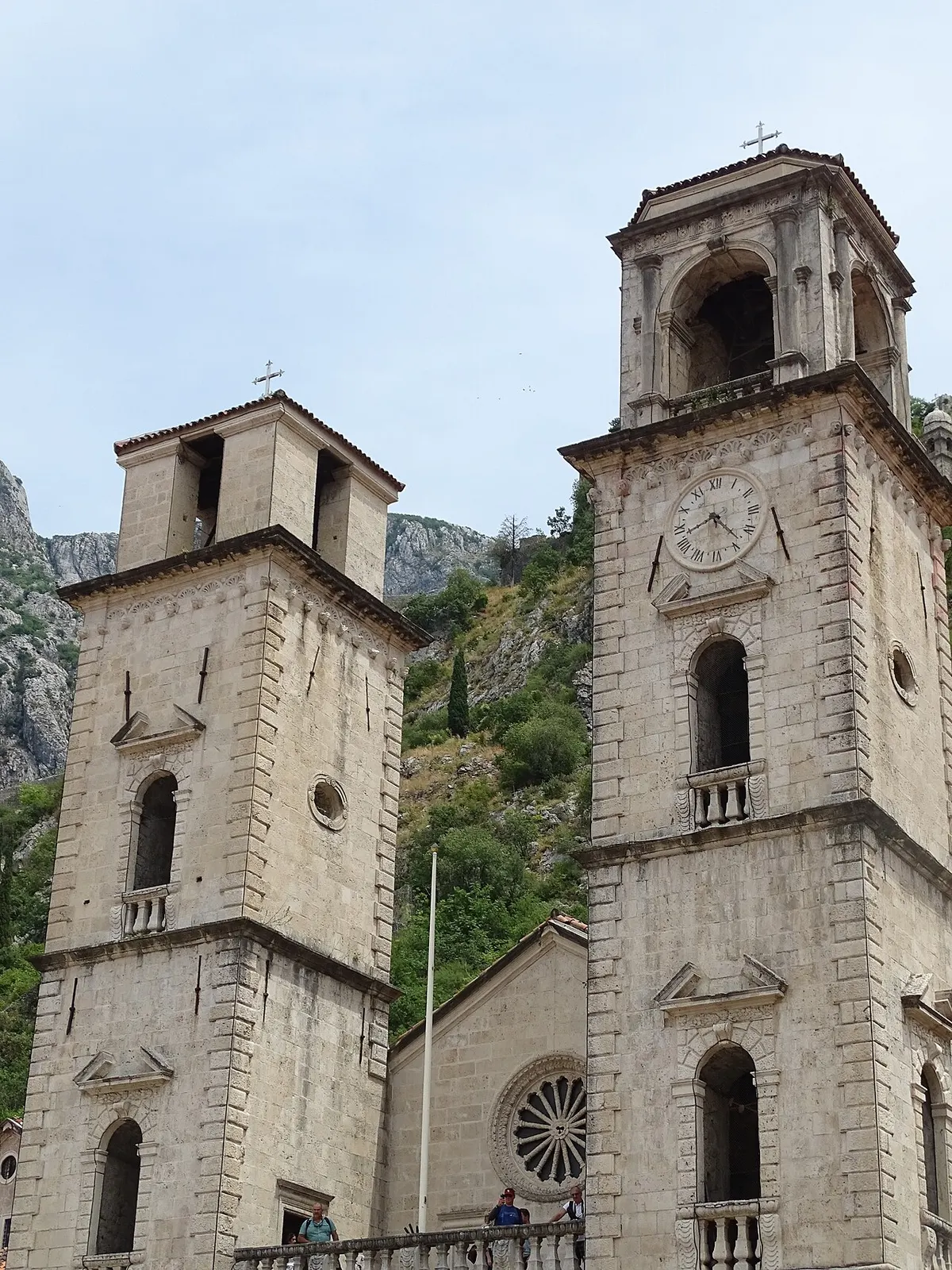
The Old Town's headline monument is the Cathedral of St Tryphon (Sveti Tripun), first consecrated in 1166 and dedicated to the city's patron saint, whose relics have been kept in Kotor since the ninth century. Romanesque in its bones and rebuilt after repeated earthquakes — which is why its two towers do not quite match — it shelters frescoes, a Gothic stone ciborium over the altar, and an upstairs reliquary chapel and treasury glittering with gold and silver. A modest entry ticket covers the cathedral and its treasury; verify the current price and hours before you go, as they shift with the season.
Beyond the cathedral, Kotor's smaller churches tell the town's layered, dual-faith story in a few quiet minutes each. On St Luke's Square, the tiny Romanesque Church of St Luke (1195) once served both Catholic and Orthodox congregations and famously kept two altars; beside it stands the larger Orthodox Church of St Nicholas, early-twentieth-century and serene inside. Scattered through the lanes are still more — St Mary Collegiate, St Clare, St Anne — most of them free to step into when their doors are open, and all of them cool, hushed antidotes to the midday heat.

The cats of Kotor
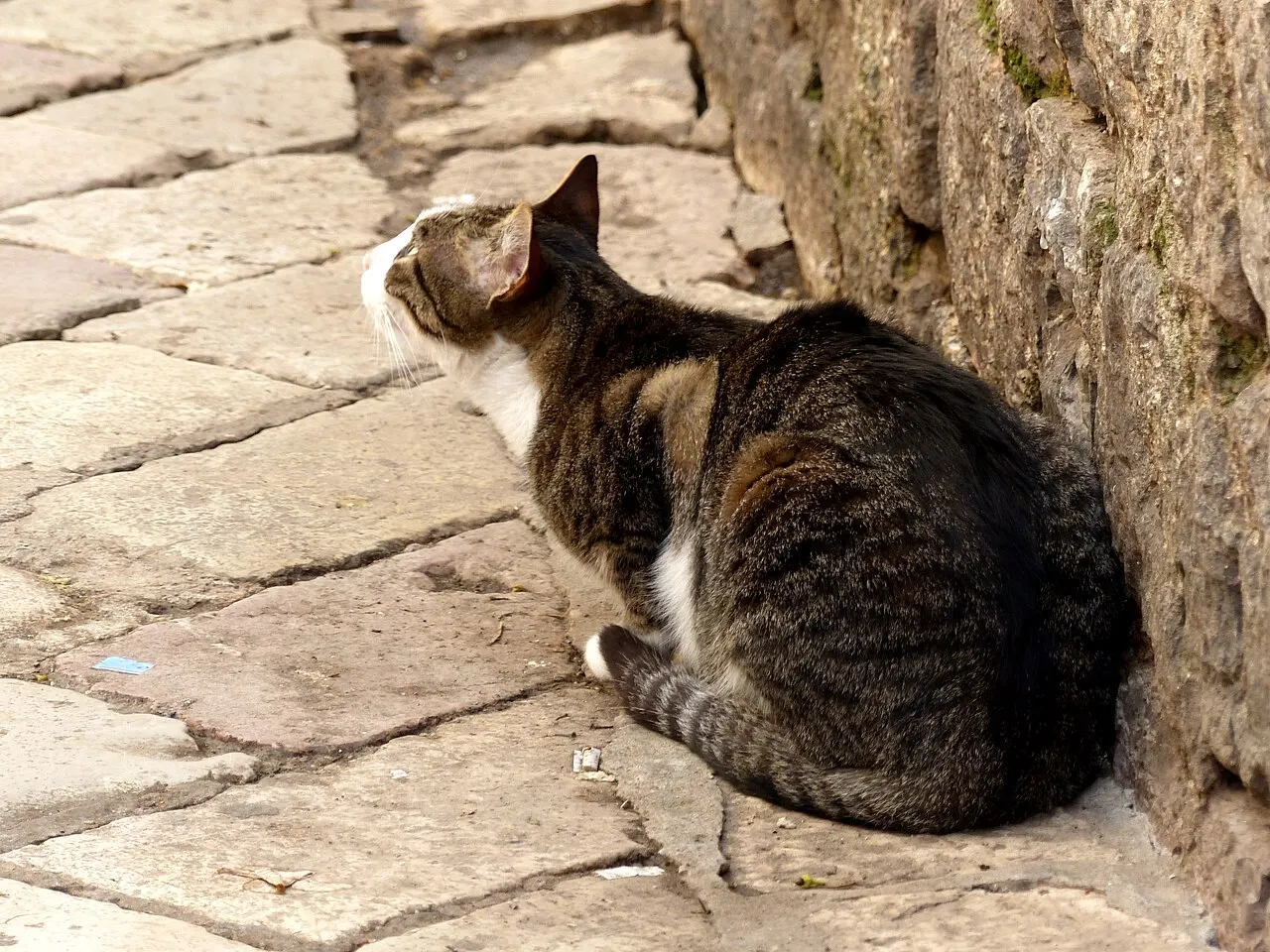
You will not be in the Old Town long before you meet its other residents. Kotor's free-roaming cats have lived here for centuries — a maritime town's natural defence against ship-borne rats — and over time they have become the place's unofficial mascots, dozing on warm stone, threading between café chairs and posing, with great patience, for photographs. They are fed and watched over by locals and visitors alike, and the town wears the affection openly.
That affection has its own small monument: a cheerful Cats Museum near the centre, full of antique prints and feline ephemera, with proceeds supporting the town's cats. Cat-themed shops and souvenirs cluster nearby, and a dedicated little square is sometimes called the cats' own. It is a light, easy stop — perfect with children or in a passing shower — and an honest expression of a town that has decided to love its strays rather than chase them off.
Museums and an indoor hour
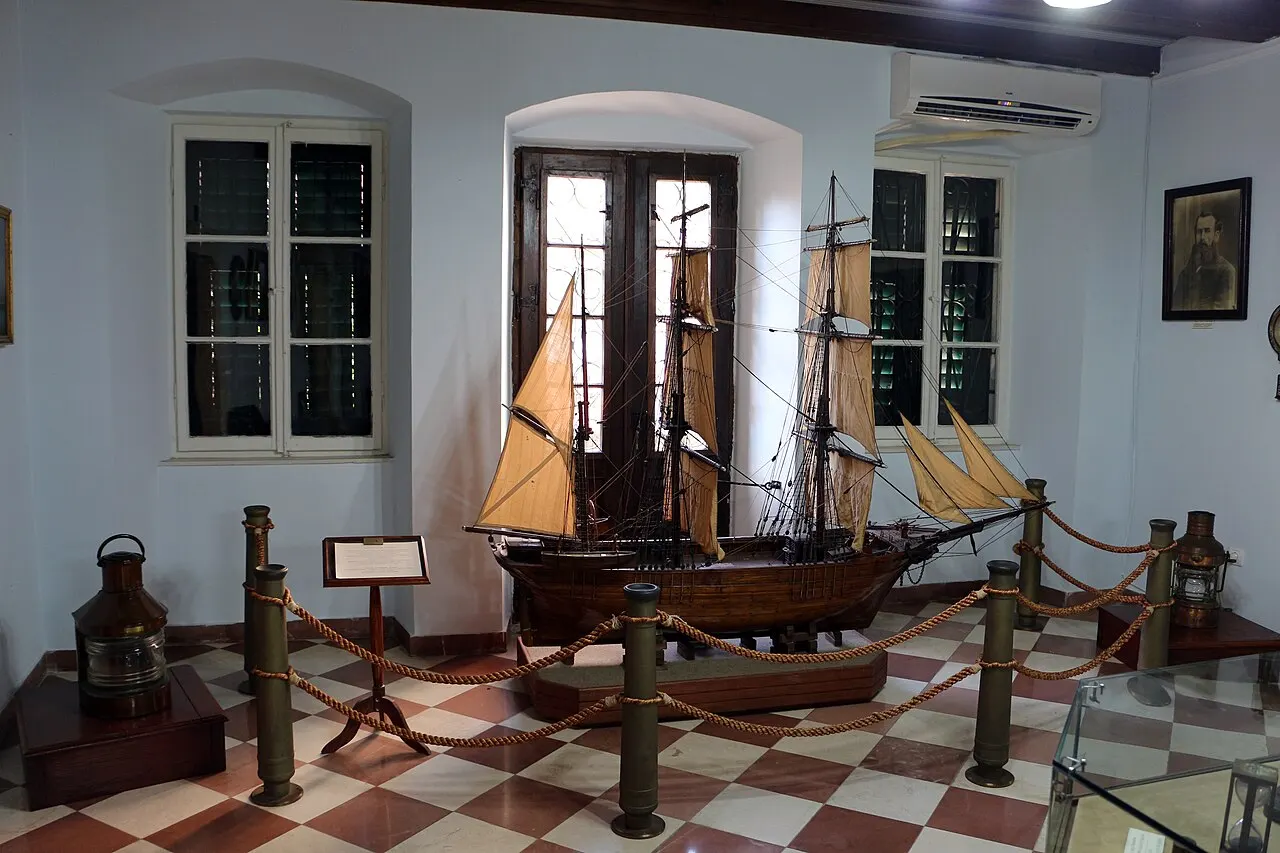
When the heat peaks or the rain comes in, the Old Town's museums give you an unhurried hour out of the weather. The standout is the Maritime Museum of Montenegro, set in the Baroque Grgurina Palace, which traces the Boka's extraordinary seafaring past through ship models, captains' portraits, charts, uniforms and weapons — a reminder that this small bay once sent navigators and admirals across the world. Nearby, smaller collections cover the town's history and the cathedral's sacred art.
These indoor stops slot neatly between the lanes and a long lunch, and they reward the kind of slow attention the squares encourage. As ever, opening hours and ticket prices change with the season, so check current details before you plan a visit around them — we keep those volatile figures out of the prose.

Quiet corners and the best hours
The Old Town has two faces, and the difference is the clock. From mid-morning to mid-afternoon on a cruise day, the main lanes between Arms Square and the cathedral can be shoulder-to-shoulder, the cafés full, the souvenir shops busy. But step a few lanes off that spine — toward the South Gate, the back walls near the River Gate, or the small squares the tour groups skip — and the same town turns quiet, residential and gently lived-in, with washing strung overhead and a cat asleep in every patch of sun.
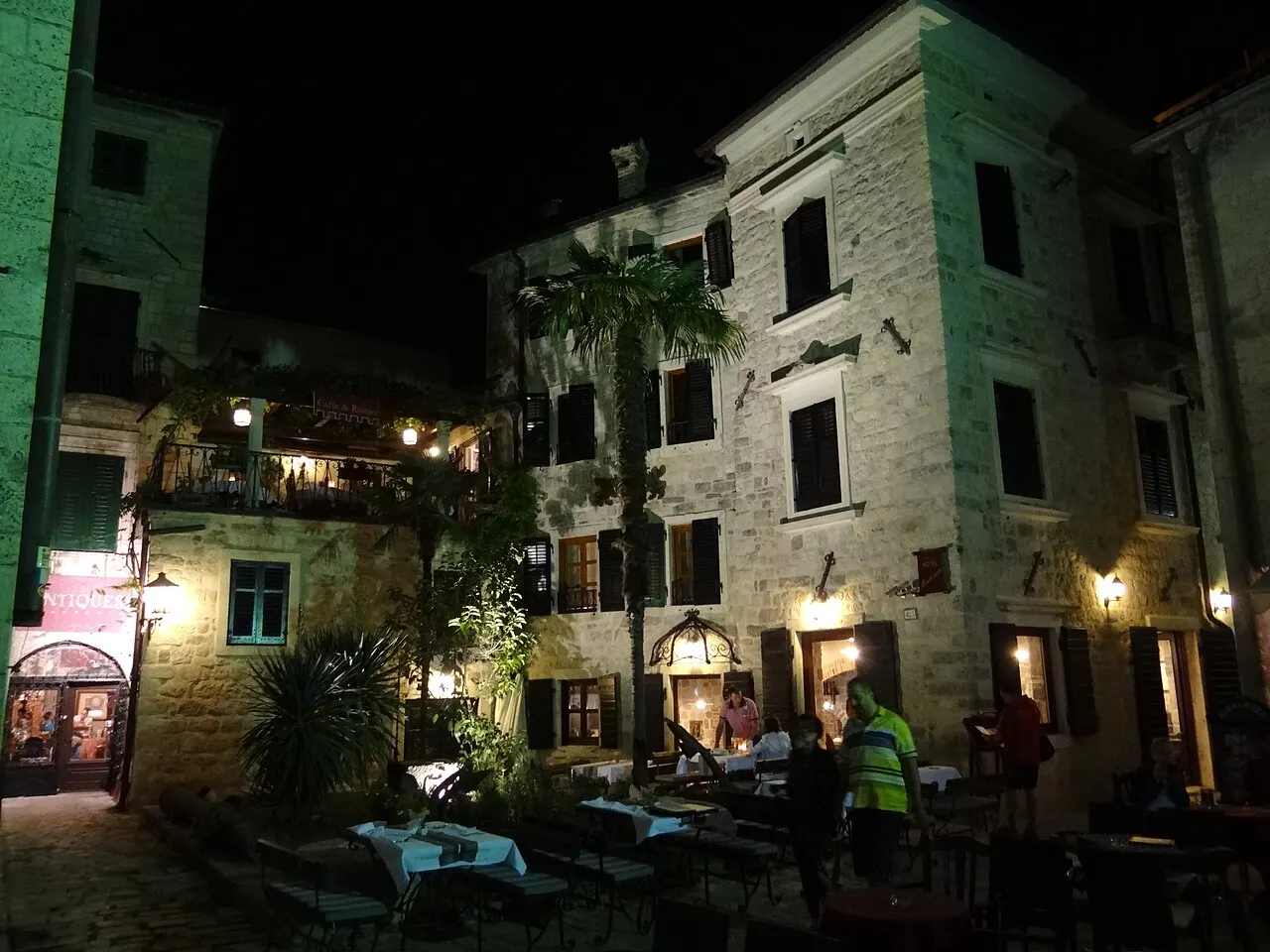
The surest way to fall for Kotor, though, is to be inside the walls when almost no one else is. Early in the morning, before the first ship's tenders land, the lanes are cool and empty and the light slants low between the stone. After the ships sail in the late afternoon, the town exhales again, the squares soften into golden evening, and dinner outdoors becomes the best thing you can do here. If you can manage only one, make it the early start — the Old Town at first light is the version worth crossing a sea for.
Old Town at a glance
Use this quick card to get oriented — but verify the volatile details (entry fees for the cathedral and museums, current opening hours, and event dates) from an official or on-the-ground source before you plan around them, as they change with the season.
- What: Kotor Old Town (Stari Grad), a walled medieval town and part of the bay's UNESCO World Heritage site.
- Size: tiny and car-free — crossable on foot in under ten minutes.
- Gates: Sea Gate (main), River Gate (north, near the walls climb), South/Gurdić Gate (oldest).
- Orient by: Arms Square, Flour Square, St Tryphon Square, St Luke's Square.
- Don't miss: St Tryphon Cathedral, the small churches, the cats and the Maritime Museum.
- Best hours: early morning and late afternoon; busiest from mid-morning on cruise days.
- Cost: free to wander; modest tickets for the cathedral treasury and museums — verify current prices.

Things to Do in Kotor
The best things to do in Kotor: the walled Old Town and its squares, St Tryphon Cathedral, the climb to St John Fortress, the cats, the viewpoints and a boat out onto the bay.
Read guide
A Self-Guided Walk Through Kotor's Old Town
A self-guided walking route through Kotor's Old Town: the Sea Gate, Arms Square and the clock tower, St Tryphon Cathedral, St Luke's and St Nicholas, the maze of palaces and the wall-view corners — in the right order, at the right hour.
Read guide
Kotor Sea Gate
Start your Old Town visit at the Sea Gate — Kotor's main western gate of 1555, opening from the waterfront onto Arms Square and the leaning clock tower. Where to find it from the cruise port, what to look for, and how to plan a route through the squares.
Read guideMore in Things to Do
6
Aquarium Boka
Visit Aquarium Boka, Montenegro's public aquarium in Dobrota just north of Kotor's Old Town — what's inside, family timing, tickets, the species on show, and the flat bay-side walking route to reach it.
Read guide
Bay of Kotor Scenic Drives
The best drives around the Bay of Kotor: the shoreline loop through Perast and the captains' villages, the white-knuckle Kotor–Lovćen serpentine, the Kamenari–Lepetane ferry shortcut, plus photo stops, summer traffic and driving cautions for each.
Read guide
Beaches Near Kotor
Where to swim near Kotor: the honest truth about the inner-bay town beaches, the quieter bay swims at Dobrota, Prčanj, Stoliv and Muo, the clear-water Luštica coves like Žanjice, and the sandy options down the coast at Budva.
Read guideBest Tours in Kotor
Which Kotor tour to book and why: Old Town walking tours, the fortress climb guided or solo, bay boat trips to Perast and the Blue Cave, food and wine tours, Lovćen and Cetinje mountain day trips, cruise shore excursions, and private boats and yacht charters.
Read guide
Best Viewpoints in Kotor
The best viewpoints over the Bay of Kotor, ranked by effort and payoff — St John Fortress, the halfway church, the Ladder of Kotor, the cable car, the Vrmac ridge, the serpentine roadside pullouts and the angle from the water.
Read guide
Cats of Kotor
Why cats are part of the Kotor experience — the maritime backstory, where to find them in the Old Town, how to photograph and feed them responsibly, and the small charities that care for the bay's free-roaming cats.
Read guide