
Maritime Museum of Montenegro, Kotor
Inside Kotor's Maritime Museum of Montenegro: the baroque Grgurina Palace, three floors of ships, captains' portraits, maps, weapons and Boka seafaring history — and why it is the Old Town's best rainy-day visit.

Photo: Fatih Beki / Unsplash
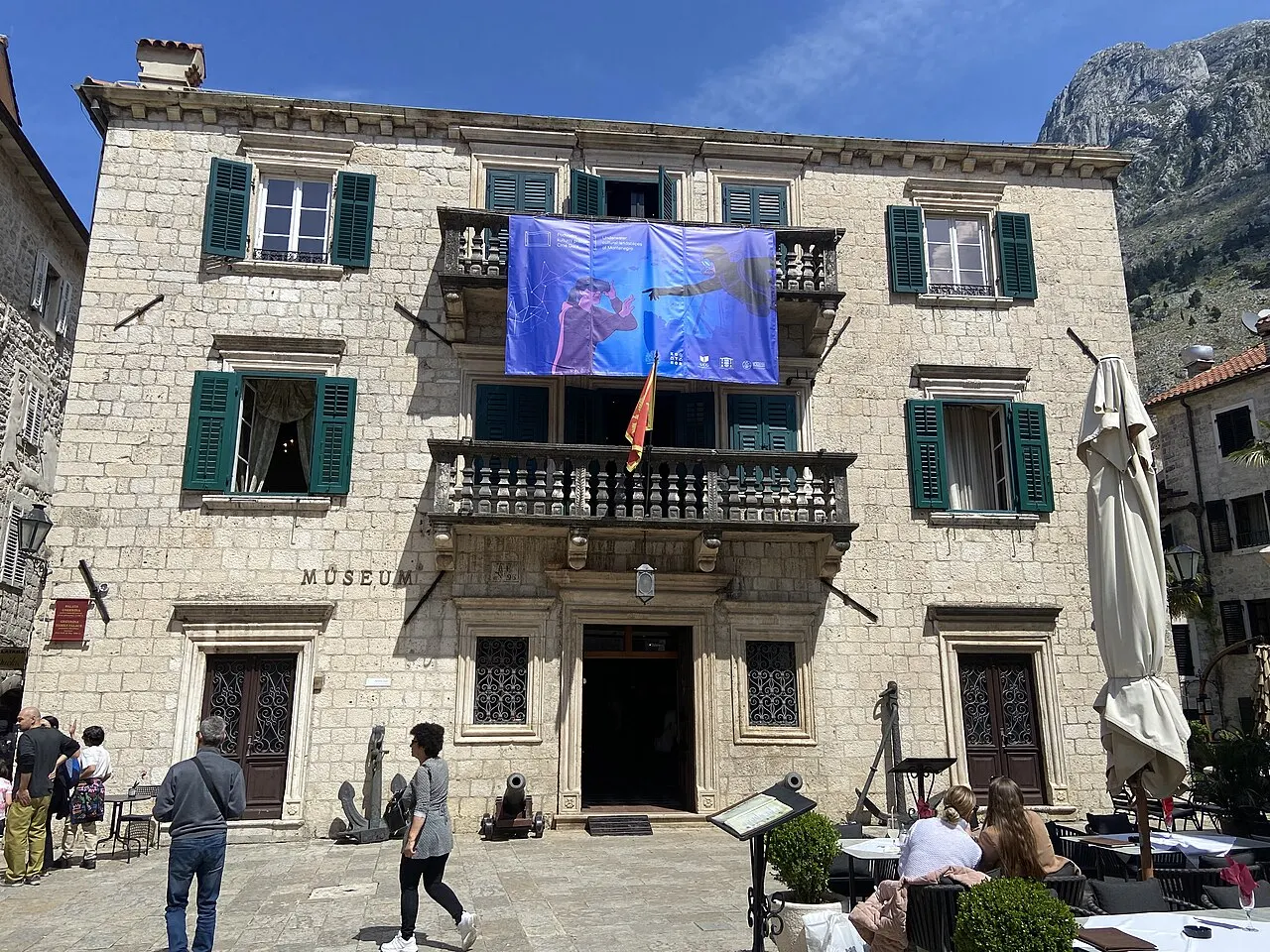
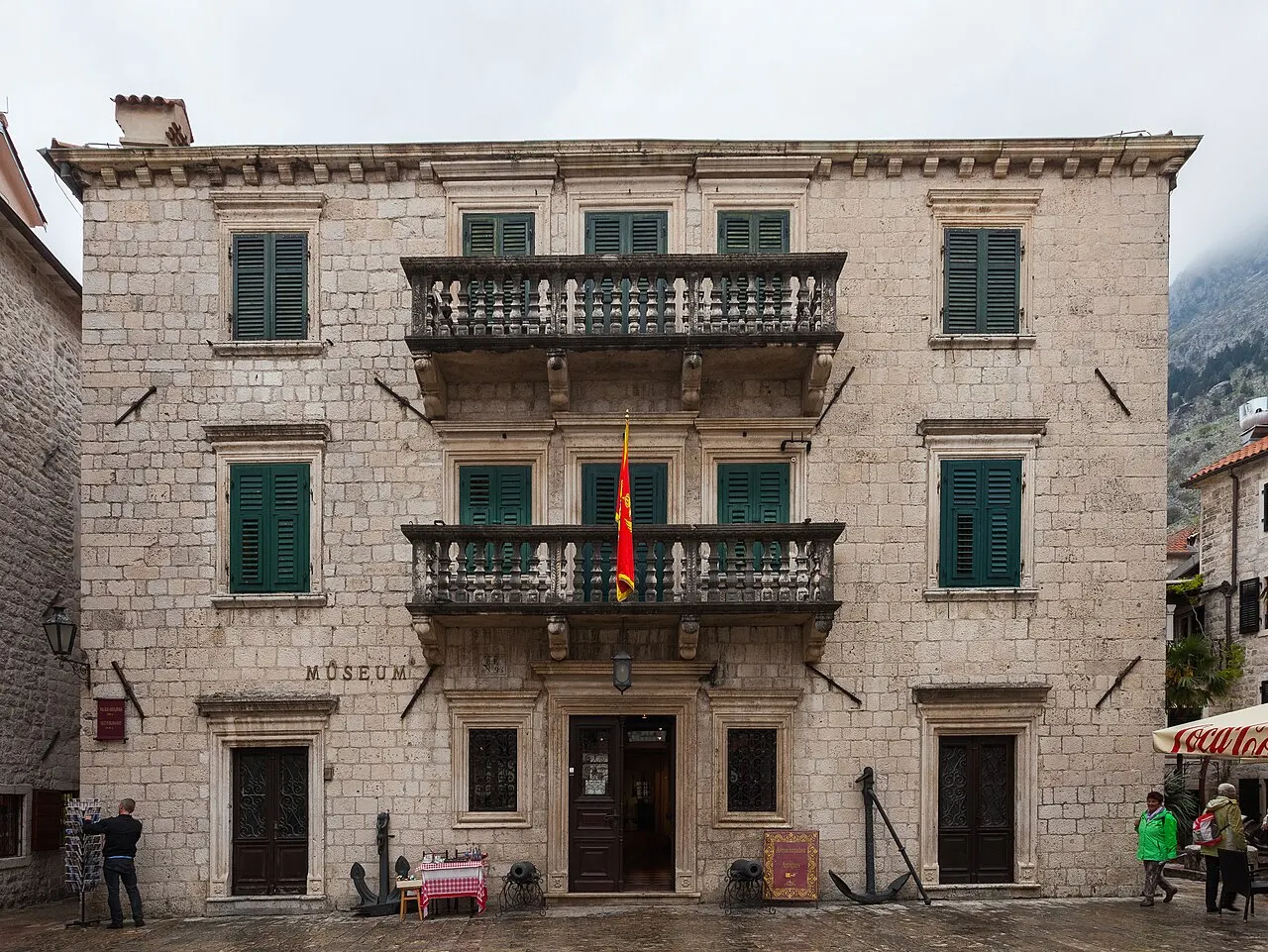
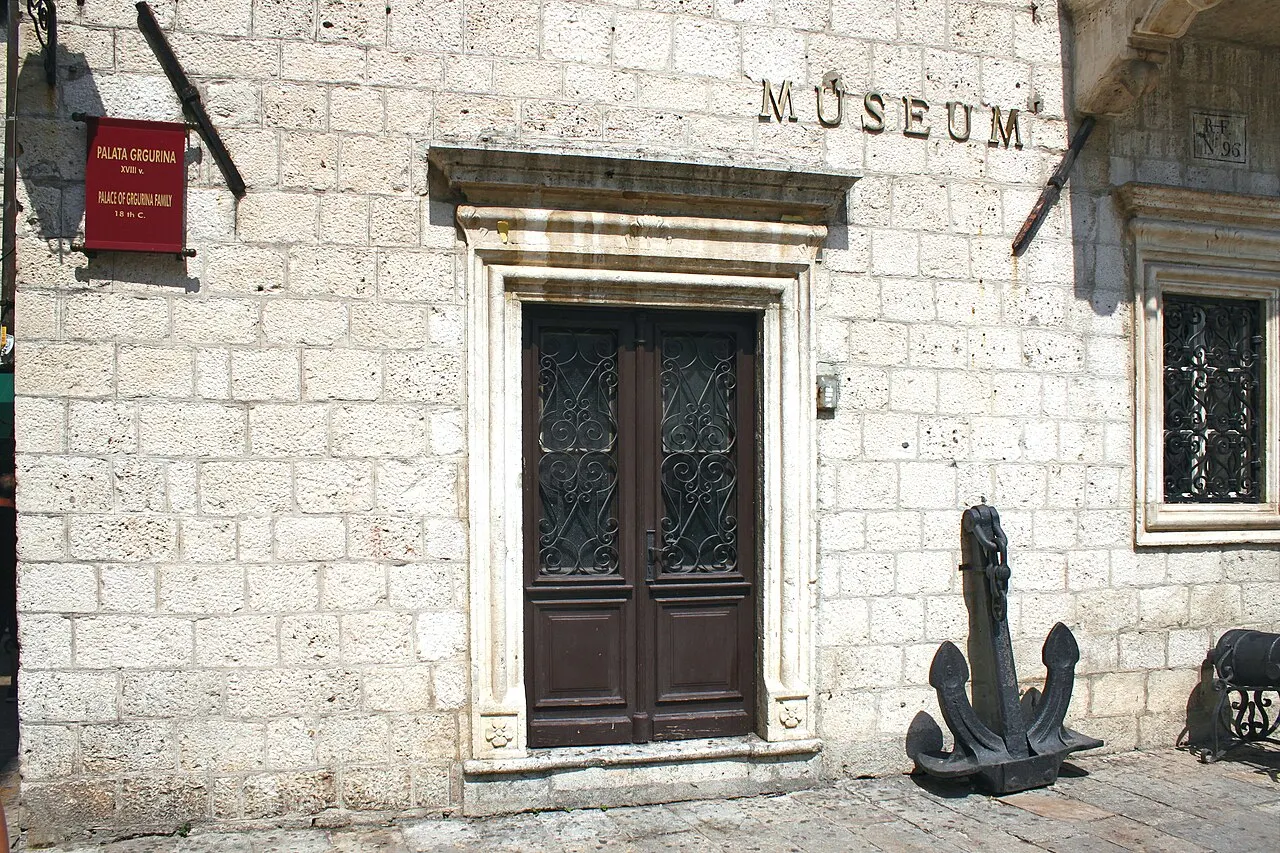
- ✓The Maritime Museum of Montenegro fills the baroque Grgurina Palace on the square that now bears the museum's name, in the heart of the Old Town.
- ✓Three floors trace the seafaring story of the Boka Kotorska — the captains, ships, trade and naval traditions that made this bay's fortune.
- ✓Highlights include model ships, captains' and admirals' portraits, antique navigation instruments, maps, weapons and decorated arms.
- ✓It grew from the collection of the Boka Navy, the centuries-old ceremonial mariners' guild, and tells that guild's story too.
- ✓It is the Old Town's best wet-weather and high-heat refuge — an hour or so indoors when the walls climb is off the table.
A palace built on the sea's fortune
Kotor's fortune was made on the water, and the Maritime Museum of Montenegro is where that story is gathered and told. It occupies the Grgurina Palace, an early-18th-century baroque townhouse built by one of the bay's noble families, on the square that now takes the museum's name. Before you reach a single exhibit, the building itself sets the tone — a graceful stone palace whose existence is, in a sense, the whole point: this is the kind of home the sea built for those who mastered it.
The collection grew out of the Boka Navy (Bokeljska mornarica), the ancient ceremonial mariners' guild of the bay, which began gathering seafaring relics and mementoes well over a century ago. From that nucleus the museum expanded into the full account of Boka Kotorska seafaring — a tradition that, at its height, ran navigation schools, sailed the Mediterranean and beyond, and made small bay towns like Perast and Dobrota wealthy out of all proportion to their size.

What you'll see on three floors
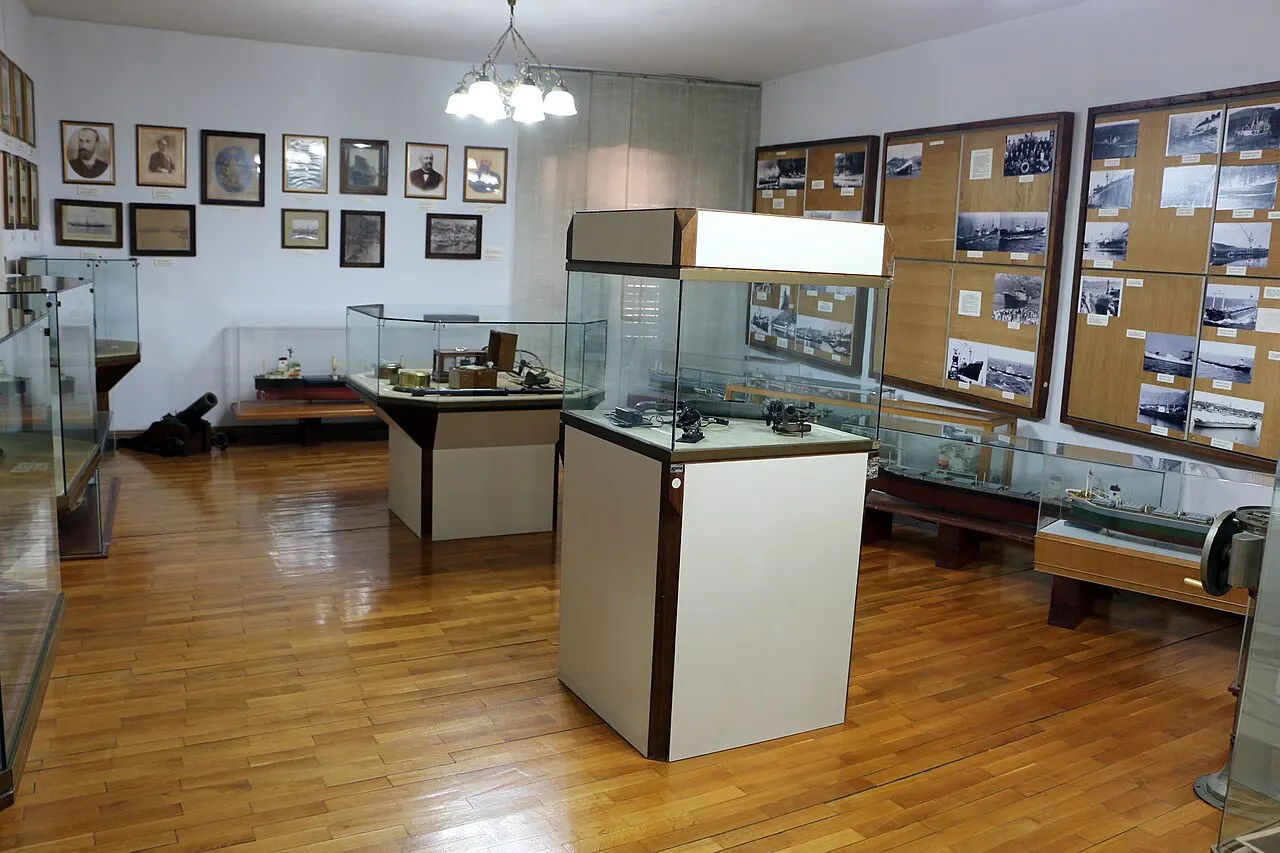
The museum is arranged over three floors of the palace, and it rewards an unhurried walk through. There are model ships of the sailing vessels the Boka's captains commanded, alongside the real instruments of their trade — sextants, compasses, telescopes and other navigation tools that took these sailors across the world. Old maps and sea charts trace the routes they ran, and the walls are lined with portraits of the captains and admirals themselves, stern figures in their best coats, the men who turned a sheltered bay into a maritime power.
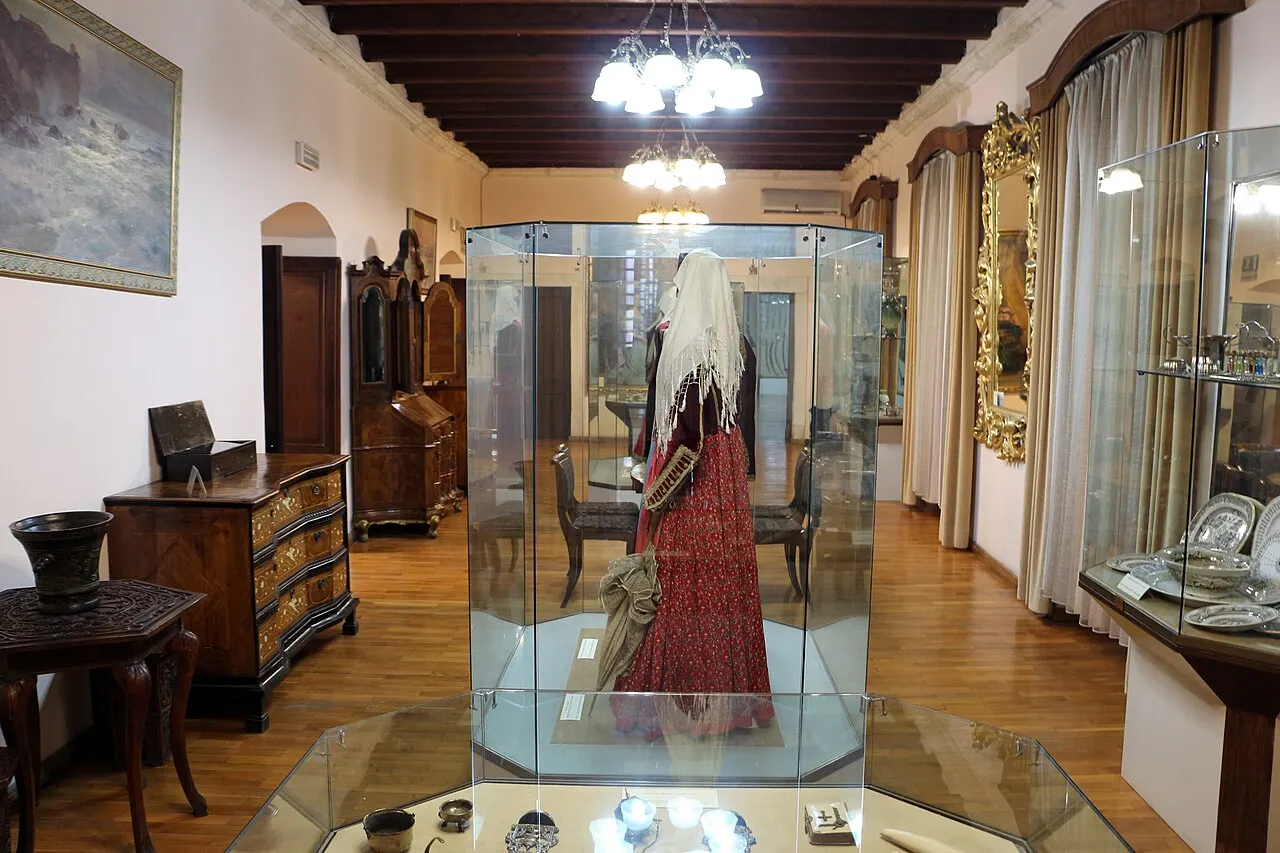
Beyond the ships and the instruments, the collection broadens into the life that seafaring brought home. There are weapons and finely decorated arms, naval uniforms and the regalia of the Boka Navy, furniture and porcelain and other treasures that the bay's captains carried back from their voyages. Together they paint a picture not just of how these people sailed, but of how they lived on the proceeds — a small, rich world assembled from a thousand return journeys.
Look out, too, for the human stories the labels tell: the famous captains, the navigation school at Perast, the votive paintings and models that grateful sailors dedicated after surviving a storm. It is these details that lift the museum above a simple display of objects into the biography of a whole seafaring community.
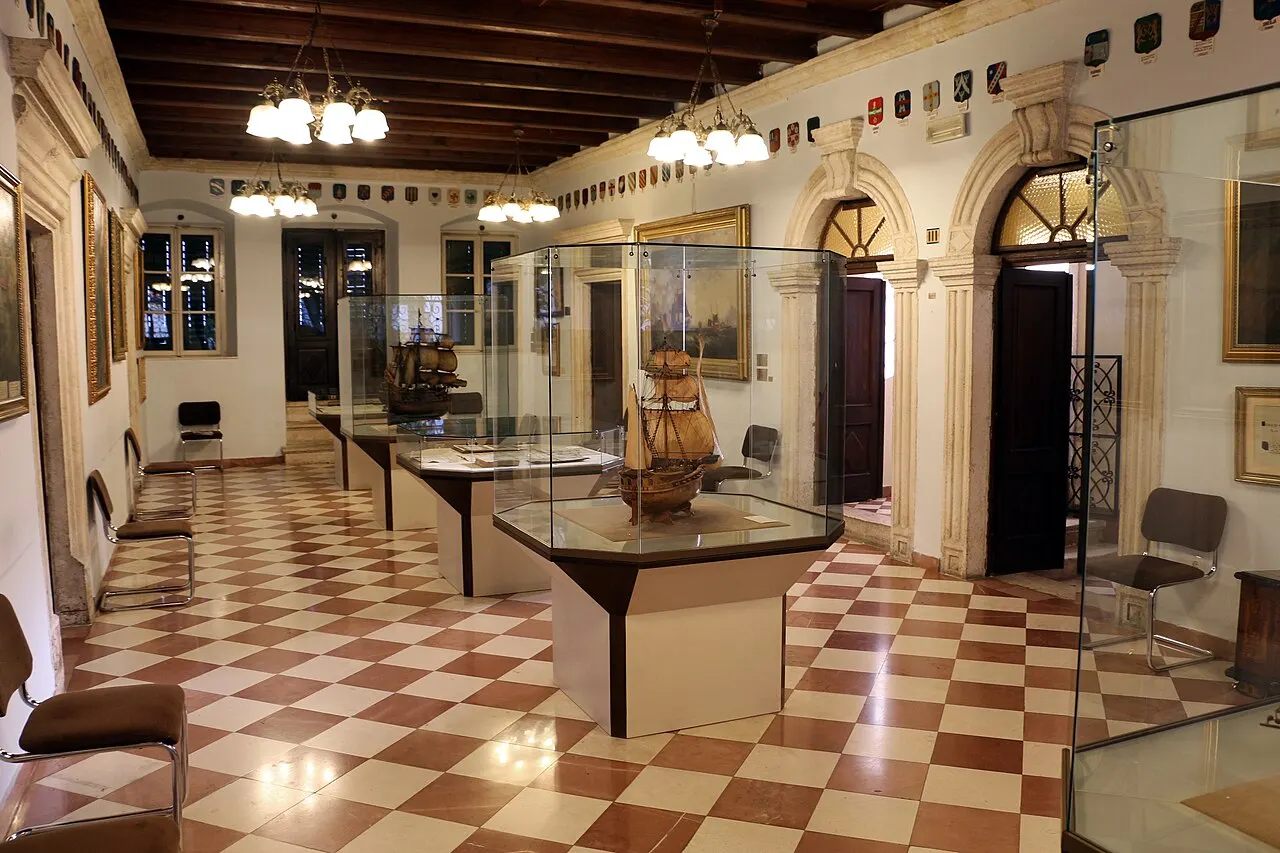
- Model ships, sextants, compasses, telescopes and antique sea charts and maps.
- Portraits of Boka captains and admirals; uniforms and regalia of the Boka Navy.
- Decorated weapons, furniture, porcelain and treasures brought home from voyages.
Map pins
Map data © OpenStreetMap contributors · Tiles © OpenFreeMap
Why it's worth your time
It is easy, with the walls and the bay calling, to skip Kotor's museums — but the Maritime Museum is the one to make time for, because it explains everything else. Once you have walked these three floors, the town outside reads differently: the grand palaces in the lanes, the captains' towns around the bay, the dedication of churches to St Nicholas the patron of sailors, the very wealth that built the cathedral's treasury. The museum is the key that unlocks why this small bay is studded with such outsized riches.
It is also a genuinely pleasant hour. The palace setting is handsome, the collection is well chosen rather than exhausting, and an audio guide (where available) brings the captains and their voyages to life. For travellers who like to understand a place rather than just photograph it — and for anyone curious about ships, navigation and the age of sail — it is among the most satisfying indoor stops in the Old Town.

The best rainy-day and beat-the-heat option
Kotor's weather can be extreme at both ends — it is among the wettest towns in Europe in winter, and fierce with summer heat that bakes the walls climb into a punishment by late morning. On either kind of day, the Maritime Museum is the obvious move: a substantial, air-conditioned, genuinely interesting hour indoors, right in the middle of the Old Town and a few steps from a coffee. When the rain sets in or the sun is too much, this is where to be.
It pairs neatly with the town's other indoor stops on a wet day — the cathedral and its treasury, the small churches, a long café session — and with the smaller, lighter Cats Museum if you have children to amuse. Build a rainy-day loop around it and the worst of Kotor's weather turns into one of its more rewarding afternoons.
- Ideal in winter rain or summer heat — a substantial indoor hour in the centre of the Old Town.
- Pairs well with the cathedral, the small churches and a café for a full rainy-day loop.
- Good with curious older children; lighter than it sounds and well laid out.
The seafaring story behind the exhibits
To get the most from the galleries, it helps to know the arc of the history they illustrate. The Bay of Kotor punched far above its weight at sea. From the late Middle Ages through the age of sail, its captains and merchants sailed the Adriatic and the wider Mediterranean, and the bay's small towns — Perast, Dobrota, Prčanj and Kotor itself — became prosperous trading and ship-owning communities under successive Venetian, Austrian and other rulers. The wealth came home in stone: the baroque palaces you walk past in the lanes, the votive churches, and the very building the museum occupies are all dividends of that maritime golden age.
Perast in particular ran a respected nautical school, and one of its most famous threads is the tradition that the captain Marko Martinović taught navigation to a group of young Russian noblemen sent by Tsar Peter the Great at the turn of the 18th century — a measure of how seriously the bay's seamanship was taken across Europe. The museum gathers the relics of all this: the instruments these navigators used, the ships they commanded, the portraits of the men who led them, and the votive models and paintings that grateful sailors left after surviving storms. Read the labels with that story in mind and the objects stop being a curiosity cabinet and become the memory of a genuine maritime power.
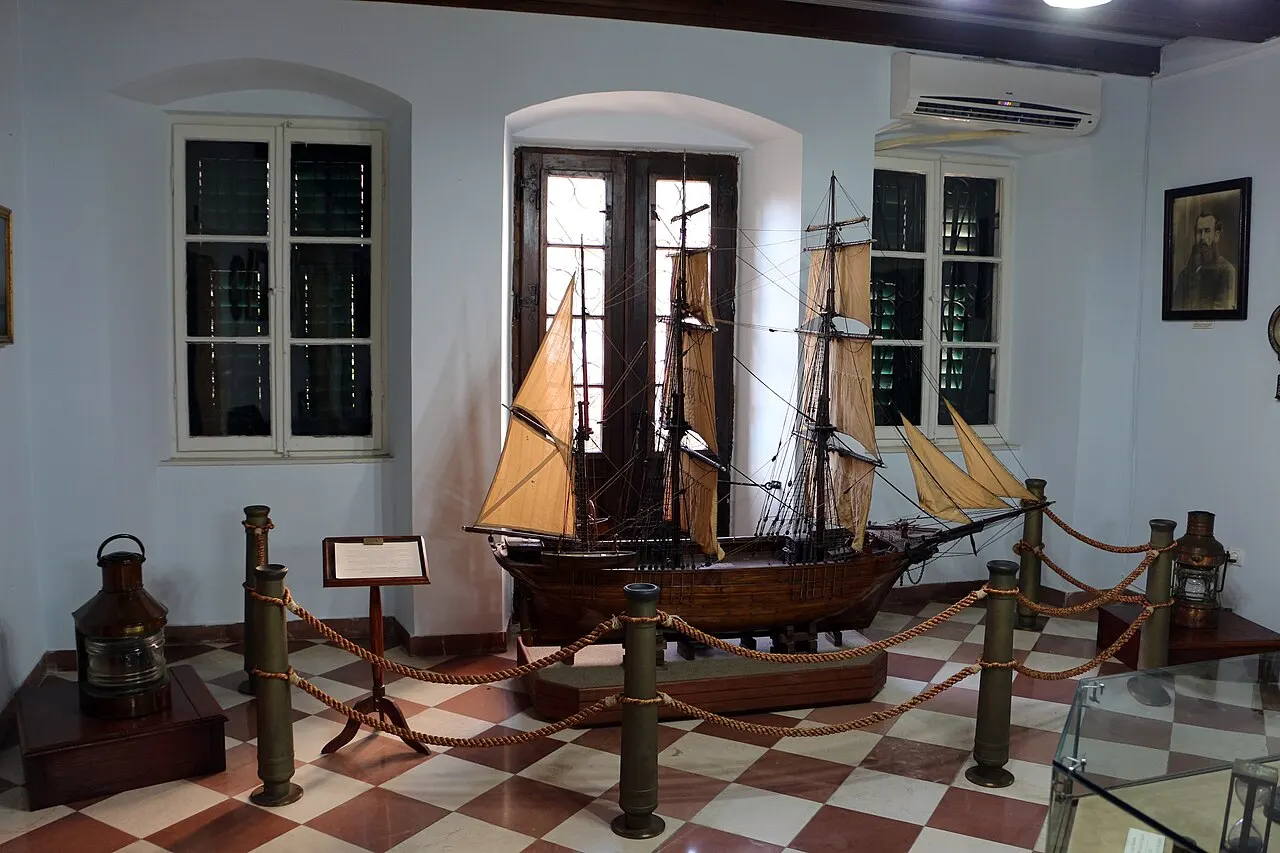
- The Boka's golden age: captains from Kotor, Perast, Dobrota and Prčanj sailing the Mediterranean.
- Perast's nautical school — by tradition, Marko Martinović taught Peter the Great's young Russian nobles.
- Votive models and paintings record sailors' thanks for surviving storms at sea.

Common questions
A few practical questions come up again and again, so here are the short answers. How long does it take? Most visitors spend an hour to ninety minutes; book longer if you take the audio guide and read the labels. Is it good for children? Older, curious children enjoy the ships, weapons and instruments, though there is reading involved; younger ones may prefer the lighter Cats Museum nearby. Is it worth it on a sunny day? Yes — but on a fine morning many people prefer to take the walls while the air is cool and save the cool galleries for the heat of the afternoon.
Is there an English option? Labelling and an audio guide in English are generally available, though provision can vary, so check at the desk. Can I photograph the exhibits? Photography rules differ by gallery and change from time to time, so ask on arrival rather than assume. And is it accessible? The palace has internal stairs between floors, which is the main limitation; ask at the desk about current arrangements. As with all volatile details, confirm ticket prices, opening hours and audio-guide options on the day, since they shift between the high and low seasons.

Visiting: practical notes
The museum is centrally located, signposted from the main squares, and well worth an hour to ninety minutes; allow longer if you take the audio guide and read the labels properly. An entry ticket applies, usually with a reduced rate for students and children and an extra option for an audio guide — verify the current prices and opening hours before you go, as they shift between the high and low seasons and the museum keeps shorter winter hours.
A few small things help. The palace has stairs between its floors, so factor that in for limited mobility, and ask at the desk about current accessibility. Photography rules vary by gallery, so check on arrival. And time your visit to the weather and the crowds: on a hot, ship-heavy day the cool galleries are a relief, while on a fine quiet morning you might prefer to save them for later and take the walls while the air is cool. Either way, the museum is the indoor anchor that makes the rest of Kotor make sense.
- Allow 1 to 1.5 hours; longer with the audio guide. The palace has internal stairs.
- Ticketed, with reduced rates for students and children and an audio-guide option — verify current prices and hours, which are shorter in winter.
- Photography rules vary by gallery — check at the desk on arrival.

A Traveler's History of Kotor
A traveler-friendly primer on Kotor's history before you walk the town: Illyrian and Roman roots, Byzantine and Serbian rule, four centuries under Venice, the bay's seafaring fortunes, earthquakes, the world wars and UNESCO protection.
Read guide
Rainy Day Kotor Guide
What to do in Kotor when it rains: the maritime and cat museums, St Tryphon Cathedral and the Old Town churches, snug cafés and konobas, covered palazzo courtyards, hotel spas, and bay plans that still work in wet weather.
Read guide
Boka Navy Traditions in Kotor
A guide to the Boka Navy (Bokeljska Mornarica) of Kotor — one of the world's oldest maritime confraternities, its ties to St Tryphon and the 3 February feast, the ceremonial kolo round dance before the cathedral, and the gold-braided historic uniforms, plus how to witness it and where it fits in a Kotor stay.
Read guideMore in Old Town
5Clock Tower & Arms Square, Kotor
The Clock Tower on Arms Square is the first thing you meet inside Kotor's Sea Gate — the Old Town's natural anchor for orientation, cafés, routes and meeting up. How to use it, what to see around it, and the leaning landmark's story.
Read guideKotor Sea Gate
Start your Old Town visit at the Sea Gate — Kotor's main western gate of 1555, opening from the waterfront onto Arms Square and the leaning clock tower. Where to find it from the cruise port, what to look for, and how to plan a route through the squares.
Read guideSt Luke's Church, Kotor
A guide to one of Kotor's most atmospheric small churches: St Luke's (Sveti Luka), built in 1195, famous for the rare period when it held both a Catholic and an Orthodox altar — and the quiet square it shares with St Nicholas's.
Read guide
St Nicholas's Church, Kotor
A respectful visitor guide to Kotor's main Serbian Orthodox church: St Nicholas's (Sveti Nikola), the twin-towered early-20th-century church on St Luke's Square, its glowing icons and silverwork, and how to visit.
Read guideSt Tryphon Cathedral, Kotor
How to visit Kotor's landmark Romanesque cathedral, consecrated in 1166: the twin bell towers, the treasury and the relics of St Tryphon, the art, the square, and the Old Town heritage that surrounds it.
Read guide