
A Self-Guided Walk Through Kotor's Old Town
A self-guided walking route through Kotor's Old Town: the Sea Gate, Arms Square and the clock tower, St Tryphon Cathedral, St Luke's and St Nicholas, the maze of palaces and the wall-view corners — in the right order, at the right hour.

Photo: Gleb Rurenko / Unsplash
- ✓A relaxed self-guided loop of Kotor's walled Old Town takes about 1.5 to 2 hours on foot — longer if you stop for the cathedral, a museum or a coffee.
- ✓The whole town is car-free and barely 300 m across, so the route is about sequence and story, not distance — you cannot get badly lost.
- ✓Walk it early, before the first cruise ship lands, or in the late afternoon once the day-trippers thin out, for empty lanes and soft light.
- ✓The route navigates by squares, not street names, exactly as the town does — Arms, Flour, St Tryphon, St Luke's.
- ✓Church entry fees, museum tickets and opening hours shift with the season; verify them on the day if you plan to go inside.
Before you start: how to walk Kotor
Kotor's Old Town is a near-triangular tangle of stone lanes wedged between the bay, the river Škurda and the cliff, all wrapped in medieval walls. It has almost no straight streets and almost no street signs — locals navigate by squares and landmarks, and so will you. That is the secret to enjoying it: do not fight the maze, follow it. This route gives you a sensible sequence through the named squares and the key sights, but treat it as a thread to pull rather than a line to colour inside. Every time a lane tempts you sideways, take it; you will rejoin the loop within a minute or two.
The single best decision you will make is when to walk it. The town transforms across the day. In the early morning, before the first cruise tender lands, the lanes belong to the cats, the café-setters and the light slanting between the walls — it is Kotor at its most magical and most photogenic. By late morning the squares fill and the cathedral queues; by mid-afternoon on a big cruise day the main lanes can feel like a corridor. Then, once the ships sail and the day-trippers leave, the town exhales again into a hush of lamplight. Walk this loop at either edge of the day and it is a different, far better town than the one people complain about at noon.
Step 1 — Enter at the Sea Gate (Arms Square)
Begin where everyone begins, at the main Sea Gate (Vrata od mora) in the western wall, the grand entrance facing the bay and the cruise quay. Above the gate, look for the carved relief and the socialist-era inscription — a line attributed to Tito marking the town's 1944 liberation — and the winged Lion of St Mark that announces five centuries of Venetian rule. The gate itself dates to the mid-16th century. Step through, and you are immediately in the largest open space in the town: the Square of Arms (Trg od oružja), so named because the Venetians made and stored weapons here.
Take a moment in the square before you move. On your right stands the leaning Clock Tower of 1602, and beside its base the squat stone pillar of shame, where wrongdoers were once exposed to public scorn. Across the square are old Venetian buildings, the former arsenal, and the cafés that make this the town's natural meeting point and rendezvous. This is your anchor: however lost you feel later, every lane eventually leads back here. Get your bearings, then plunge in.
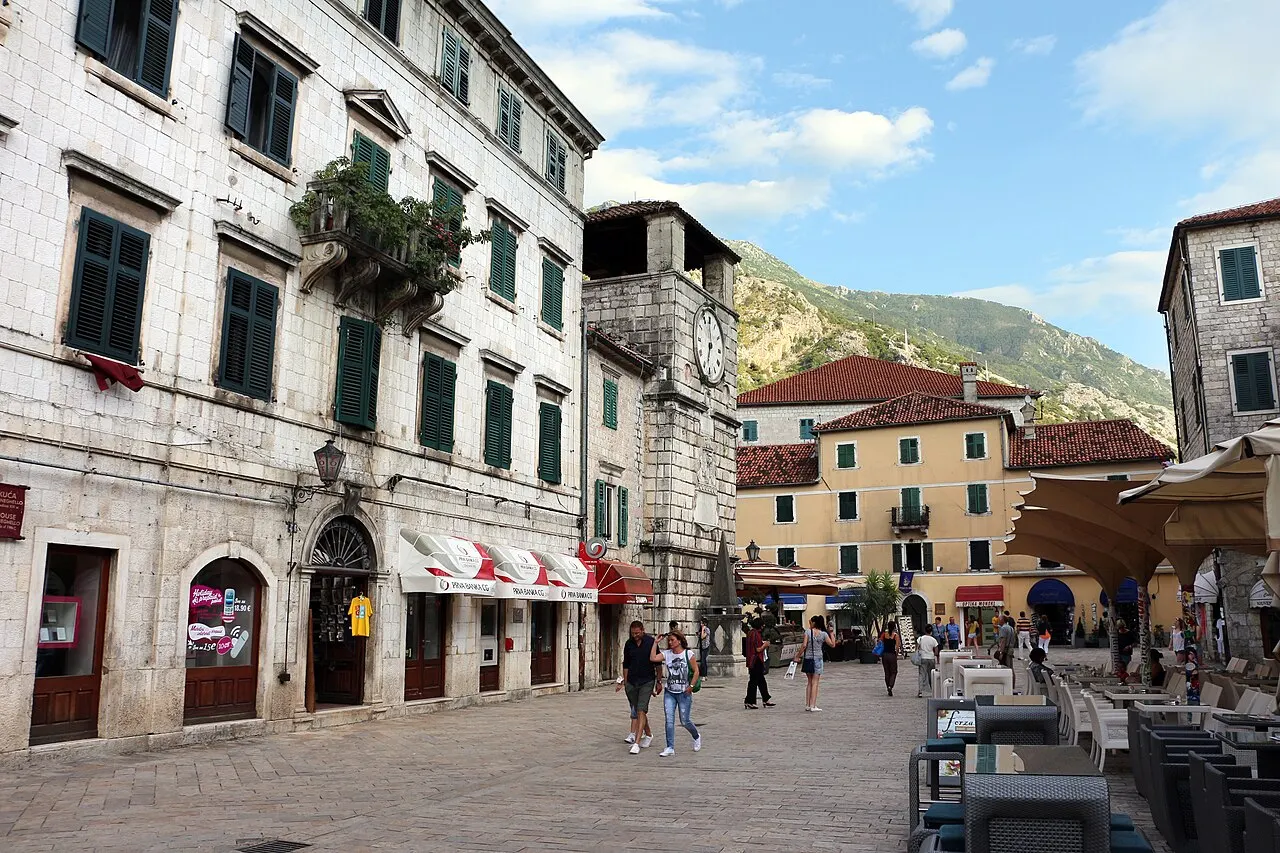
- Find the Lion of St Mark above the gate — the mark of Venetian rule across the bay.
- The leaning clock tower (1602) and the pillar of shame beside it are your orientation point.
- Arms Square is the town's main rendezvous and the easiest meeting spot to name.
 Kotor Sea Gate
The main gate's history, reliefs and the walk in from the quay.
Clock Tower & Arms SquareThe square at the heart of the town and the leaning tower above it.
Map pins
Map data © OpenStreetMap contributors · Tiles © OpenFreeMap
Step 2 — Drift to Flour Square and into the maze
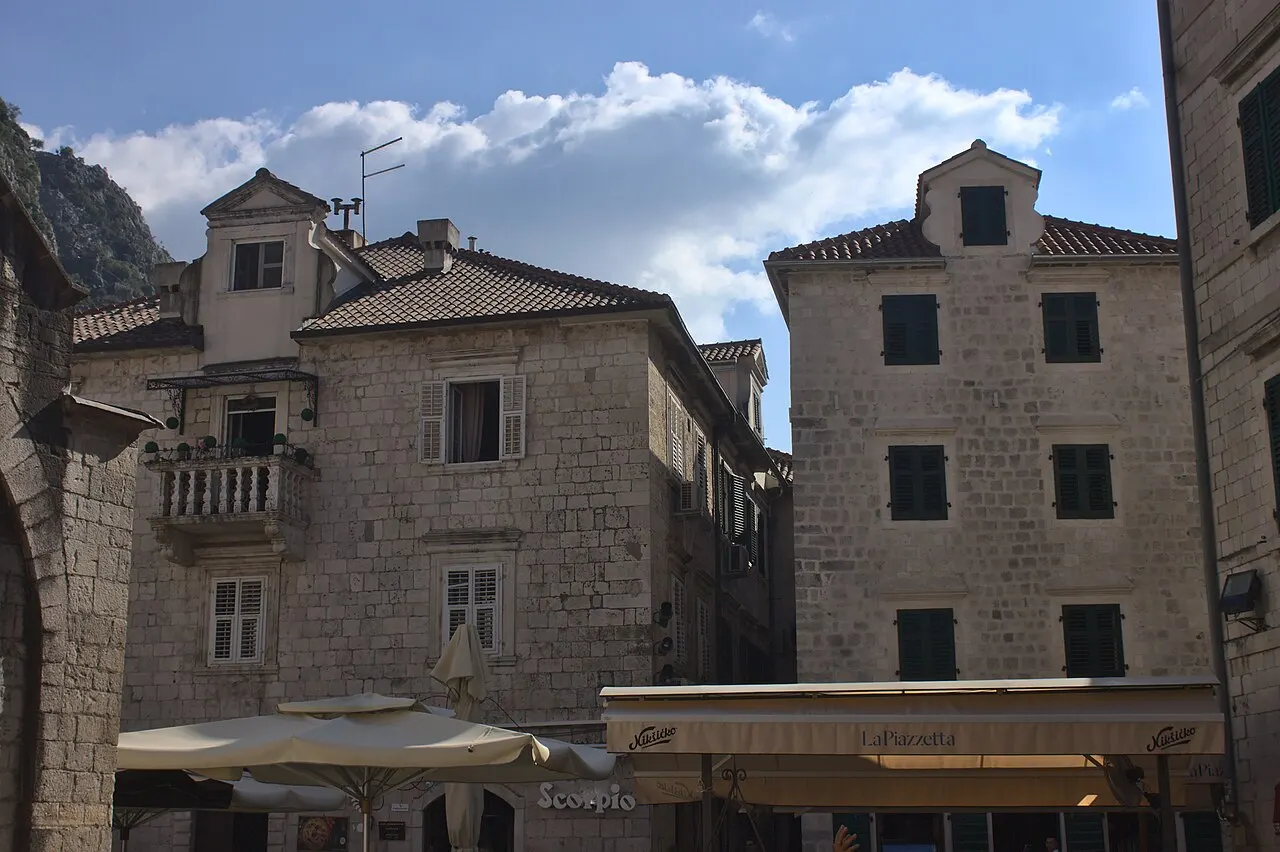
From the far corner of Arms Square, follow the main lane deeper into the town and let it open onto smaller squares. One you will likely cross is the Square of Flour (Trg od brašna), once the grain market, now ringed by old palaces — among them the Pima and Buća family houses, whose baroque balconies and stone coats of arms hint at the wealth of Kotor's merchant and captain families. This stretch is where the self-guided walk really starts to reward you, because there is no single 'must-see' here: it is the texture of the place — the worn flagstones, the green shutters, the cats asleep on warm steps, the sudden glimpses of the cliff above the rooftops.
Let yourself wander these connecting lanes between the named squares. Look up: you will see stone balconies, family crests over doorways, and the occasional Madonna in a niche. Look down: the polished limestone underfoot has been worn smooth by a thousand years of feet. This is the part of the walk to do slowly and without a phone in your hand. When you are ready, aim for the town's spiritual centre — the cathedral square — which you will sense before you see, as the lanes widen and the twin towers rise ahead.

Step 3 — St Tryphon Cathedral (the heart of the town)
The Square of St Tryphon opens up to reveal Kotor's defining building: the Cathedral of St Tryphon (Katedrala Svetog Tripuna), consecrated in 1166 and dedicated to the city's patron saint, whose relics have been venerated here for more than a thousand years. Its two unmatched Romanesque towers — rebuilt after earthquakes, which is why they do not quite match — are the town's signature silhouette, and the broad stone façade between them is the single most photographed wall in Kotor. This is the natural pause point of the whole walk, roughly its midpoint in spirit if not in distance.
Step inside if it is open and you are dressed modestly — this is an active place of worship. Within, the great stone ciborium over the high altar, fragments of medieval fresco, and the upstairs reliquary chapel reward a slow look; the treasury holds centuries of gold and silver votive work that doubles as a small museum of the town's faith and fortunes. A ticket usually covers the church and the treasury together; verify the current admission and hours, which vary with services and season. Even if you only sit on the steps with a coffee from a nearby café, give this square more time than the others — it is the emotional centre of Kotor.
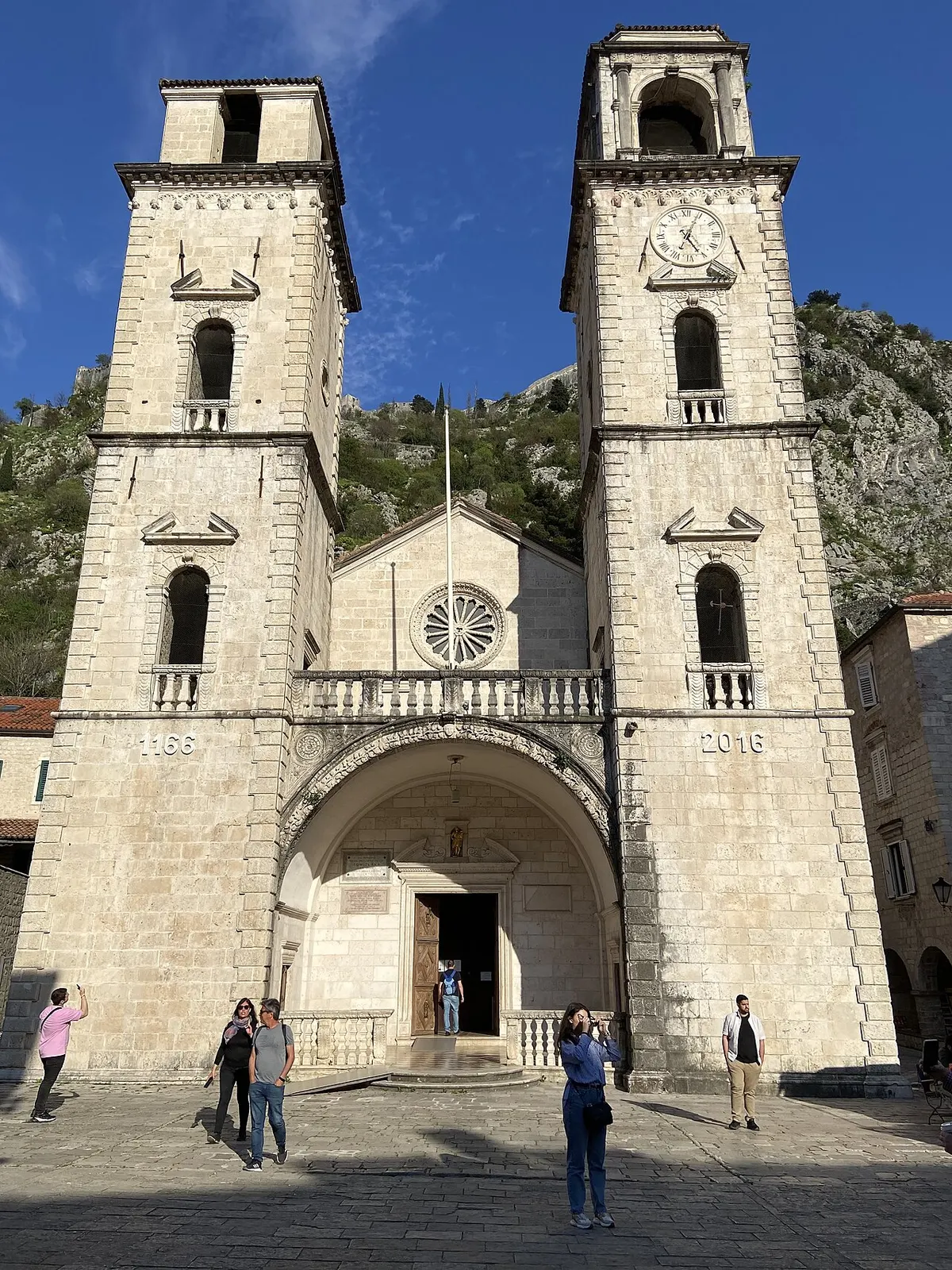
- Consecrated 1166 — one of the older cathedrals on the eastern Adriatic, dedicated to St Tryphon.
- The two towers don't match because they were rebuilt after earthquakes — look closely.
- Dress modestly to go inside; verify the combined church-and-treasury ticket and hours.
Step 4 — St Luke's Square: two churches, two faiths
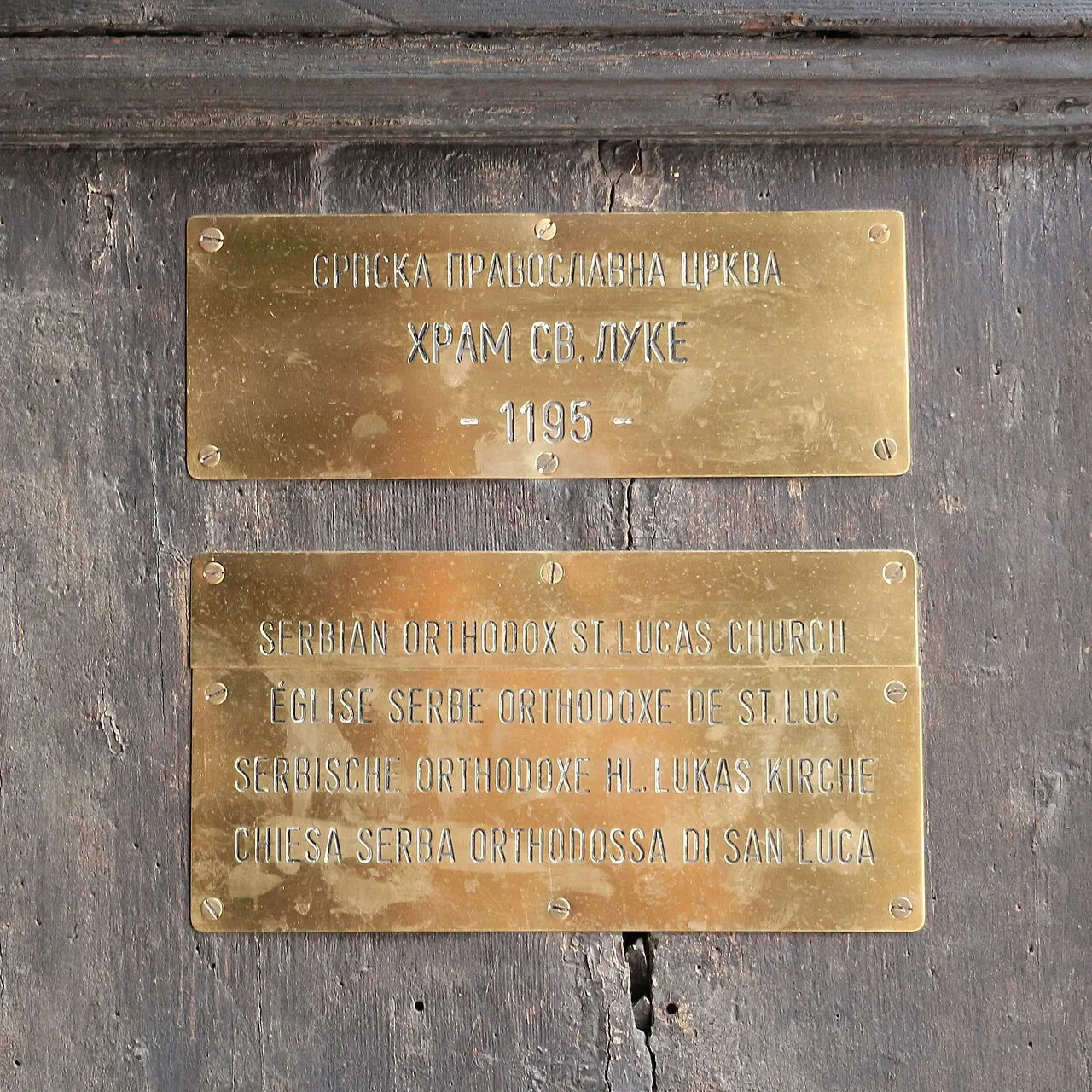
From the cathedral, wind east and north through the lanes to one of the town's most atmospheric corners: St Luke's Square (Trg Svetog Luke). At its centre sits the small Church of St Luke (Sveti Luka), built in 1195 — modest, low and beautifully plain, and unique in the town for having served both Catholic and Orthodox congregations under one roof, with two altars to prove it. That double history tells the story of Kotor's mixed faith more vividly than any plaque: for centuries the two communities shared this single church, and the floor is laid with old gravestones of the families who did.
Across the same square rises the larger, younger Church of St Nicholas (Sveti Nikola), a Serbian Orthodox church completed in the early 20th century, dark and richly iconed inside and still a working centre of Orthodox life. Together the two churches make this the quietest and most contemplative stop on the walk — a square where the town's layered religious history stands in plain sight. Step inside both if they are open, keep your voice low, and observe any signs about photography; these are living churches, not exhibits.
Step 5 — The Maritime Museum and the cats
Now thread back toward the centre for the walk's two contrasting indoor stops, both optional but both very Kotor. The first is the Maritime Museum of Montenegro, housed in the baroque Grgurina Palace near the cathedral square — three floors of ship models, captains' portraits, navigation instruments, charts and weapons that explain the whole improbable story of this inland sea and its seafaring fortunes. Give it an hour if you go in; it is the single museum that makes the rest of your Kotor trip make sense. Verify the ticket and hours before you commit, as both shift between high and low season.
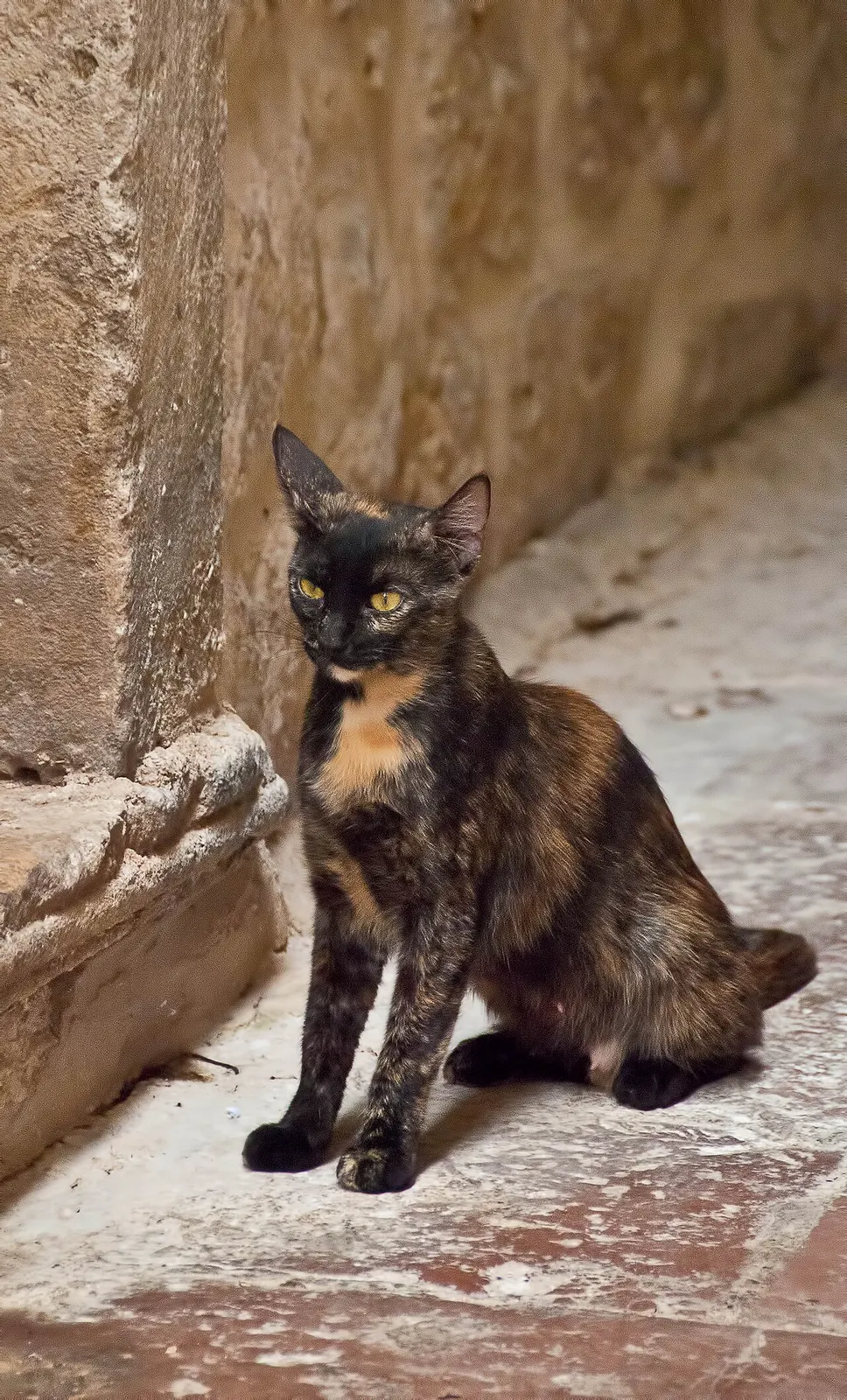
The second is far lighter: somewhere on your loop you will already have met Kotor's famous free-roaming cats, sunning themselves on warm stone and stalking the squares. They are the town's unofficial mascots, and they have a small Cats Museum of their own near the centre — a modest, charming collection of feline prints, postcards and ephemera, whose proceeds help support the strays. It is the right size for a five-minute smile, a favourite with children, and a gentle stop on a hot afternoon. Neither indoor stop is essential to the walk, but together they show the town's two faces: the grand maritime past and the soft, cat-strewn present.
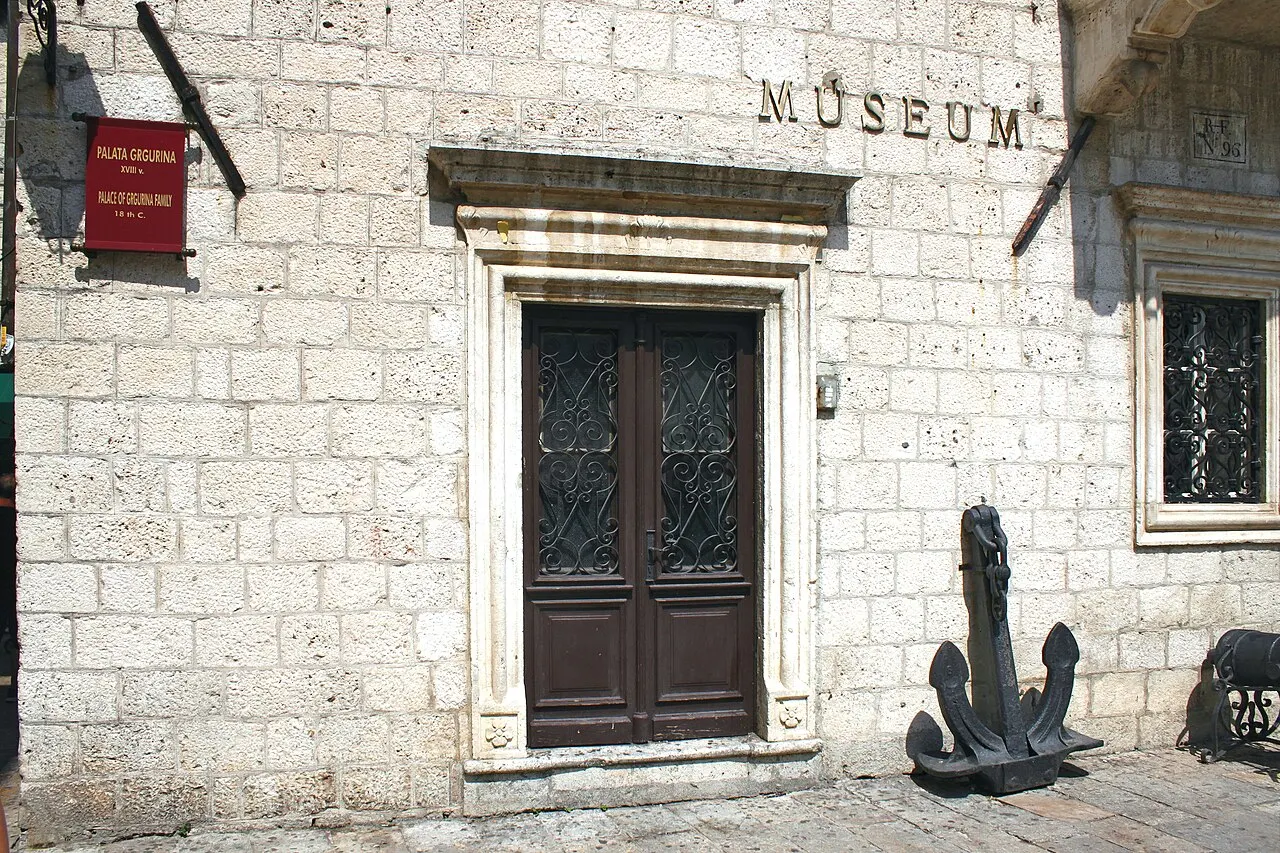
- Maritime Museum: about an hour, the best single indoor stop — verify ticket and hours.
- Cats Museum: a five-minute charmer near the centre, good with children.
- Both are optional detours off the main loop, a few minutes' walk apart.

Step 6 — The back lanes and the wall-view corners
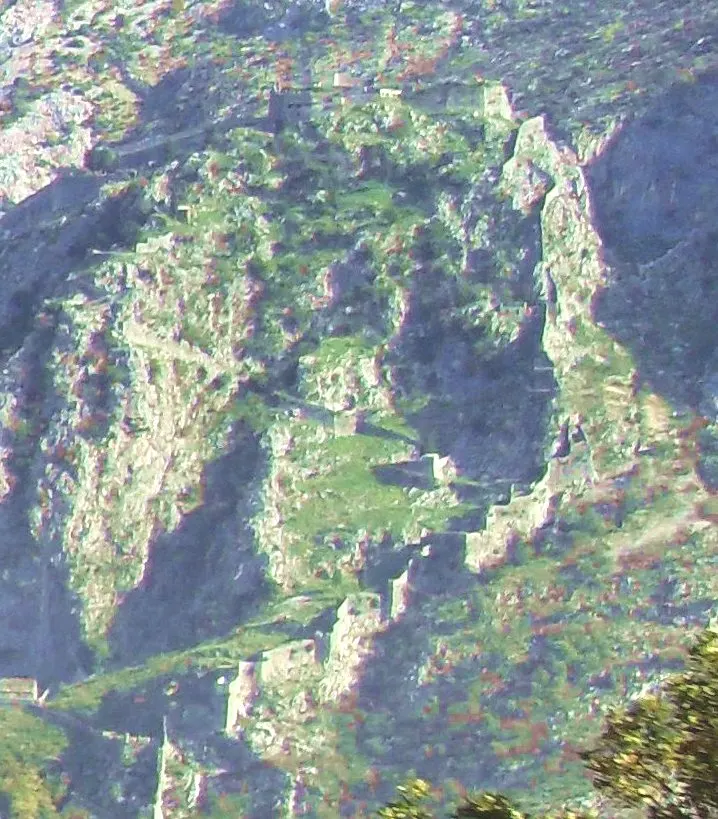
Before you loop back, give the town its quieter eastern edge. Wander toward the back of the Old Town, under the cliff, where the lanes narrow and the crowds fade and you can hear your own footsteps. Here you will find the gate at the foot of the city-walls climb — the start of the famous switchback ascent to St John Fortress — and, even if you are not climbing today, it is worth standing at its base to crane up at the ramparts zigzagging across the cliff face above the rooftops. The view of the walls from below is half the drama of them.
This back quarter is also where the town's smaller churches, blind alleys and stone staircases reward a curious wanderer: a niche shrine here, a flight of steps to a locked door there, a courtyard you were not meant to find. If you have the legs and the cool of the morning, you can break off the walk here and climb a few hundred steps up the walls just for the rooftop view, then come back down — but treat the full fortress climb as a separate outing, not a tail-end of this stroll, because it is a serious, hot, exposed ascent.


Step 7 — The River Gate, the North Gate and back
To close the loop, find your way to the town's other gates, which most day-trippers never bother with and which are all the better for it. The North Gate (River Gate, Vrata od Škurde) opens onto the little river Škurda and the moat-like channel on the town's northern edge, with a view up to the walls and a quieter, more local feel; it is the gate that faces the road to Dobrota. The southern Gurdić Gate sits above a karst spring near the cliff. Walking out of one gate and along the outside of the walls for a few minutes gives you a completely different sense of the town — its scale, its defences, its setting against water and stone.
Then drift back through the lanes to Arms Square where you began, and let the walk dissolve into what it should: a coffee, a glass of wine, and an unhurried sit while the town moves around you. That is the real end of the route — not a final monument, but the moment you stop ticking things off and simply belong in the square for a while. If you timed it for the late afternoon, stay on as the light turns gold and the lamps come up; the lanes you walked at the start become quietly, completely yours again.
- Three gates: the Sea Gate (west), the River/North Gate to the Škurda, and the Gurdić Gate (south).
- Walk a few minutes outside the walls for a fresh sense of the town's scale and setting.
- End with a coffee or a glass of wine on Arms Square rather than a final 'sight'.
Eat, drink and shop along the route
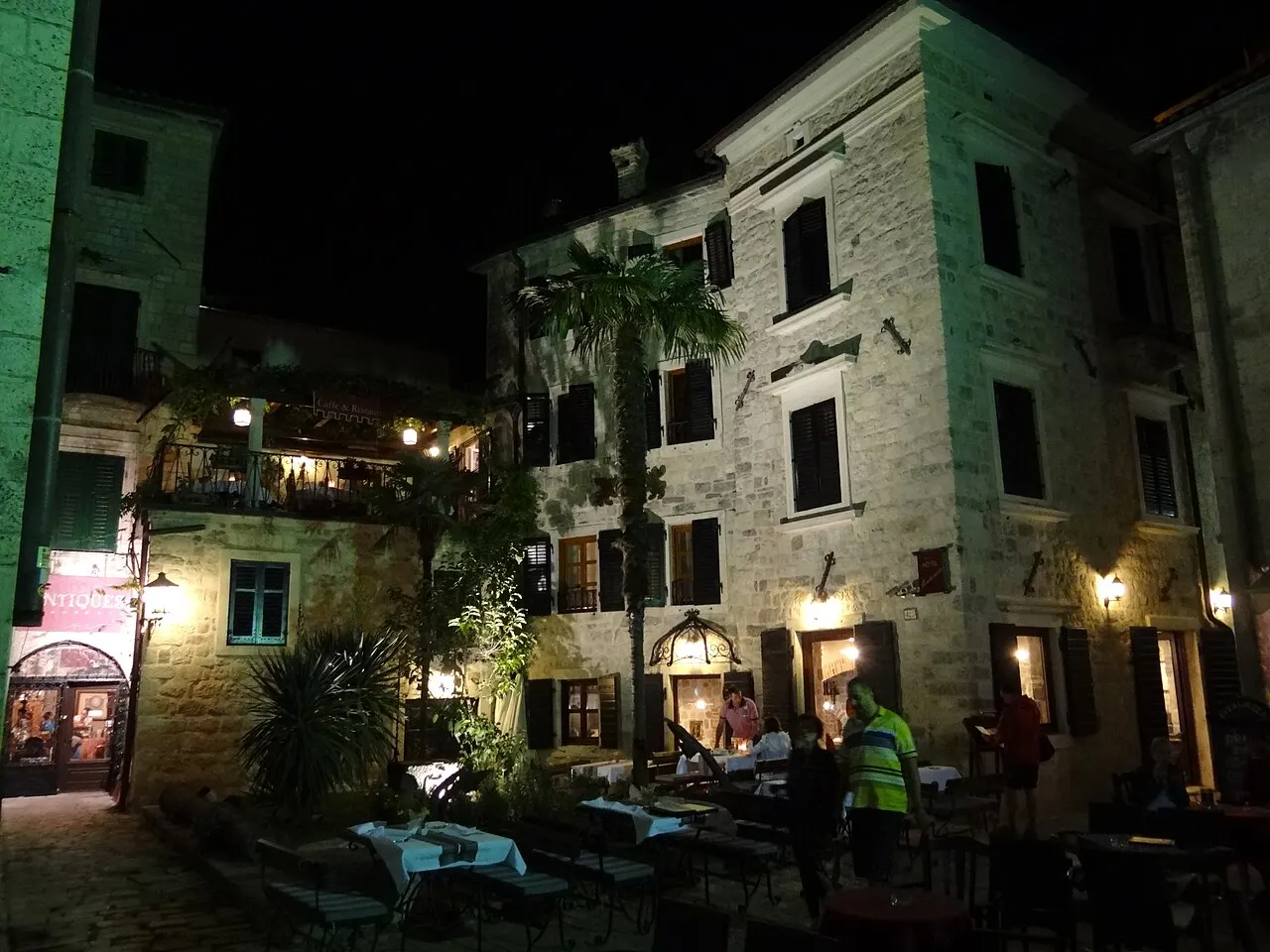
Half the pleasure of this walk is what you stop for between the sights, and the loop passes the best of it. For coffee, the cafés around Arms Square and the cathedral square are the obvious sit-down points — the squares are made for watching the town go by — though you pay a little for the setting; a lane or two back you will find quieter, cheaper tables. For a meal, the same rule holds: the konobas tucked into the side alleys off the main squares serve the bay's buzara, fresh fish and Njeguši prosciutto for better value than the plaza-front tables, and after the ships sail those lanes turn lamplit and calm. If you want to assemble a picnic instead, the open-air market just outside the walls, by the Sea Gate, sells bread, cheese, cured ham, olives and fruit for a few euros — the cheapest and most local lunch in town, carried to a bench by the water.
On shopping, Kotor leans hard and happily into its own character. Expect cat-themed everything — the strays are the town's mascots, and the souvenir shops know it — alongside local olive oil, honey, rakija, Njeguši products and the usual run of trinkets. The better buys are the edible ones: a vacuum-pack of prosciutto or a jar of honey travels well and tastes of the place. Window-shop as you walk rather than making a special trip of it; the shops are woven through the same lanes the route already follows, so you lose nothing by browsing as you go and everything by treating shopping as a separate errand that pulls you out of the town's rhythm.
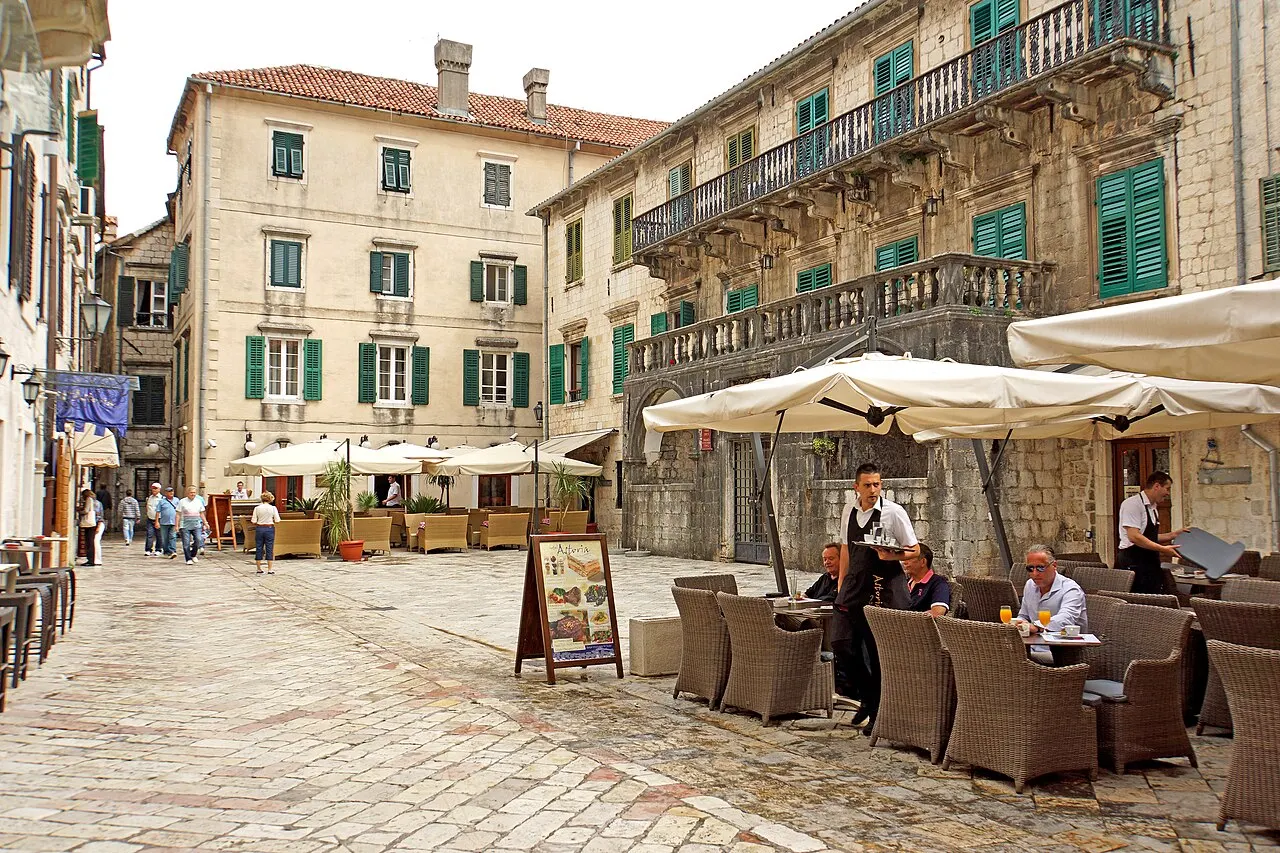
- Coffee on the squares for the setting, or a lane back for quieter, cheaper tables.
- Eat buzara, fish and Njeguši ham in the side-alley konobas off the main squares for better value.
- Build a cheap picnic from the open-air market by the Sea Gate — bread, cheese, ham, olives, fruit.
- Shop as you walk: cat souvenirs, local oil, honey, rakija and Njeguši products line the same lanes.

Walking the Old Town with children
The Old Town is an easy and rewarding walk with children, partly because it is car-free, compact and impossible to get badly lost in, and partly because it comes with its own built-in entertainment: the cats. Turning the loop into a gentle cat-hunt — counting them, spotting them dozing on warm steps and in doorways — keeps small legs moving between the grown-up sights, and the little Cats Museum near the centre makes a perfect short, cheap stop pitched exactly at a child's attention span. Keep the church and museum visits brief, reward progress with an ice cream from one of the square cafés, and the whole walk becomes a game rather than a slog.
A few practical notes help with younger children. The lanes are flat but the limestone is polished and slippery, especially after rain, so sensible shoes matter for little feet too; prams are workable on the flat lanes but awkward on the few sets of steps. There is plenty of shade in the narrow lanes but the open squares get hot at midday, so carry water and time the walk for the cooler morning. And the real fortress climb is emphatically not a children's add-on to this stroll — stand at its base for the view up if you like, but save the full ascent for older kids and a separate, cooler outing.
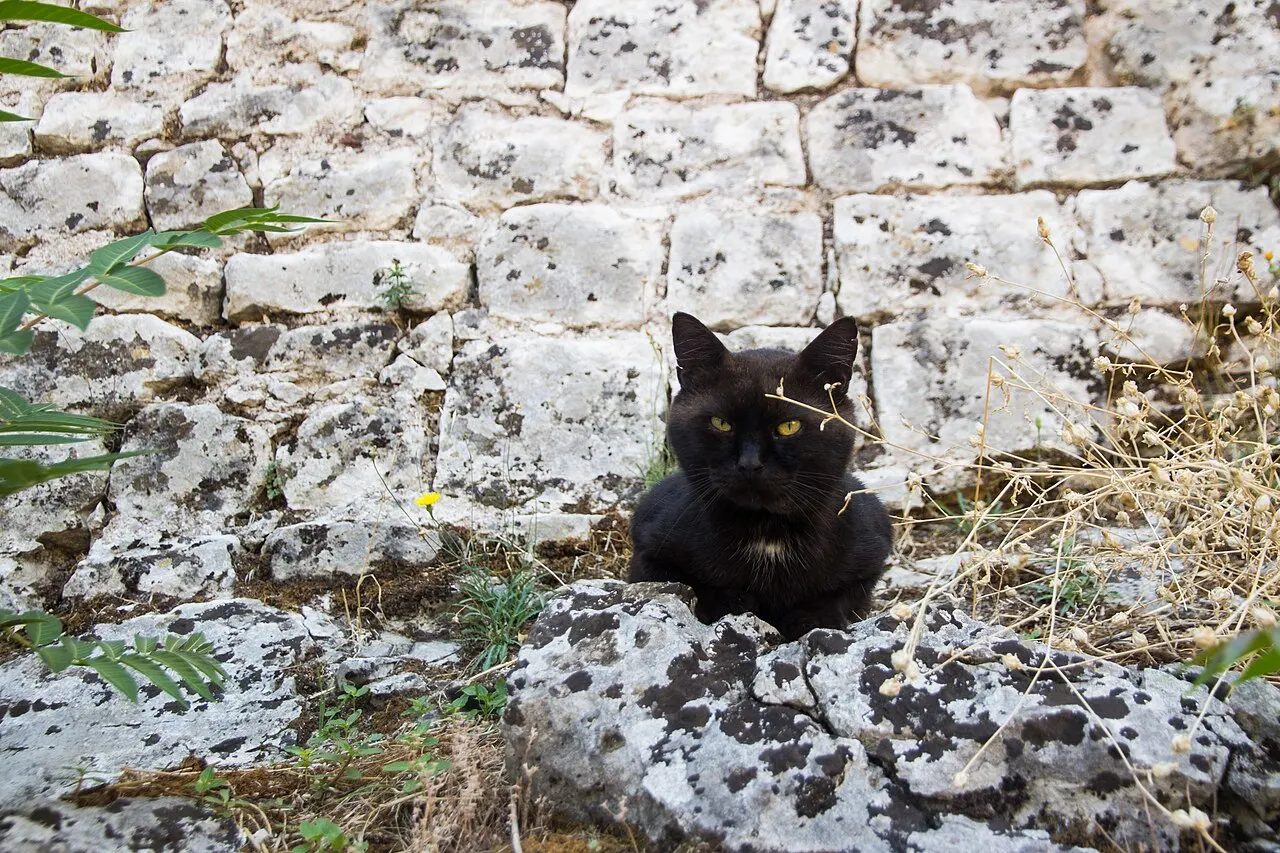
- Turn the loop into a cat-hunt; the Cats Museum is a perfect short, cheap stop for children.
- Keep church and museum visits brief and reward progress with an ice cream on a square.
- Polished lanes are slippery when wet; prams work on the flat but not the few steps.
- Skip the fortress climb with young kids — stand at its base for the view up instead.
Timing, pacing and making it your own
Done briskly, this loop is little more than an hour; done properly — with the cathedral, a museum, the churches and a coffee — it is a relaxed half-day, two to three hours of walking and dawdling combined. The distances are tiny, so the variable is always how long you linger, not how far you go. If you have only a short cruise call, prioritise Steps 1, 3 and 4 (Sea Gate, cathedral, St Luke's Square) and save the museums for a return trip. If you have a whole morning, take the detours, climb a few steps of the walls for the view, and let the cats slow you down.
Two last pieces of advice. First, wear shoes you can walk on polished, uneven stone in — the limestone is beautiful and treacherously smooth, especially after rain. Second, do this walk twice if you can: once at the quiet edges of the day to feel the town, and once in the busy middle only if you must, to appreciate how much better the early or late version was. Kotor's Old Town is small, but walked at the right hour and the right pace it holds more than its size suggests — which is exactly why it has been a UNESCO-protected place for half a century.
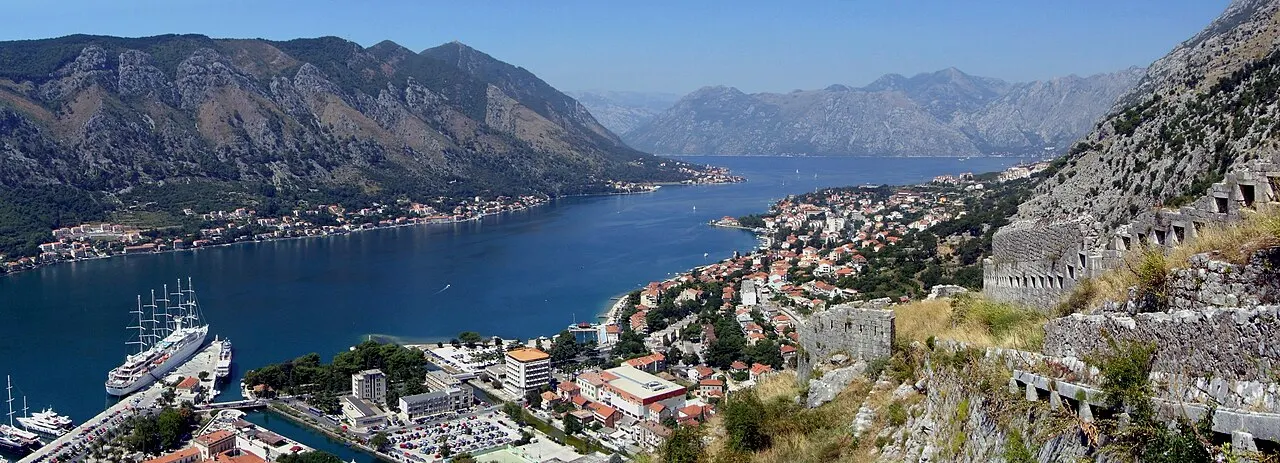


Kotor Old Town: A Guide to Stari Grad
How to explore Kotor's walled Old Town (Stari Grad): the gates, the squares you navigate by, St Tryphon Cathedral, the small churches, the cats, the museums and the quiet corners away from the crowds.
Read guide
St Tryphon Cathedral, Kotor
How to visit Kotor's landmark Romanesque cathedral, consecrated in 1166: the twin bell towers, the treasury and the relics of St Tryphon, the art, the square, and the Old Town heritage that surrounds it.
Read guide
Best Cafés in Kotor
Where to sit over coffee in and around Kotor: the Old Town squares for people-watching, quiet courtyards and side-lane spots, bay-view and Dobrota promenade terraces, gelato counters, rainy-day indoor rooms, and how to beat the cruise crowds to the best morning cup.
Read guide