
St George Island, Perast
A guide to St George Island (Sveti Đorđe) off Perast: the cypress-clad natural islet with its Benedictine monastery, why it is closed to visitors, the legends and the 'Isle of the Dead' association, how it differs from Our Lady of the Rocks, and the best places to view and photograph it.

Photo: Benjamin Nilsen / Unsplash
- ✓St George (Sveti Đorđe) is the second of Perast's two famous islets — a natural island, unlike its man-made twin Our Lady of the Rocks just beside it.
- ✓It is dark with cypress trees and crowned by an old Benedictine abbey/monastery, one of the oldest religious sites in the bay, with records going back centuries.
- ✓The island is not open to the public — it remains a working religious site with a graveyard — so you admire it from the Perast shore or from the boat.
- ✓Its cypresses and brooding silhouette are often linked to Arnold Böcklin's painting 'Isle of the Dead', and to local legends of love and loss.
- ✓Seen together with the open, welcoming Our Lady of the Rocks, the two islands form the single most iconic image of the Bay of Kotor.
- ✓The best plan: visit Our Lady of the Rocks by boat and photograph St George from the water, or shoot both islands from the Perast waterfront at golden hour.
The bay's other island — and how it differs from its twin
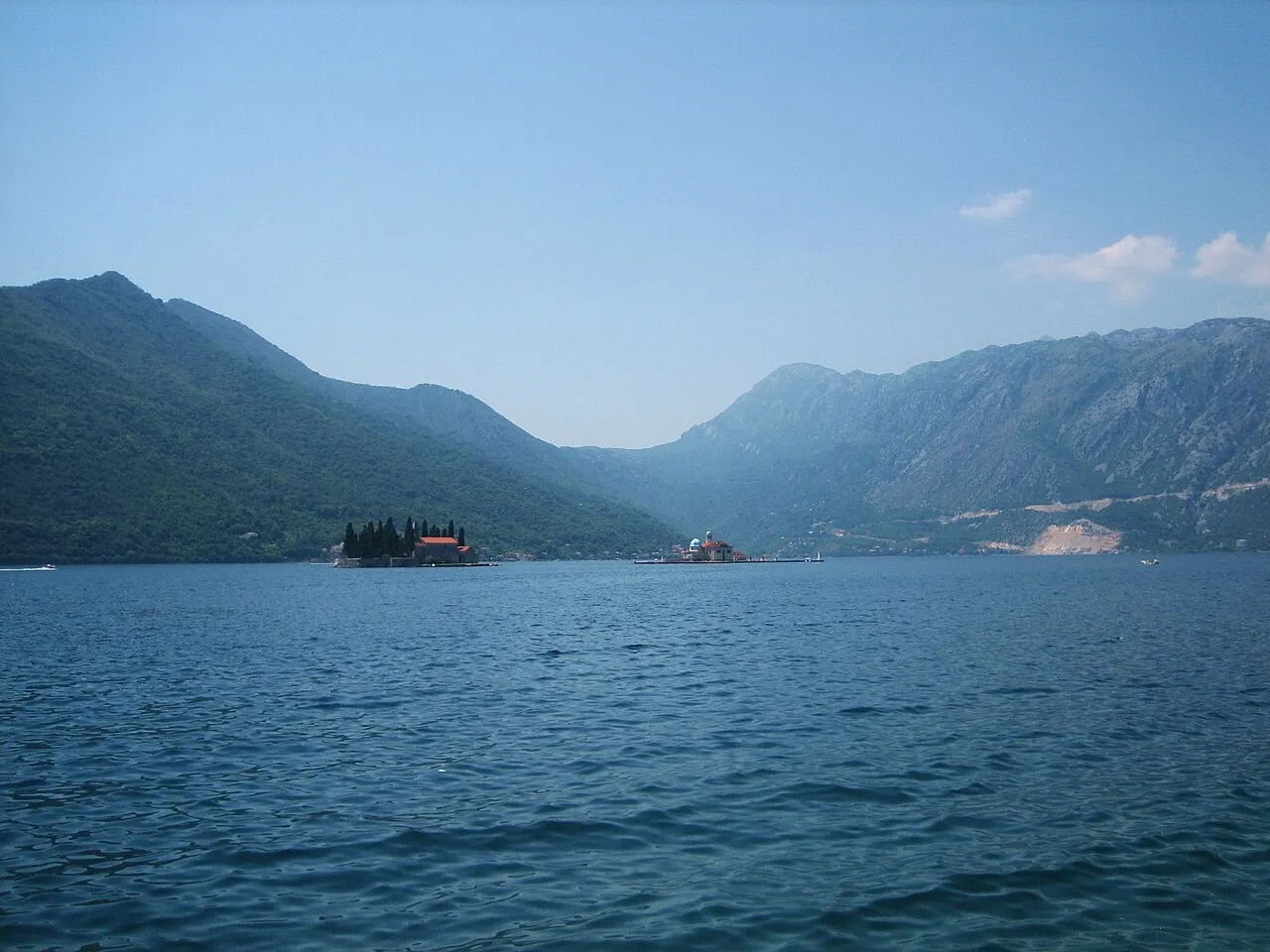
Two small islands sit in the bay just off Perast, so close together that most visitors photograph them as a pair without quite registering how different they are. The famous one, the one everyone steps onto, is Our Lady of the Rocks: open, flat, man-made, crowned by a blue-domed church. Its quieter neighbour is St George — Sveti Đorđe — and it is, in almost every way, the opposite.
St George is a natural island, real geology rather than centuries of dropped stone. Where Our Lady of the Rocks is sunlit and welcoming, St George is dense with tall, dark cypress trees that crowd around an old stone monastery and an enclosed graveyard, giving it a still, hushed, almost solemn air. It is not a place you visit so much as a place you contemplate from a distance — and that, oddly, is part of what makes it so compelling. The bay's two islands tell two halves of one story: arrival and rest, the living church and the silent grove.
The monastery, the cypresses and a very old history
St George carries one of the longest histories in the bay. A Benedictine monastery has stood on the island for many centuries — references reach back to the Middle Ages — making it among the oldest religious foundations in the Boka Kotorska. For long stretches it was an important abbey, holding sway over land and churches around Perast, and its abbots were figures of real local power. The buildings you see today, low stone among the trees, are the descendants of that long monastic presence.
The cypresses are not incidental. On Adriatic islands cypress traditionally marks consecrated and burial ground, and St George holds an old cemetery: many of Perast's most prominent families, its captains and noble houses, were laid to rest here over the generations. That blend of monastery and graveyard, evergreens and stone, gives the island its particular gravity. It is beautiful in a way that is closer to reverent than picturesque — a small dark grove of memory anchored in the bright bay.
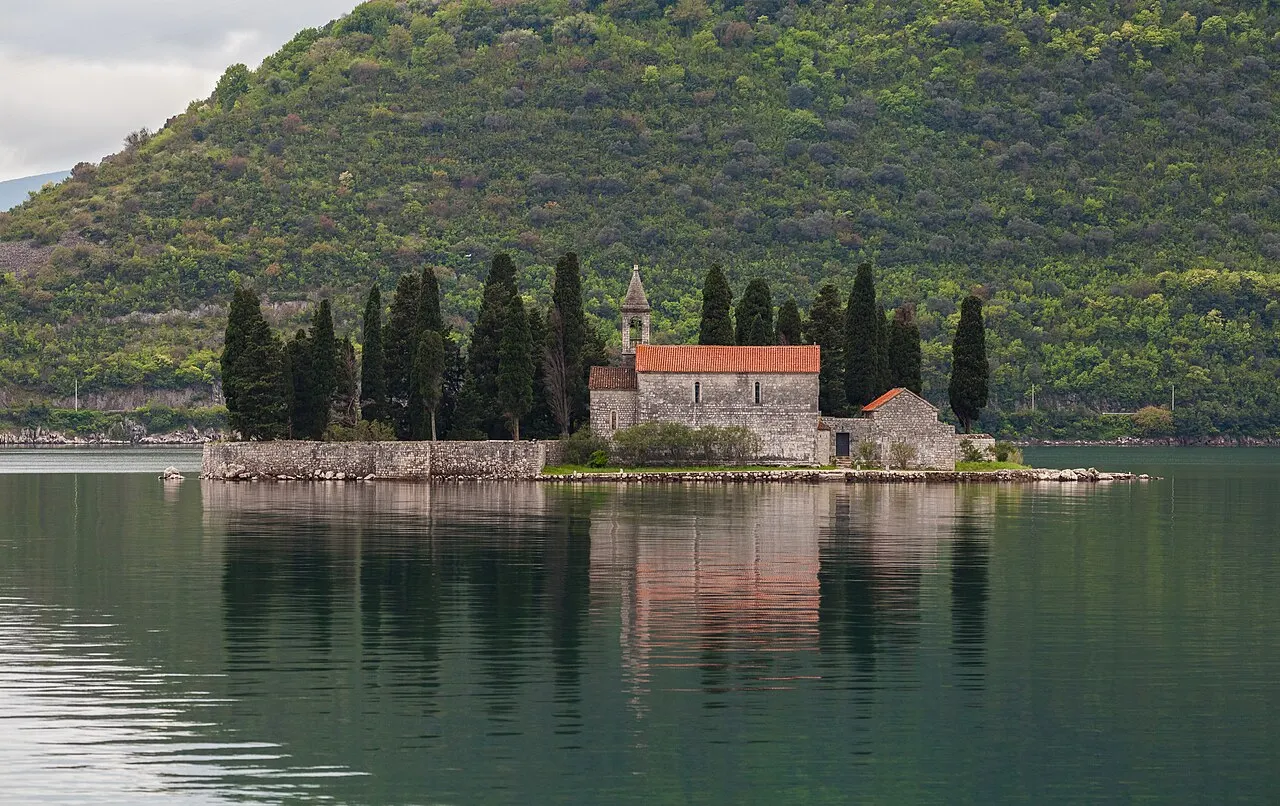
- A Benedictine monastery has stood here for many centuries — one of the oldest religious sites in the bay.
- Once a powerful abbey holding land and churches around Perast.
- Holds an old cemetery where many of Perast's noble families and captains are buried.
- Its tall cypresses traditionally mark consecrated and burial ground.

Map pins
Map data © OpenStreetMap contributors · Tiles © OpenFreeMap
Why you can't land on St George
The most common question about St George is also the simplest to answer: no, you cannot visit it. Unlike Our Lady of the Rocks, the island is not open to the public. It remains a working religious site with an active cemetery, and access is reserved — it is not a tourist stop, and the boats from Perast do not land there. This sometimes surprises people who assume the two islands must work the same way; in fact their whole appeal lies in being a contrasting pair, one open and one closed.
That restriction is worth respecting rather than resenting. Part of what gives St George its atmosphere is precisely that it has been left alone — quiet, intact, free of the foot traffic that the more famous islands of the Adriatic carry. The good news is that you lose almost nothing as a visitor: the island is at its most striking seen whole, from a little distance, where the cypresses and monastery read as a single dark silhouette against the bay. Up close you would only ever see fragments; from the water or the shore you get the picture entire.
- St George is closed to visitors — an active monastery and graveyard, not a tour stop.
- Perast boats run to Our Lady of the Rocks, not to St George.
- It is best appreciated from a distance, where the island reads as one dramatic silhouette.
- Respect the closure: the island's stillness is exactly what makes it special.
Legends, the 'Isle of the Dead' and a love story
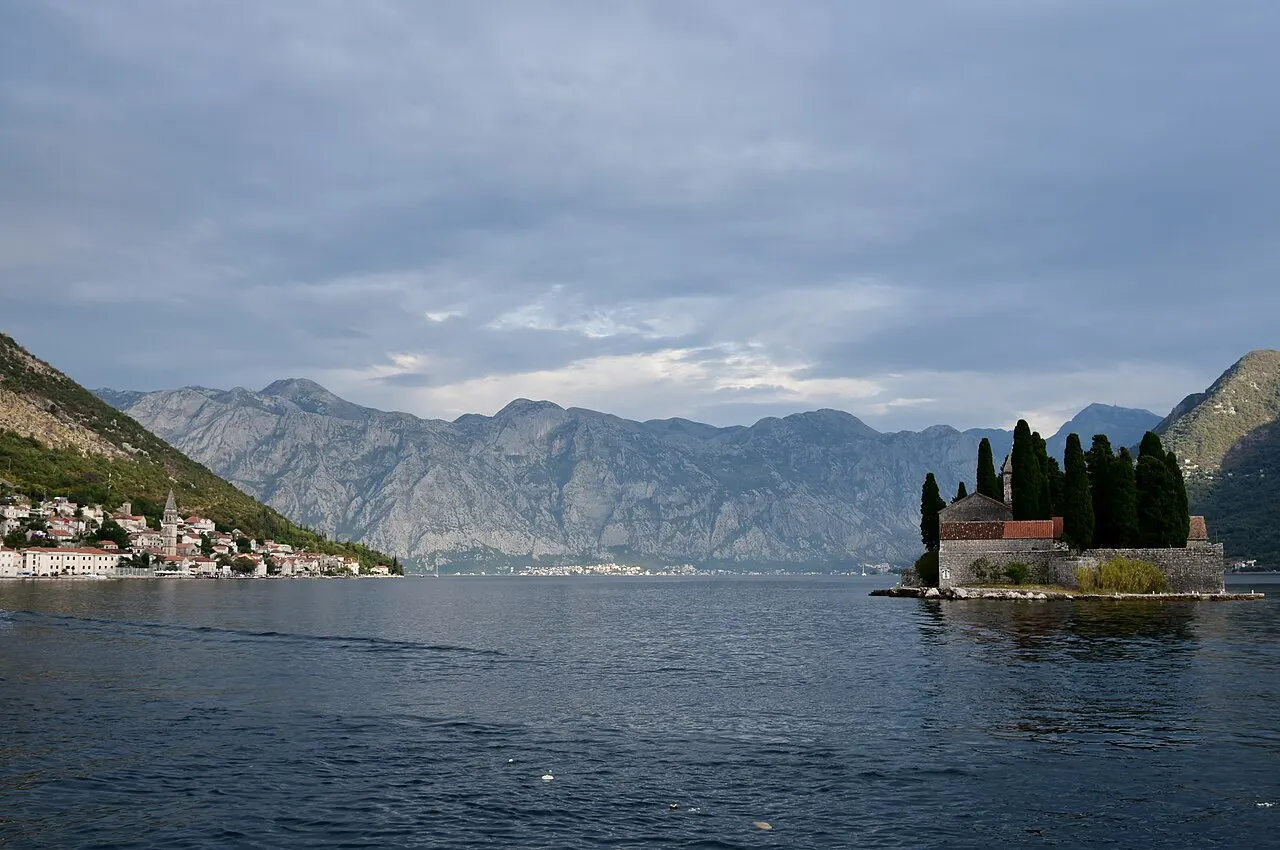
An island this brooding inevitably gathers stories. The most famous association is artistic: St George's profile — a cluster of black cypresses rising from a small rocky island — is widely linked to Arnold Böcklin's haunting 19th-century painting 'Isle of the Dead' (Die Toteninsel). Whether or not Böcklin had Perast specifically in mind is debated, but stand on the Perast quay at dusk and the resemblance is uncanny: the same dark grove, the same hush, the same sense of an island that keeps to itself. Treat the connection as evocative tradition rather than settled fact.
The local legends lean to love and loss, as bay legends tend to. One often-told tale has a French (or Napoleonic-era) soldier who, in the fighting around the bay, accidentally killed his own beloved's father or brother; in grief and penance he is said to have retreated to or been buried on the island. Versions vary, and the historical truth is hazy — these are stories the bay tells about itself as much as documented events. But they suit the place perfectly: St George is the island of memory and mourning to Our Lady of the Rocks' island of hope and return.

Where to view and photograph it
Since you can't set foot on St George, the whole art of visiting it is choosing your viewpoint. The two best are the Perast waterfront and the water itself. From the long stone promenade in Perast you look straight out at both islands, almost level with the bay — the classic frame, with St George's cypresses on one side and the blue dome of Our Lady of the Rocks on the other. Walk a little along the front to line them up or separate them as you prefer.
From a boat — the short one out to Our Lady of the Rocks, or a wider bay tour — you pass close to St George and get it in profile against open water and the far mountains, often the more dramatic angle. For something different, the elevated views above Perast (from the road climbing toward the Kotor side, or higher viewpoints around the bay) compress both islands against the water far below, a composition that turns up on every postcard of the Boka.
On light: early morning gives clean, still reflections and few boats; late afternoon and dusk give the moody, golden, silhouette images the island is made for. Midday is harsh and crowded with tour traffic — the least flattering time for a photograph here. A short lens captures both islands together; a longer one isolates St George's cypresses and monastery for a more intimate, atmospheric shot.
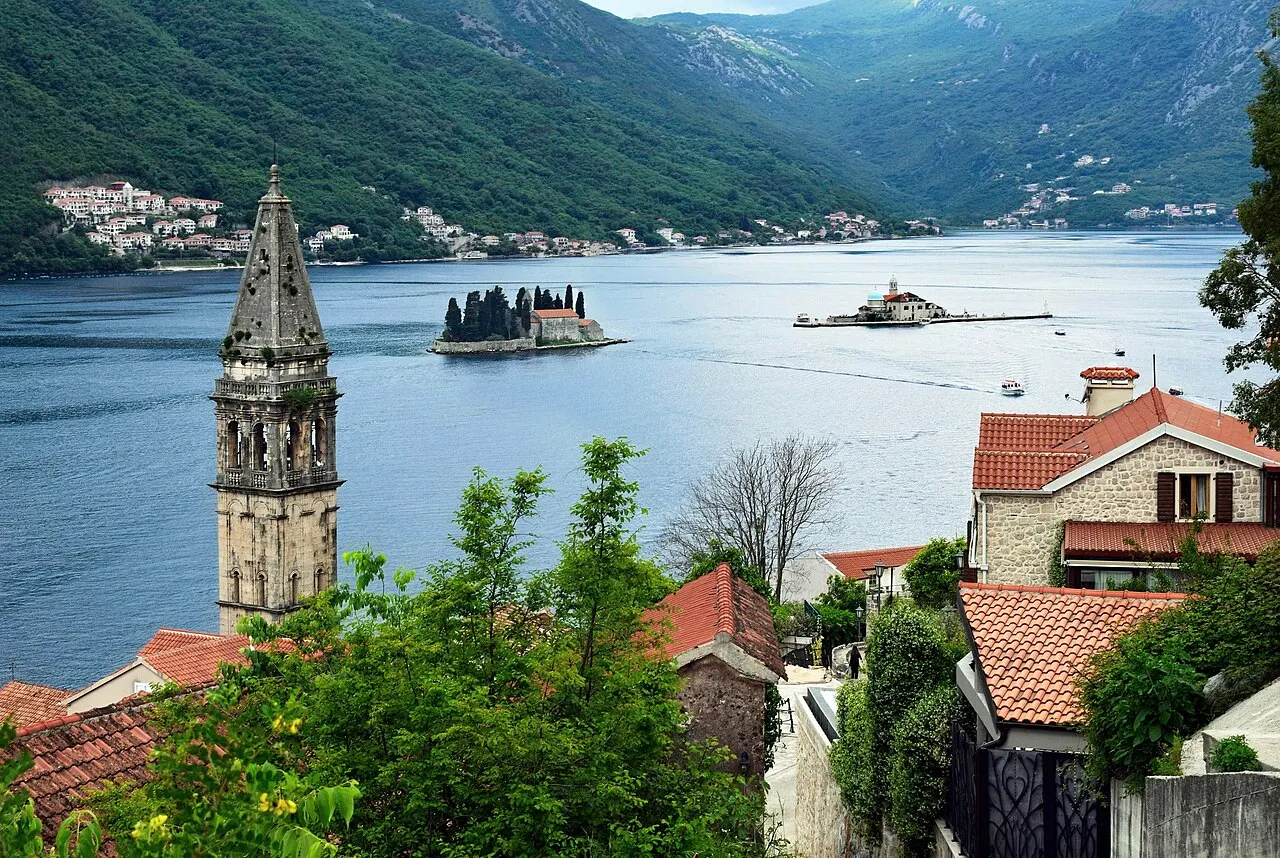
- From the Perast waterfront — the classic near-level frame of both islands together.
- From the boat to Our Lady of the Rocks — St George in profile against open water and mountains.
- From the elevated road/viewpoints above Perast — both islands compressed against the bay, the postcard shot.
- Best light: early morning for stillness and reflections; dusk for the moody silhouette.
- Short lens for both islands; longer lens to isolate St George's cypresses and monastery.
Making a half-day of the two islands and Perast
St George is rarely a destination on its own; it is the quiet half of a lovely Perast half-day. The natural plan is to come to Perast, wander its baroque waterfront and palaces, take the short boat to Our Lady of the Rocks to see the church and museum, and view St George from both the shore and the water as you go. That gives you the whole pairing — the island you walk on and the island you only ever look at — in a couple of unhurried hours.
Time it for the edges of the day if you can. Mornings are calm and the islands sit mirror-still; late afternoons hand you the golden light and the chance to linger over a drink on the Perast quay as the cypresses of St George turn to silhouette. From Kotor it's a short trip out, by car, bay bus, taxi or boat tour — easily folded into a wider day on the water that might also reach further up or out of the bay.

St George Island at a glance
Use this card to set expectations before you go — and remember the one rule that doesn't change: St George itself is not open to visitors, so plan to view it, not land on it. Verify volatile details (Perast boat schedules and fares for the neighbouring island, viewpoint access) locally as they shift with the season.
- What: a natural islet off Perast with a centuries-old Benedictine monastery and graveyard (Sveti Đorđe).
- Twin: sits beside the man-made Our Lady of the Rocks — together the iconic image of the bay.
- Access: closed to the public — view from the Perast shore or from the boat, not by landing.
- Atmosphere: dark cypresses, an old abbey and noble graves; linked to Böcklin's 'Isle of the Dead'.
- Best viewpoints: the Perast waterfront, the boat to Our Lady of the Rocks, and elevated roads above Perast.
- Best light: early morning for reflections; dusk for the moody silhouette.
- Plan: pair with Our Lady of the Rocks and Perast for an unhurried half-day.

Our Lady of the Rocks
A guide to Our Lady of the Rocks off Perast: the legend and the votive stones that built the islet, the 17th-century church, its icon, silver tablets and museum, the short boat across, the Fašinada ritual, and how to time and photograph a visit.
Read guide
Perast
The baroque captains' town on the Bay of Kotor: its seafaring palaces and churches, the waterfront walk, St Nicholas and its bell tower, the boats to Our Lady of the Rocks, the Fašinada, and how to arrive, stay and eat.
Read guide
Best Photo Spots in Kotor
Where and when to photograph Kotor and the bay — the fortress switchbacks, the lamplit Old Town lanes, the cats, the boats, the Perast islands, the rooftops and the golden-hour bay compositions.
Read guideMore in Bay of Kotor
6
Bay of Kotor Boat Tours
Compare the kinds of boat trip on the Bay of Kotor: shared group tours, fast speedboat trips, private charters, the Perast and Our Lady of the Rocks classic, the Blue Cave route, and sunset cruises — what each suits, rough durations and the weather caveat.
Read guide
Best Swimming Spots in the Bay of Kotor
The best places to swim in the Bay of Kotor, compared by access, water, shade, families, boat traffic and view: the Dobrota platforms, the Muo and Prčanj rocks, the quiet Stoliv, Orahovac and Ljuta coves, and the clear-water Luštica beaches out toward the open sea.
Read guide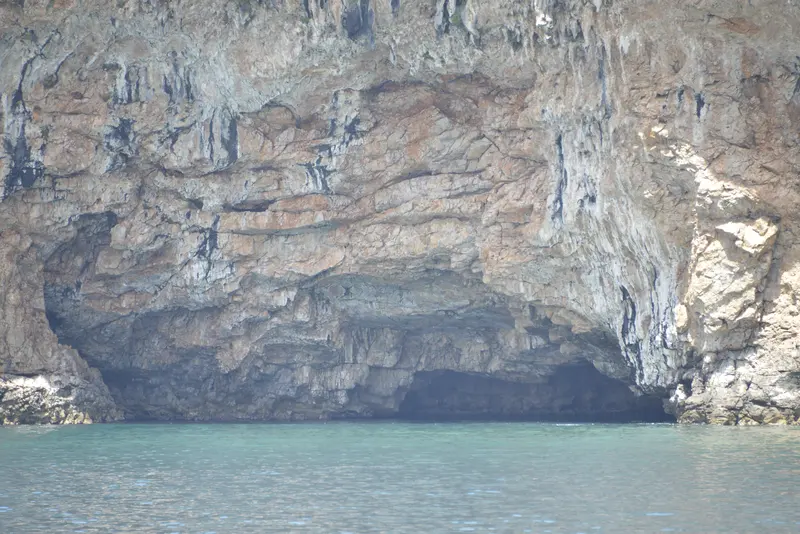
Blue Cave Montenegro
Is the Blue Cave (Plava Špilja) worth it from Kotor? What it is and why the water glows, where it sits near the bay mouth, how trips reach it, the sea-condition and timing realities, swimming inside, the crowds, and the honest verdict with alternatives.
Read guide
Kayaking & SUP in Kotor Bay
Where paddling works in the Bay of Kotor: the sheltered inner bay off Dobrota, Muo and Prčanj, the beginner-friendly routes, the all-important morning-wind safety rule, what to rent and which guided trips to join, and who kayaking and stand-up paddleboarding suit.
Read guide
Kotor Sunset Cruise Guide
When to book a sunset cruise in Kotor and what route to choose: why the bay is at its most beautiful at golden hour, the Perast run versus the open-bay loop, group boats versus going private, and how the high mountains change the sunset itself.
Read guide
Kotor to Perast by Boat
Every way to get from Kotor to Perast and Our Lady of the Rocks: boat tours (shared and private), the bay bus, taxi and driving — with steps, rough durations and the catch that there is no scheduled passenger ferry.
Read guide