
Stoliv Guide
A guide to Stoliv, one of the quietest villages on the Bay of Kotor's western shore: the waterfront Lower Stoliv, the old stone path climbing to abandoned Upper Stoliv and its church, the chestnut woods and camellias, swimming, and the car-dependent stays.

Photo: Dean Milenkovic / Unsplash
- ✓Stoliv is a small, deeply quiet village on the bay's western (Vrmac) shore, beyond Prčanj — one of the calmest corners of the whole Boka.
- ✓It comes in two halves: Lower Stoliv (Donji Stoliv) on the waterfront, and Upper Stoliv (Gornji Stoliv) high on the mountain, largely abandoned and reached only on foot.
- ✓An old stone footpath climbs through chestnut woods from the shore to Upper Stoliv and its church of St Elijah, with sweeping bay views as the reward.
- ✓The village is famous locally for its camellias — there is a long-standing spring camellia tradition on this stretch of the bay — and for chestnut woods on the slopes above.
- ✓Swimming is off the rocks, ladders and platforms of the waterfront, in clear, deep, calm bay water — there is no sandy beach.
- ✓Stays here are few and quiet, and the village is genuinely car-dependent: come with wheels or budget for taxis, and confirm access and parking with your host.
Where Stoliv is, and what kind of place it is
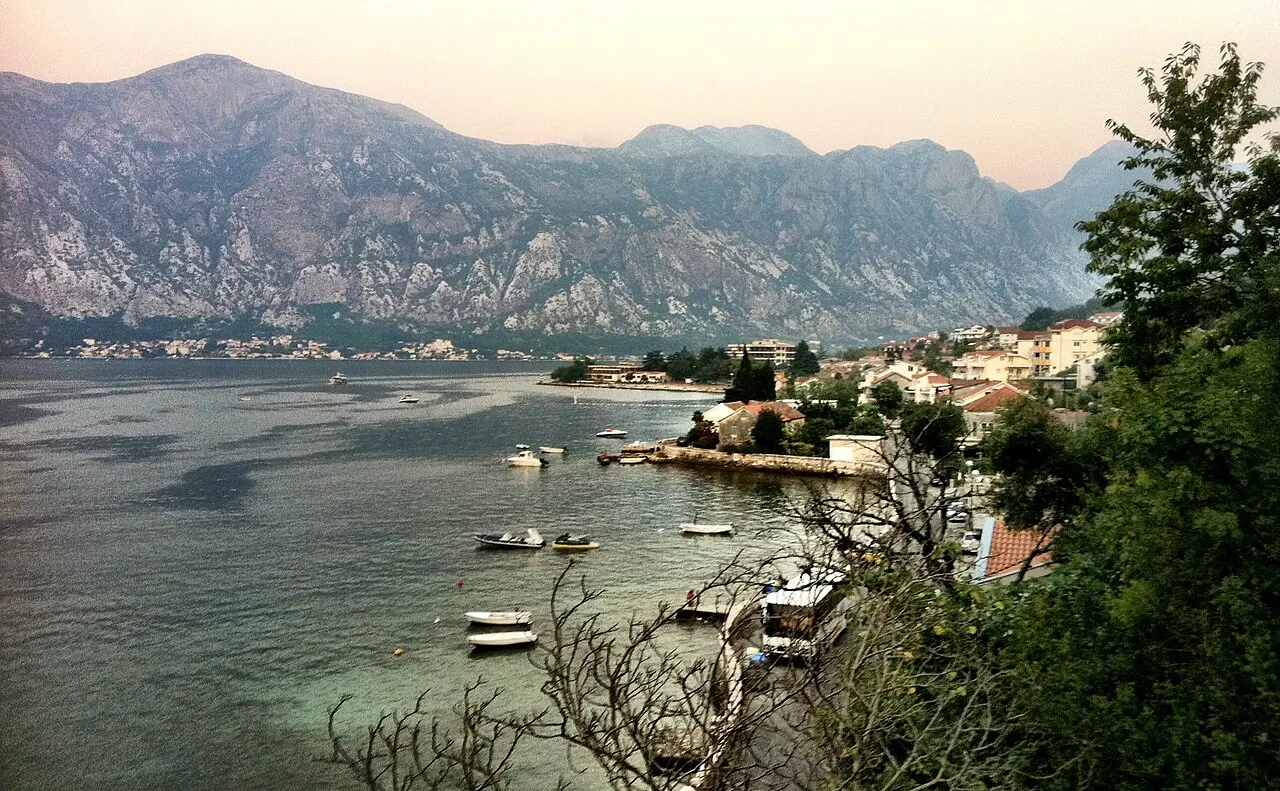
Stoliv sits on the western shore of the inner Bay of Kotor, on the flank of the Vrmac peninsula, continuing south-west past Muo and Prčanj toward the bay's next narrows. It is one of the smallest and quietest of the bay's old captains' villages — a thin run of stone houses, chapels and gardens along the water, with the steep, green slope of Vrmac rising straight up behind. Where Kotor is the bay's bustling medieval heart and Dobrota its busy waterfront, Stoliv is the hush: a place where the loudest sound is usually the water, a passing boat, or birdsong from the woods above.
What makes Stoliv unusual, even among the quiet bay villages, is its split personality. There is the village you see from the water — Lower Stoliv (Donji Stoliv), strung along the shore — and there is a second, older village hidden high on the mountainside above it: Upper Stoliv (Gornji Stoliv), now largely abandoned, its stone houses returning slowly to the chestnut forest. The two are linked by an old footpath, and that climb is the heart of what brings curious travellers here. Stoliv rewards people who like their beauty quiet, their history a little melancholy, and their days unhurried.

Lower Stoliv: the waterfront village
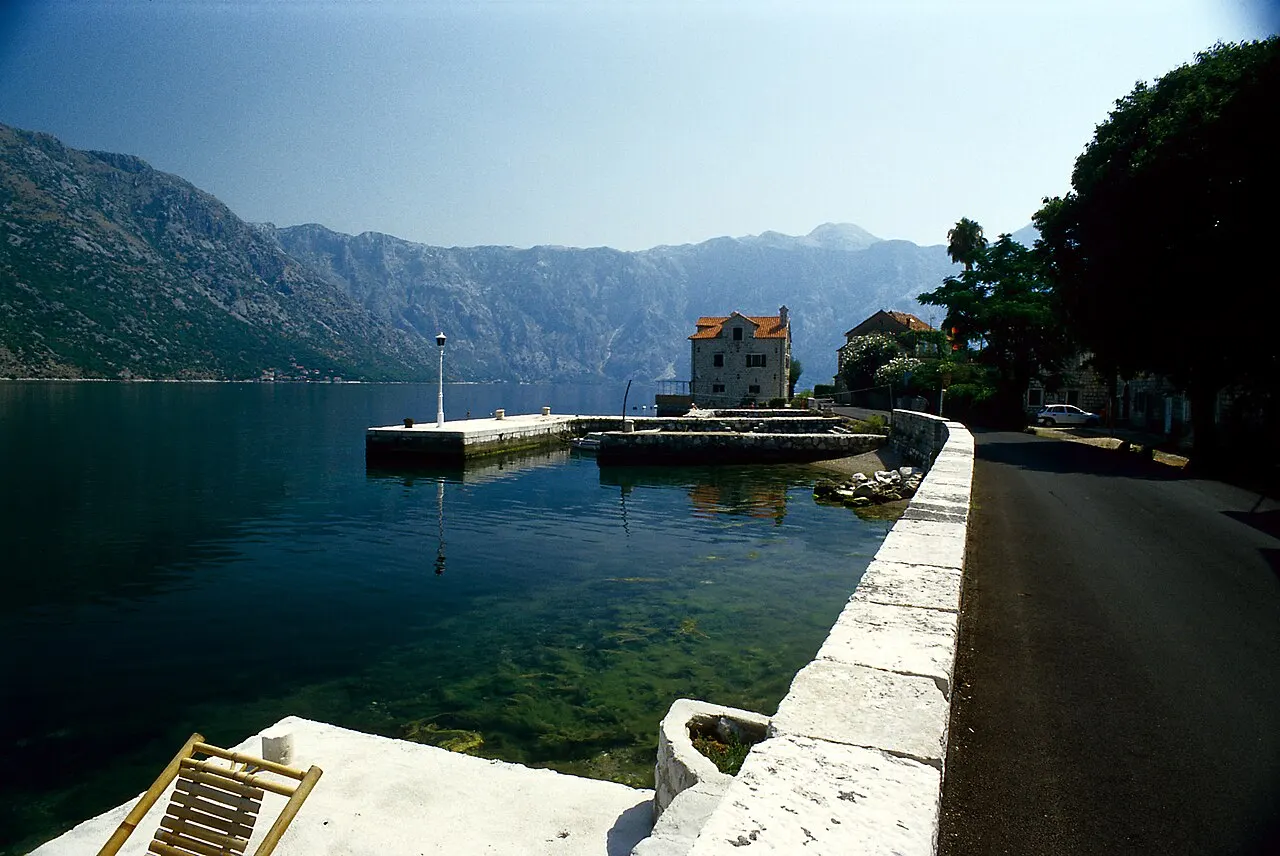
Lower Stoliv is the Stoliv most visitors see — a narrow waterfront settlement of old stone houses, votive chapels, walled gardens and a handful of cafés and konobas along the shore, much like its neighbours Muo and Prčanj but smaller and stiller. Like all the bay villages it grew on seafaring wealth, and you can read that history in the weathered facades and the private bathing steps that come down to the water. There is little to 'do' here in the ticking-off sense; the pleasures are slow ones — a coffee with the bay at your feet, a swim off the rocks, a wander along the shore as the light moves across the water.
The waterfront is also where Stoliv shows off its camellias. This stretch of the western shore has a long-standing camellia tradition, with the delicate spring blooms cherished and celebrated locally; if you visit in late winter or early spring you may catch the gardens and old houses softened by them. It is a small, seasonal grace note, but a lovely one, and very much in keeping with Stoliv's quiet, old-world character. As with all such seasonal events, dates and any organised camellia celebration shift year to year, so verify locally if you are timing a visit around them.
- A narrow waterfront village of stone houses, chapels, gardens and a few cafés and konobas.
- Quiet pleasures: coffee by the bay, a swim off the rocks, a slow shoreline wander.
- Known for its camellias — late-winter and early-spring blooms on this stretch of the western shore.
- Any organised camellia celebration shifts year to year — verify dates locally if timing a visit.
Map pins
Map data © OpenStreetMap contributors · Tiles © OpenFreeMap
The climb to Upper Stoliv and the church of St Elijah
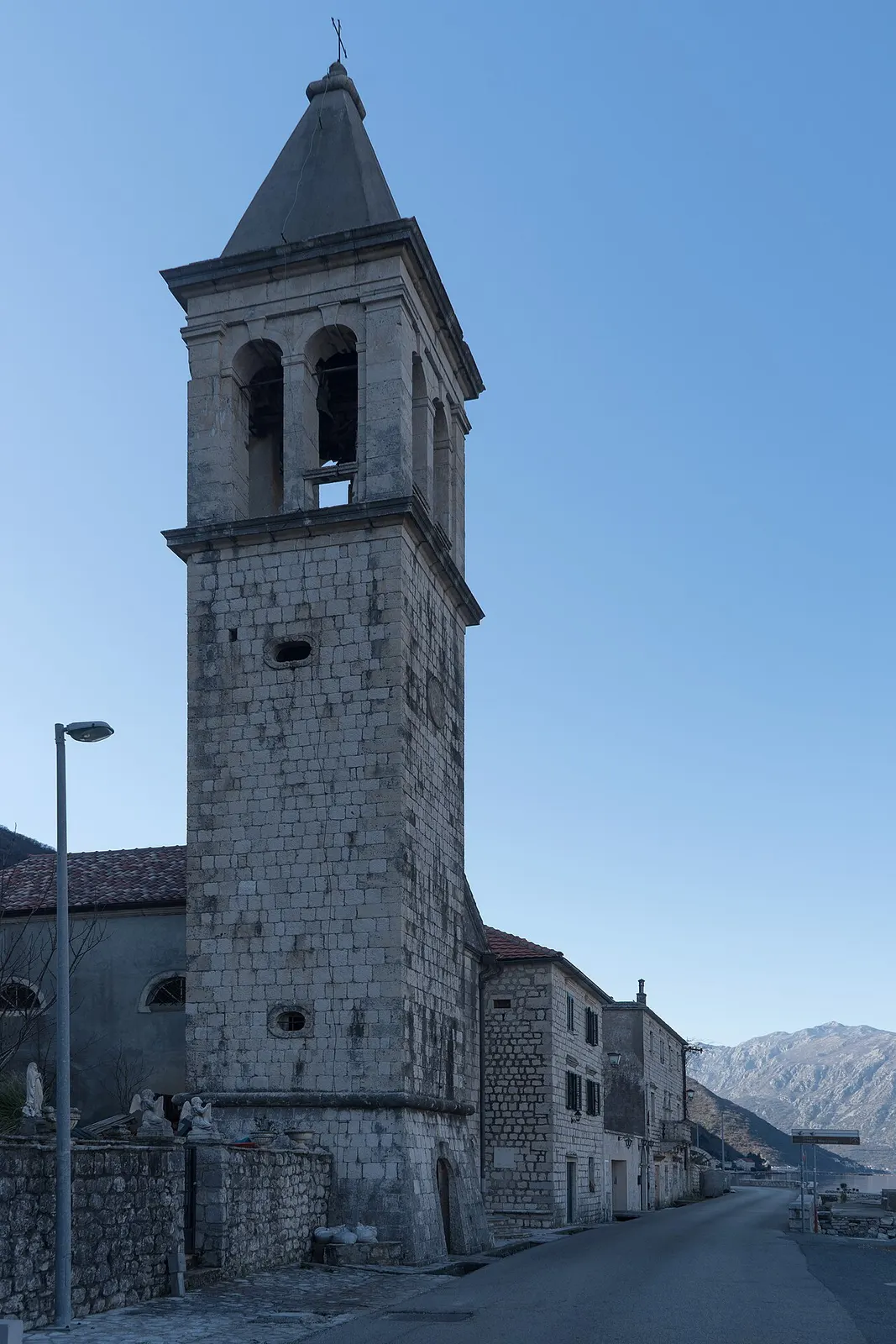
The most memorable thing to do in Stoliv is to climb away from the water. An old stone footpath — the kind of stepped mule track that once linked every shore village to its upland fields and houses — switchbacks up through chestnut woods from Lower Stoliv to Upper Stoliv (Gornji Stoliv), high on the slope of Vrmac. The climb is steady rather than savage, but it is a real walk on uneven old stone, so wear proper shoes, carry water, and give yourself time; the reward is one of the bay's quietest, most atmospheric viewpoints.
Upper Stoliv is a village the modern world left behind. Once a thriving hamlet, it has been largely abandoned as families moved down to the water and away, and its stone houses now stand roofless and ivy-grown among the chestnut trees — a haunting, beautiful place that feels far older than the few hundred metres of climb it takes to reach. At its heart is the church of St Elijah (Sveti Ilija), still standing above the ruins, with a sweeping outlook over the bay. It is a moving, melancholy spot, the antithesis of the cruise-day Old Town, and the single best reason a walker would seek Stoliv out. Treat church access as uncertain — the building may not be open on a casual visit — and the path as wild rather than waymarked, so go prepared and in daylight.
- An old stone footpath climbs through chestnut woods from the shore to Upper Stoliv.
- Upper Stoliv (Gornji Stoliv) is largely abandoned — roofless stone houses returning to the forest.
- The church of St Elijah (Sveti Ilija) still stands above the ruins, with sweeping bay views.
- Wear proper shoes, carry water, go in daylight; the path is wild rather than waymarked.
Swimming, eating and the slow daily rhythm
Swimming in Stoliv is the same easy, clear-water affair as the rest of the inner bay, only quieter. There is no sandy beach — the bay is a deep, steep-sided ria — so you slip into clear, deep, calm water from ladders, flat rocks and concrete platforms along the waterfront. Because the village is so little-visited, you often have the bathing spots largely to yourself, which is part of the charm. The water is clean and swimmable well into autumn; bring water shoes for the rock and pebbles, pack your own shade and water for the quieter platforms, and check whether a spot is free public shoreline or part of a café or villa before you settle.
Eating is low-key and limited. There are a few waterfront konobas and cafés serving the classic Boka table — buzara (mussels or shellfish in white wine, garlic and olive oil), fresh fish priced by the kilo, Montenegrin wine — but far fewer than along Dobrota or in the Old Town, and they may keep seasonal or irregular hours. Most people staying in Stoliv keep a stocked kitchen and treat a konoba dinner as an occasional pleasure rather than a nightly given, driving into Prčanj, Kotor or Tivat when they want more choice. If a quiet terrace, a home-cooked breakfast and the bay to yourself sound like the holiday, Stoliv delivers exactly that; if you want restaurants on your doorstep every night, it will frustrate you.
- Swim off ladders, rocks and platforms in clear, deep, calm water — no sand; bring water shoes.
- Often near-empty bathing spots, thanks to how little-visited the village is.
- A few waterfront konobas and cafés — limited and seasonal; keep a kitchen for self-sufficiency.
- Drive into Prčanj, Kotor or Tivat when you want a wider choice of restaurants and shops.


Staying in Stoliv: who it suits, and the car reality
A Stoliv stay is for a particular kind of traveller: someone who wants deep quiet, a waterfront terrace, easy swimming and the freedom to climb into the hills above the door — and who is genuinely happy to be away from the Old Town's restaurants, shops and nightlife. Couples after a romantic, unplugged few days, walkers drawn by the Upper Stoliv path and Vrmac, and anyone seeking the bay at its stillest will love it. Families can do well here too, given the space and the swimming, with the same caution as the rest of the bay: the water deepens fast, so it is a shore to supervise rather than a paddling beach.
The non-negotiable practicality is the car. Stoliv is on the far shore from Kotor, reached by the western-shore bay road that loops around the head of the water; there is no walking into the Old Town from here. By car it is a short-to-moderate drive into Kotor or over to Tivat; the regular Kotor-bound buses run the shore road and stop in the village, but services are sparser the further you are from town and thin out in the evening. In short, plan to have wheels or to budget for taxis, and do not rely on being able to nip out for a late dinner in town without one. Parking is easier than the car-free Old Town, but the waterfront lanes are narrow, so confirm a space — and exactly how to reach the property — with your host before booking, especially for a larger vehicle or if your room is up a footpath rather than on the road.
A few evergreen notes to finish: Montenegro uses the euro, cards are widely taken but cash is handy in small konobas; the bay is loveliest in spring and autumn, hot and busy at the height of summer, and Kotor is one of Europe's rainier towns in winter, so pack accordingly. As always, we keep the volatile details — room rates, exact bus and taxi times, konoba hours and parking — out of the prose; verify them before you build a plan around them.
- Best for: couples, walkers and quiet-seekers who want the bay at its stillest and don't need town on the doorstep.
- No walk-in Old Town access — a drive, taxi or sparse bus along the western-shore road.
- Genuinely car-dependent: plan for wheels or taxis; don't count on a late dinner in town without one.
- Parking is easier than the Old Town, but lanes are narrow — confirm a space and access route with your host.
- Euro currency; carry some cash. Spring and autumn are best; pack for rain in winter.
Stoliv at a glance
Use this quick card to size up Stoliv. The village, the Upper Stoliv path, the swimming and the car-dependent access are evergreen; the volatile details — room rates, exact bus and taxi times, konoba hours and parking — change with the season and the property, so verify them directly before you build a day or a stay around them.
- What it is: a very quiet waterfront village on the bay's western (Vrmac) shore, beyond Prčanj.
- Two halves: Lower Stoliv on the water; abandoned Upper Stoliv high on the mountain, reached on foot.
- Don't miss: the stone-path climb through chestnut woods to Upper Stoliv and the church of St Elijah.
- Seasonal grace note: the camellias of late winter and early spring.
- Swimming: off ladders, rocks and platforms — bring water shoes; often near-empty.
- Access: car-dependent — a drive, taxi or sparse bus around the shore; no walk-in to Kotor.
- Best for: couples, walkers and quiet-seekers happy to be away from the Old Town's bustle.
- Verify directly: room rates, bus/taxi times, konoba hours and parking/access.

Staying in Muo & Prčanj
Where to stay in Muo and Prčanj across the bay from Kotor: the front-row view of the walled town, waterfront guesthouses and captains' palaces, swimming off the Vrmac shore, and the driving and parking notes you need for a far-shore base.
Read guide
Hidden Gems in Kotor
The quieter side of Kotor: the lesser-trodden squares and lanes inside the walls, small churches like St Luke and St Nicholas, the bay-shore corners of Dobrota and Prčanj, the Vrmac ridge views, and the low-crowd bay stops the day boats skip.
Read guide
Bay of Kotor Scenic Drives
The best drives around the Bay of Kotor: the shoreline loop through Perast and the captains' villages, the white-knuckle Kotor–Lovćen serpentine, the Kamenari–Lepetane ferry shortcut, plus photo stops, summer traffic and driving cautions for each.
Read guideMore in Where to Stay
6
Accessible Hotels & Stays in Kotor
Where to stay in Kotor for step-free access: why the cobbled, stepped, car-free Old Town is the hardest base for limited mobility, the flatter bay alternatives like Dobrota and the modern wider-bay hotels, and the access questions to ask before you book.
Read guide
Best apartments in Kotor
How apartment stays work around the Bay of Kotor: why they're the dominant choice here, what a kitchen and space buy you, where to find them by area, and the practical realities — stairs, parking, air-con, bay views and self check-in — to weigh before you book.
Read guide
Best boutique hotels in Kotor
How to find Kotor's most atmospheric boutique stays: restored stone palaces and captains' houses inside the Old Town walls, along the Dobrota and Muo–Prčanj shore, and in baroque Perast — and how to choose by atmosphere, noise, stairs and view.
Read guide
Best budget hotels in Kotor
How to stay cheaply around the Bay of Kotor without losing your days to buses, parking or steep walks: where the value is, what budget looks like here, the shoulder-season and cruise-day pricing tricks, and the hidden costs to weigh before you book.
Read guide
Best family hotels in Kotor
Where families should stay around the Bay of Kotor: why the car-free Old Town is rarely the best base, the calmer bayfront bases that give space, parking, pools and swimming, and the practicalities — kitchens, prams, deep water — that matter most with kids.
Read guide
Best Hotels in Kotor by Area
A practical framework for choosing where to stay around the Bay of Kotor — matching the Old Town, Dobrota, Muo and Prčanj, Perast and Tivat to first-timers, couples, families, drivers, luxury travellers and cruise extensions, with the booking checks that matter.
Read guide